
- Industries
- Commercial Property ManagementParking lots, lobbies and common areas protected day and night.
- ConstructionJob site theft and after-hours break-ins, covered until the crew returns.
- Logistics and WarehouseGates, yards and loaded trailers watched and logged around the clock.
- AutomotiveLots, keys and inventory protected while the dealership is closed.
- EducationCampuses, doors and after-hours events kept safe.
- Health Care FacilityVisitor screening, patrols and monitoring for healthcare buildings.
- Services
- Security Guards & PatrolLicensed officers at the gate or on mobile patrol, with GPS-verified logs.
- Drone & RoboticsAerial and robotic patrols for large or hard-to-reach sites.
- Security TrailersMobile surveillance units that can be deployed within hours.
- Security CamerasCamera systems built to detect and report, not just record.
- Video MonitoringAI flags it, a human verifies it, and dispatch follows. 24/7.
- NotaryNotary public services for your business.
- Live ScanLive Scan fingerprinting for background checks.
- Resources
- About us
- Careers
Protect the People Providing Care. Protect the Care They Provide.
Healthcare security begins with the people who keep the facility operating.
When staff face threats, violence, unauthorized access, or other security concerns, the consequences can extend directly into patient care and facility operations.
SPADE builds security programs around staff protection, operational continuity, response, policy, and accountable reporting.
24/7 SECURITY
STAFF SAFETY
COMPLIANCE SUPPORT
INCIDENT REPORTING
Healthcare Security Is About
More Than the Building.
Healthcare facilities have a unique security challenge: they must remain accessible to people while maintaining control over a complex, continuously operating environment.
Healthcare Security Doesn't End With Response. It Has to Stand Up to Review.
Healthcare facilities operate within policies, regulatory requirements, accreditation standards, and documentation expectations. Security activity therefore needs to be more than having someone on-site—it needs to be structured, consistent, and documented.
CMS — Centers for Medicare & Medicaid Services
Healthcare organizations participating in Medicare and Medicaid operate within extensive requirements designed to support patient safety, quality, and facility operations. Security procedures and incident documentation can form part of the facility’s broader compliance and risk-management environment.
TJC — The Joint Commission
Accredited healthcare organizations must demonstrate that their policies, procedures, and operations support a safe environment. Consistent security practices, incident response, documentation, and accountability can help facilities demonstrate how security risks are being managed.
Security That Can Be Accounted For
SPADE can help healthcare facilities establish security operations around defined procedures, documented incidents, clear escalation processes, and consistent reporting—giving facility management a stronger record of what happened and how security responded.
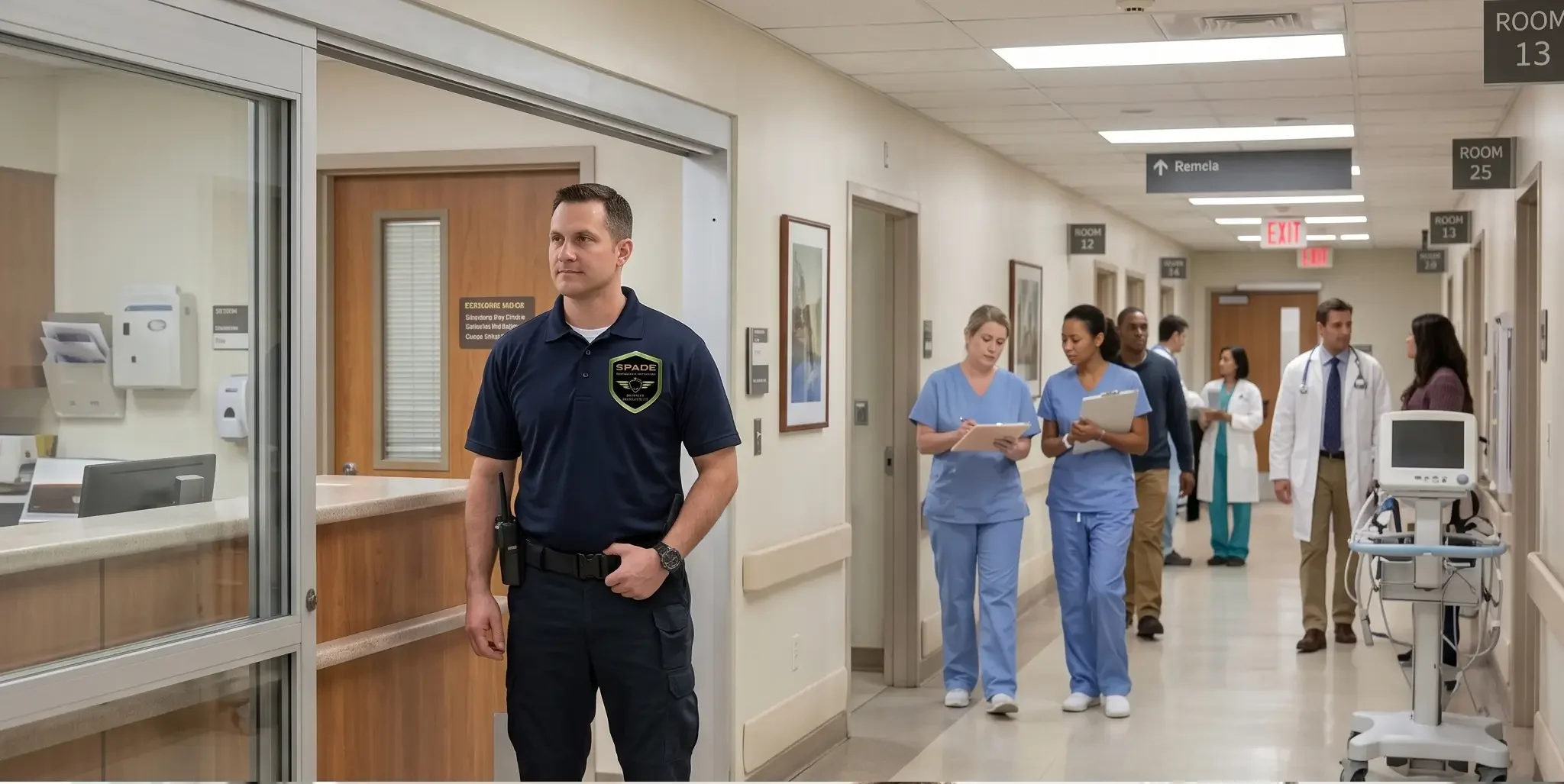
A Security Incident Can Become a Patient-Care Problem.
In healthcare, security incidents don’t happen in isolation. A staff assault, unauthorized entry, disruptive visitor, or uncontrolled situation can quickly affect the people and operations around it.
- A nurse gets pulled away.
- A treatment area is disrupted.
- Staff attention shifts from care to security.
- The facility still has to keep operating.
SPADE approaches healthcare security with that reality in mind—protecting people while helping the facility maintain continuity of care.
Security Built Around Healthcare Operations—Not a Generic Security Package.
Protect Staff & Patients
Provide a professional security presence where staff, patients, and visitors may face elevated security risks.
Control Critical Access
Maintain security awareness around emergency entrances, restricted departments, staff-only areas, pharmacies, parking areas, and other sensitive locations.
Respond to Incidents
Identify, assess, and respond to security concerns according to established facility procedures and escalation protocolss
Document What Happens
Maintain clear records of incidents, patrol activity, observations, and responses—giving facility management the information needed for review and follow-up.
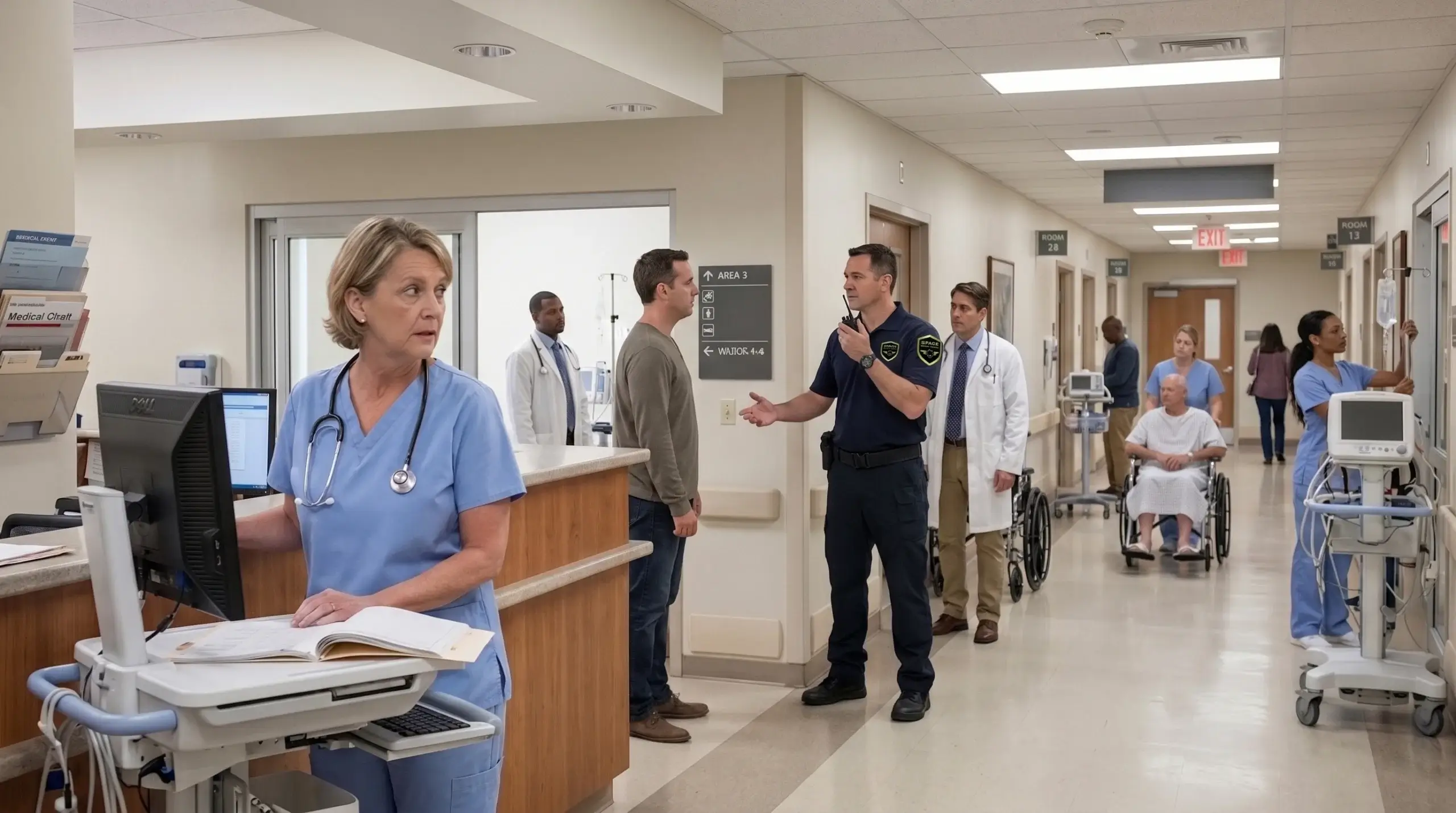
Your Facility Changes Throughout the Day. Your Security Should Account for That.
A healthcare facility at 2:00 PM is not the same environment at 2:00 AM.
Patient traffic changes.
Staff shifts change.
Visitor activity changes.
Access requirements change.
Risk changes.
SPADE’s approach is built around those operational realities.
Security coverage can be structured around your facility’s footprint, operating hours, access points, parking areas, sensitive locations, and after-hours requirements—rather than forcing your organization into a predefined security package.
The Goal Isn't More Security.
It's a Safer, More Controlled Facility.
Healthcare administrators shouldn’t have to spend their day dealing with:
- Staff facing threatening or aggressive behavior
- Unauthorized visitors entering controlled areas
- Security concerns around employee parking
- Restricted-area access
- Theft of medical equipment, supplies, or facility property
- Disruptive incidents affecting patient care
- Repeated emergency calls for recurring problems
- Security providers who don't understand healthcare operations
The SPADE Advantage
Security Built for Active Commercial Properties
01
PROFESSIONAL SECURITY TEAMS
Security personnel trained to operate in environments where professionalism, awareness, communication, and appropriate response matter as much as physical presence.
02
FACILITY-FOCUSED COVERAGE
Security coverage can be structured around entrances, parking areas, restricted zones, service access points, and other locations identified through your facility’s specific risk profile.
03
PROACTIVE RISK REDUCTION
Identify suspicious activity, unauthorized access, perimeter vulnerabilities, and emerging security concerns before they become larger operational problems.
+clients
% Rate
How Healthcare Leaders Measure Security That Works
Security shouldn't be measured by how many guards are on-site or how many cameras are installed.
It should be measured by what changes because SPADE is there.
01
Patient & Staff Safety
Create a more controlled environment around entrances, common areas, parking facilities, and other locations where people may be vulnerable.
02
Access Control
Reduce unauthorized access to restricted areas, staff-only spaces, service entrances, and sensitive parts of the facility.
03
Facility Protection
Help protect medical equipment, technology, supplies, property, and other valuable assets from theft or unauthorized activity.
04
After-Hours Protection
Maintain security awareness during nights, weekends, shift changes, and other periods when facility activity changes.
05
Faster Threat Response
Identify suspicious activity earlier and coordinate an appropriate response before an incident has more time to escalate.
06
Incident Documentation
Maintain clear documentation of incidents, patrol activity, alerts, and responses—giving facility leadership a reliable security record.
07
Operational Continuity
Measure security by what it helps prevent: disruptions, unauthorized access, theft, property damage, and incidents that pull staff away from their primary responsibilities.
Our Useful Articles
Stay Ahead of Healthcare Security Risks
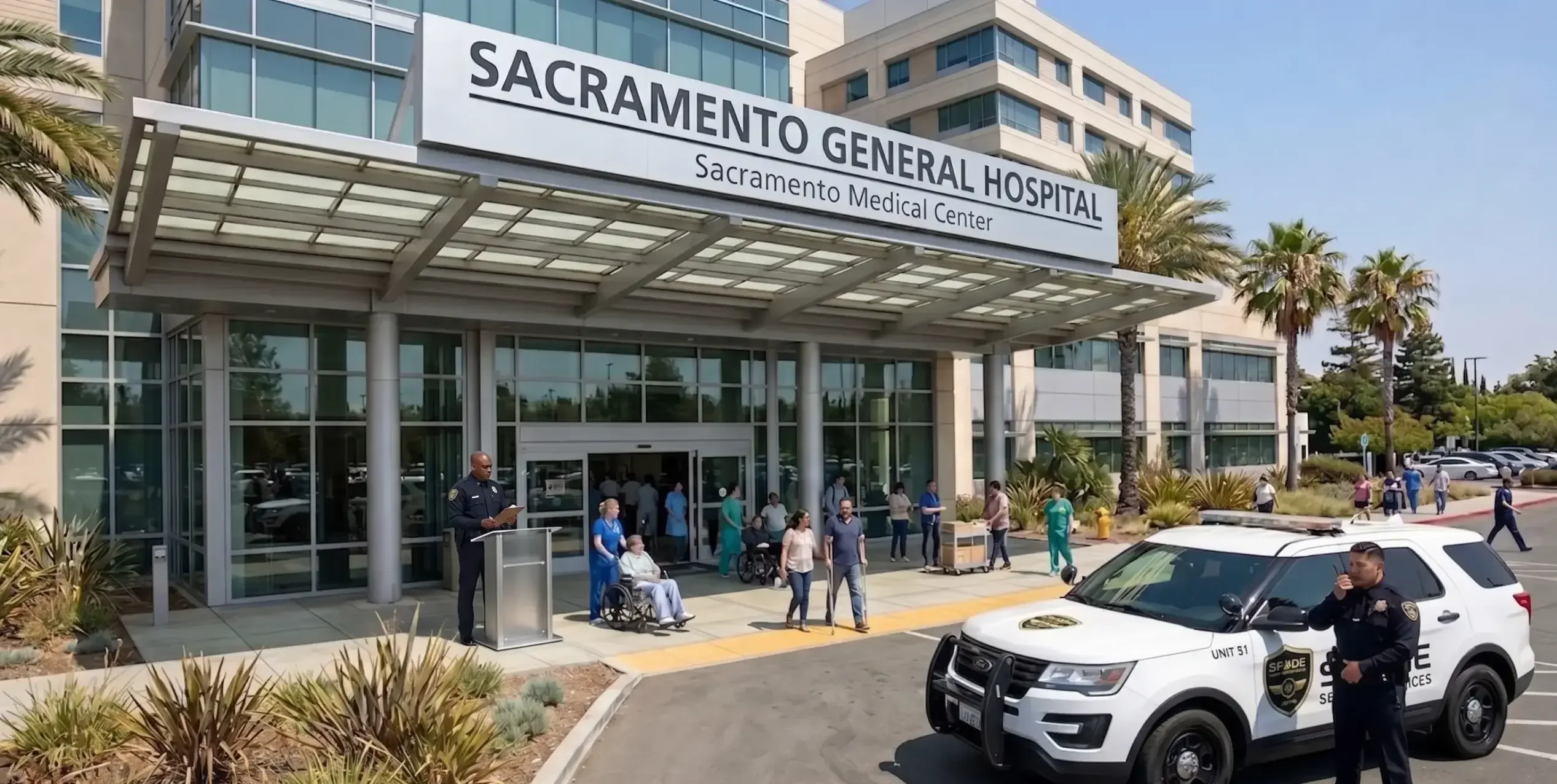
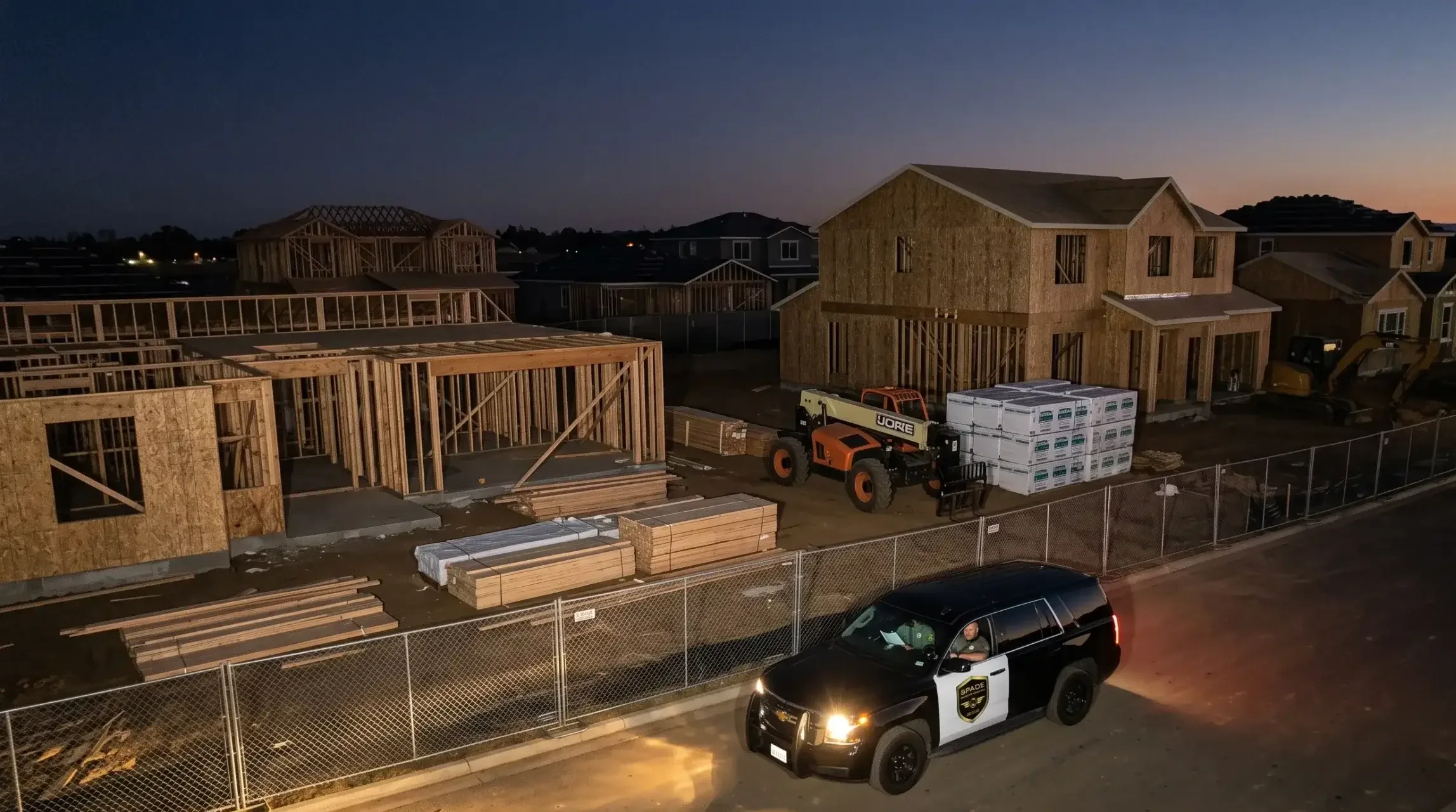
Retail Theft in Sacramento: How Small and Mid-Size Retailers Are Fighting Back
Don't Let Security Become Another Operational Problem.
Your patients, staff, equipment, and facility remain exposed to security risks throughout the day.
Protect the facility with a security program built around how your healthcare environment actually operates.
Have Questions About Healthcare Facility Security?
Healthcare facilities operate continuously, but staffing and activity levels change throughout the day. SPADE can combine remote monitoring, intelligent surveillance, security patrols, and response capabilities to maintain visibility when facility activity decreases.
Yes. Security programs can be structured around parking areas, entrances, service access points, exterior areas, and other locations identified as part of the facility’s security requirements.
Yes. Security coverage can be designed around sensitive and restricted areas where unauthorized access could create safety, operational, or property risks.
SPADE’s security approach connects detection and monitoring with an appropriate response process, allowing suspicious activity to be assessed and addressed rather than simply recorded.
Yes. After-hours coverage can be structured around the facility’s operating schedule and specific security requirements.


THE ACE IN SECURITY
Menu
Stay Ahead of Security Threats
Get Spade Security’s latest insights, incident breakdowns and company news in your inbox — only when we publish.
Text size: 100%