
About 60 Cars Were Broken Into in 90 Minutes Across Chapel Hill Parking Lots. Police Had to Ask the Public for the Footage.
Author
Pranil Shankar
Post Date
September 23, 2026
Views
234
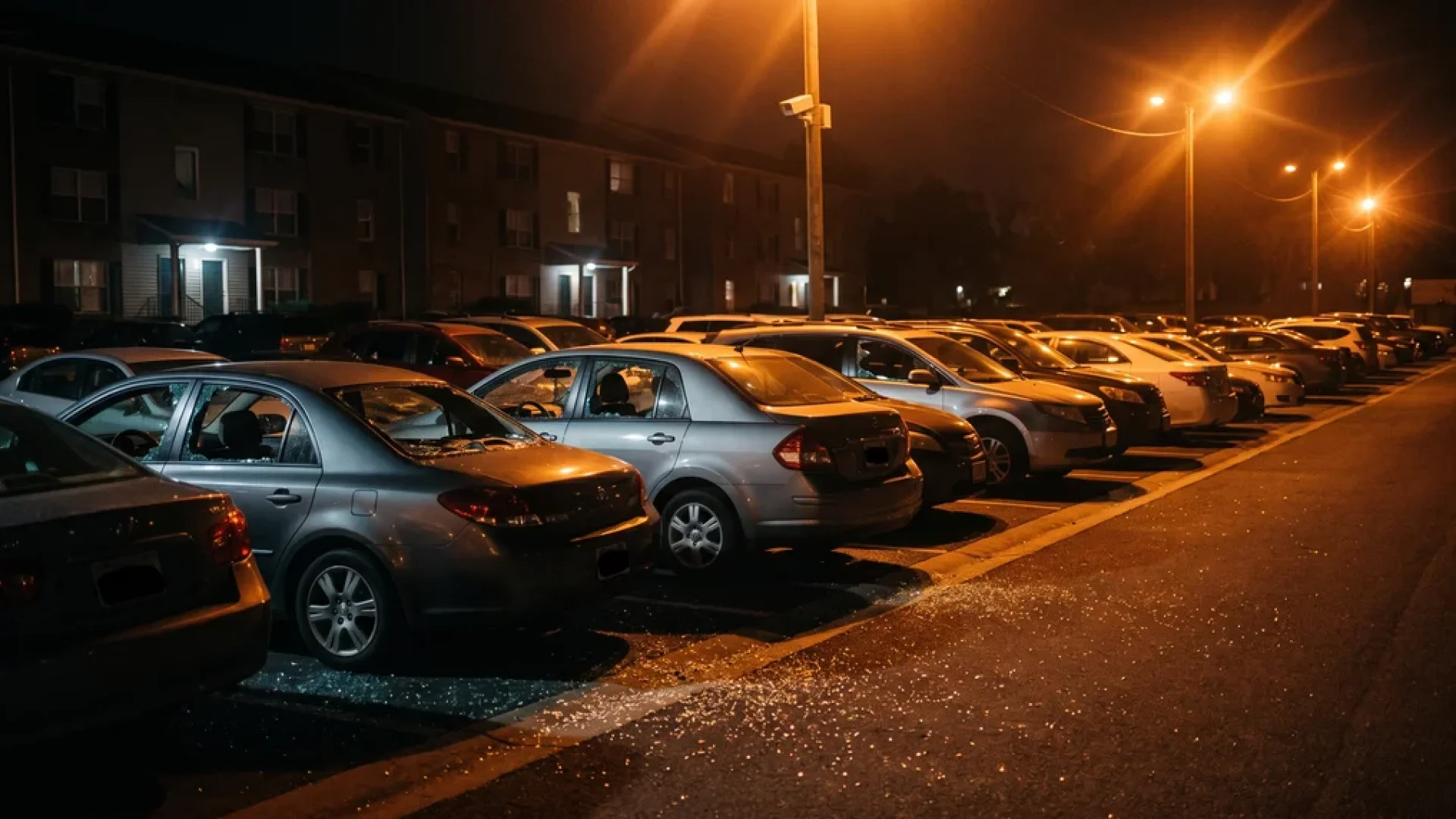
Sixty windows in ninety minutes is one every ninety seconds. Nobody in those lots was awake to hear a single one.
Security takeaway: A parking lot with cameras and no one watching them is a crime scene waiting to be filmed. When a crew can work 60 cars across multiple properties in 90 minutes, the only thing that changes the outcome is someone who notices the first window, not the footage of the sixtieth.
3 a.m. to 4:30 a.m. Along Two Corridors
Early on Saturday, September 13, 2026, thieves smashed their way into about 60 vehicles in Chapel Hill, North Carolina, according to the Chapel Hill Police Department. The break-ins were concentrated along Martin Luther King Jr. Boulevard and Raleigh Road, in the parking lots of apartment complexes and hotels.
“The suspects moved quickly between 3 and 4:30 a.m. Any bit of information helps us,” Police Chief Celisa Lehew said, per Hoodline. The department asked residents and business owners to review their own security camera footage and share anything they found with detectives.
No arrests had been announced.
This Was Not the First Wave
The overnight spree landed on top of a year that was already bad. Chapel Hill recorded roughly 320 vehicle break-in reports through early August, compared with 95 in the first quarter of the year. The department assigned a dedicated investigative team on August 4, and three juveniles were arrested weeks before this latest spree for related break-ins along similar corridors.
In other words, the pattern was known, the corridors were known, and the time of night was predictable. The crews came anyway, and they came to the same kinds of properties: multifamily lots and hotel lots where hundreds of cars sit unattended for hours.
Why Shared Lots Are the Easiest Target on the Map
A single homeowner’s driveway gets one car. An apartment or hotel lot gets dozens in one stop, with predictable lighting, predictable exits, and nobody whose job it is to walk the rows at 3 a.m. Residents assume the property handles it. Management assumes the cameras handle it. The cameras record and wait.
A window-smash crew does not need to defeat anything. It needs about 30 seconds per car and a lot where no one will react to breaking glass. Chapel Hill’s crews found a corridor full of them.
The Footage Request Is the Tell
When police ask residents and businesses to go check their cameras after the fact, it tells you what those cameras were doing during the crime: recording to a drive that no one was looking at. That footage may help identify a suspect later. It did nothing for the 60 owners who walked out to broken glass that morning.
Recorded video is evidence. Monitored video is intervention. Most multifamily and hospitality lots have the first and think they have the second.
Who Is Carrying This Exposure
- Apartment and condo communities with open surface lots or unstaffed parking decks
- Hotels whose lots serve overnight guests with luggage, laptops, and work equipment in the car
- Mixed-use properties where retail closes at night but residential parking stays full
- Any property along a corridor that has already had a spike in reports this year
Five Questions for Property and Hotel Managers
1. Who is looking at the parking lot cameras at 3 a.m.?
If the answer is no one, the cameras are for insurance claims. Live remote monitoring can spot a crew on the first car and issue a voice warning or dispatch a patrol.
2. Does anyone walk the lot overnight?
A licensed patrol on an unpredictable schedule is the one thing a crew cannot plan around. Even one unscheduled pass through the rows changes the risk calculation.
3. Is the lighting uniform, or are there dark rows?
Crews start where the light is worst. A lighting survey of the lot costs little and shows exactly where the first window will break.
4. What are residents and guests told about leaving items visible?
Chapel Hill police routinely remind the public not to leave valuables in sight. A property that reinforces the same message at check-in and move-in removes the reason to break the window.
5. Has the property compared its incident log with the neighborhood’s?
If the corridor has a documented spike, the property is next. Waiting for your own first report means waiting for your own 60 cars.
Speed Beats Cameras Every Time
A crew that can move through a lot in minutes is always faster than a video review the next morning. The only defenses that work on that timeline are the ones that happen in real time: a person on the property, a person watching the cameras, or both.
How SPADE Protects Multifamily and Hotel Parking
SPADE Security Services builds parking protection around the hours between midnight and dawn. That means licensed mobile patrol on randomized rounds through lots and decks, remote video monitoring with live operators who can talk down to the lot and dispatch officers, and a site assessment that maps lighting gaps and blind spots before the first window breaks. Our Scan, Patrol, Advise, Defend, Encrypt model is built so the first car is the last car.
Schedule a Property Security Consultation
SPADE Security Services | Rocklin, CA | Veteran-owned | DVBE certified
Serving Placer, Sacramento, and El Dorado counties
Licensed by the California Bureau of Security and Investigative Services
PPO121804
Why do car break-in crews target apartment and hotel lots?
Because one stop gives them dozens of vehicles, predictable exits, and usually no one on site overnight to react to breaking glass.
Do parking lot cameras stop break-ins?
Recorded cameras help police after the fact. Cameras watched live by an operator who can issue a warning and send a patrol are what interrupt a crew on the first car.
What time do most vehicle break-in sprees happen?
In the small hours, typically between 2 and 5 a.m. The Chapel Hill spree ran from about 3 to 4:30 a.m.
What can residents do to protect their cars?
Leave nothing visible inside, including bags and chargers, park in lit areas where possible, and report suspicious activity immediately instead of the next morning.
SPADE Security Services | Rocklin, CA | Veteran-owned | DVBE certified | Serving Placer, Sacramento & El Dorado counties
Licensed by the California Bureau of Security and Investigative Services


THE ACE IN SECURITY
Menu
Stay Ahead of Security Threats
Get Spade Security’s latest insights, incident breakdowns and company news in your inbox — only when we publish.
Text size: 100%