
A License Plate Reader Found an Armed Burglary Suspect on I-75 in 79 Minutes. Here Is What Plate Readers Can and Can't Do for Your Property.
Author
Pranil Shankar
Post Date
September 30, 2026
Views
199
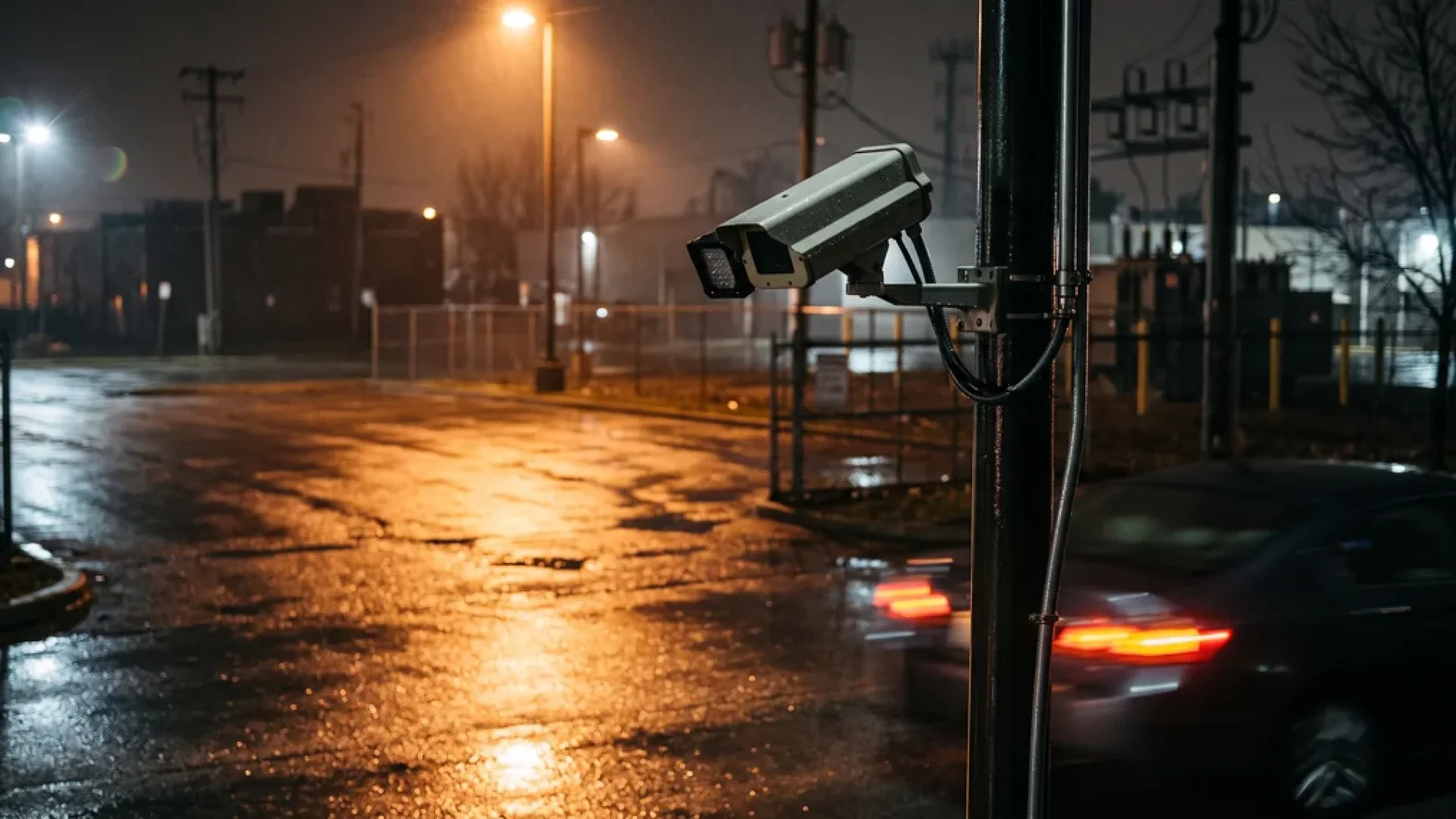
The camera found him fast. It found him on an interstate in another state, long after the burglary was over.
Security takeaway: License plate readers are one of the most effective tools police have for finding a suspect after a crime. They are not a way to stop the crime on your property. A plan that treats them as prevention will get better arrests and the same losses.
79 Minutes on I-75
At 7:33 p.m. on September 11, 2026, deputies in Columbia County, Florida, received a be-on-the-lookout bulletin for an armed and dangerous burglary suspect wanted in Alabama. He was believed to be driving a white 2015 Toyota Highlander with Alabama plates.
At 8:52 p.m., a Flock license plate reader in the state highway right-of-way near the I-75 and I-10 interchange logged the Highlander heading south. Deputies set up along the interstate and made a high-risk stop at about 9:03 p.m. Juan Montero, 57, was taken into custody on an outstanding warrant from the Elberta, Alabama, Police Department. Two children in the car were unharmed. Deputies found a loaded 9mm handgun and extra ammunition, per News4JAX.
“When that tag pinged, that put us in a position to better act on an active and current crime,” Deputy Craig Strickland said.
The Same Tool, Three Different Jobs
That case is a clean example of what plate readers do best: turn a vehicle description into a location, quickly, across a wide area. It is not the only way they get used.
Finding a stolen car in motion. In April 2025, a Flock camera in Grafton, Wisconsin, flagged a stolen vehicle near Wisconsin Avenue and Chateau Drive. Police found it at a nearby business with a second vehicle, rented with a stolen identity, traveling in tandem. Seven suspected members of the Felony Lane Gang, a crew known nationally for car break-ins and identity fraud, were arrested, per Grafton police as reported by Yahoo News.
Connecting one crime to another. In Lake County, California, this month, deputies entered a suspect truck into their plate reader system after a school utility vehicle was stolen. Within days, alerts showed the same truck hauling material under a blue tarp. It led them to about $20,000 in stolen copper wire.
In every case, the camera helped after something had already been taken.
What Plate Readers Do Well
- Match a known vehicle to a location and time, often within minutes
- Build a travel pattern that links separate crimes to one vehicle
- Give investigators a lead when there is no witness and no face on video
What They Do Not Do
- Recognize a crime in progress on a parking lot, dock, or job site
- Tell anyone that a crew on foot is working your cars or cutting your fence
- Help at all when the vehicle is unplated, has a swapped or stolen plate, or is not yet on any hot list
- Replace a person who can see, speak, and respond on site
Crews know this. The Doral warehouse ring that SPADE covered earlier this month used swapped and stolen plates specifically to stay off the readers.
Privacy Is a Real Question
Plate reader networks store where cars go. Civil liberties groups, including the ACLU, have pushed back on how long that data is kept and who can search it. Property owners who install readers on their own lots should know where the data goes, who can access it, and how long it is retained, and should say so clearly to tenants and visitors.
How to Use Plate Readers on a Property Without Overrating Them
1. Treat them as an investigative layer.
They are most valuable feeding police a lead after an incident. Budget for them that way.
2. Pair them with something that reacts.
Monitored cameras with live operators and a patrol response handle the part plate readers cannot: the crime happening right now.
3. Cover the entrances, not just the road.
A reader at the lot entrance ties a vehicle to your property and time window. One on the public road only tells you the vehicle passed by.
4. Set a data policy before you turn them on.
Decide retention, access, and sharing rules in writing. It protects tenants and protects you.
The Arrest Is Not the Outcome You Wanted
Every case above ended well from a police perspective. For the business that was burglarized, the victim of the stolen car, or the utility that lost copper, the loss had already happened. Plate readers make it more likely that someone is caught. Keeping the loss from happening still takes a person on the property or watching it live.
How SPADE Combines Technology With Response
SPADE Security Services designs layered programs for commercial properties that put technology where it performs best and people where response matters. That includes site assessments that place cameras and readers at entrances that actually matter, remote video monitoring with live operators who can issue voice warnings and dispatch, and licensed mobile patrol on randomized schedules. Our Scan, Patrol, Advise, Defend, Encrypt model treats every camera as the start of a response, not the end of one.
Schedule a Security Technology Consultation
SPADE Security Services | Rocklin, CA | Veteran-owned | DVBE certified
Serving Placer, Sacramento, and El Dorado counties
Licensed by the California Bureau of Security and Investigative Services
PPO121804
Do license plate readers prevent crime?
Their main strength is helping police find a vehicle after a crime. They can deter some offenders, but they do not detect or interrupt a crime in progress on a property.
Can license plate readers be defeated?
Yes. Crews use stolen, swapped, or covered plates, and a vehicle that is not on any hot list will not trigger an alert.
Should a business install its own plate reader?
It can help investigations if placed at property entrances, but it should be paired with monitored cameras or patrol, and backed by a written data retention and access policy.
What is the difference between a plate reader and a monitored camera?
A plate reader logs vehicles for later matching. A monitored camera is watched by a person in real time who can warn intruders and send a response while the incident is happening.
SPADE Security Services | Rocklin, CA | Veteran-owned | DVBE certified | Serving Placer, Sacramento & El Dorado counties
Licensed by the California Bureau of Security and Investigative Services


THE ACE IN SECURITY
Menu
Stay Ahead of Security Threats
Get Spade Security’s latest insights, incident breakdowns and company news in your inbox — only when we publish.
Text size: 100%