
Relay Attack Theft Isn't Just a Driveway Problem Anymore. Dealership Lots and Service Drives Are Now the Preferred Target.
Author
Pranil Shankar
Post Date
July 31, 2026
Views
179
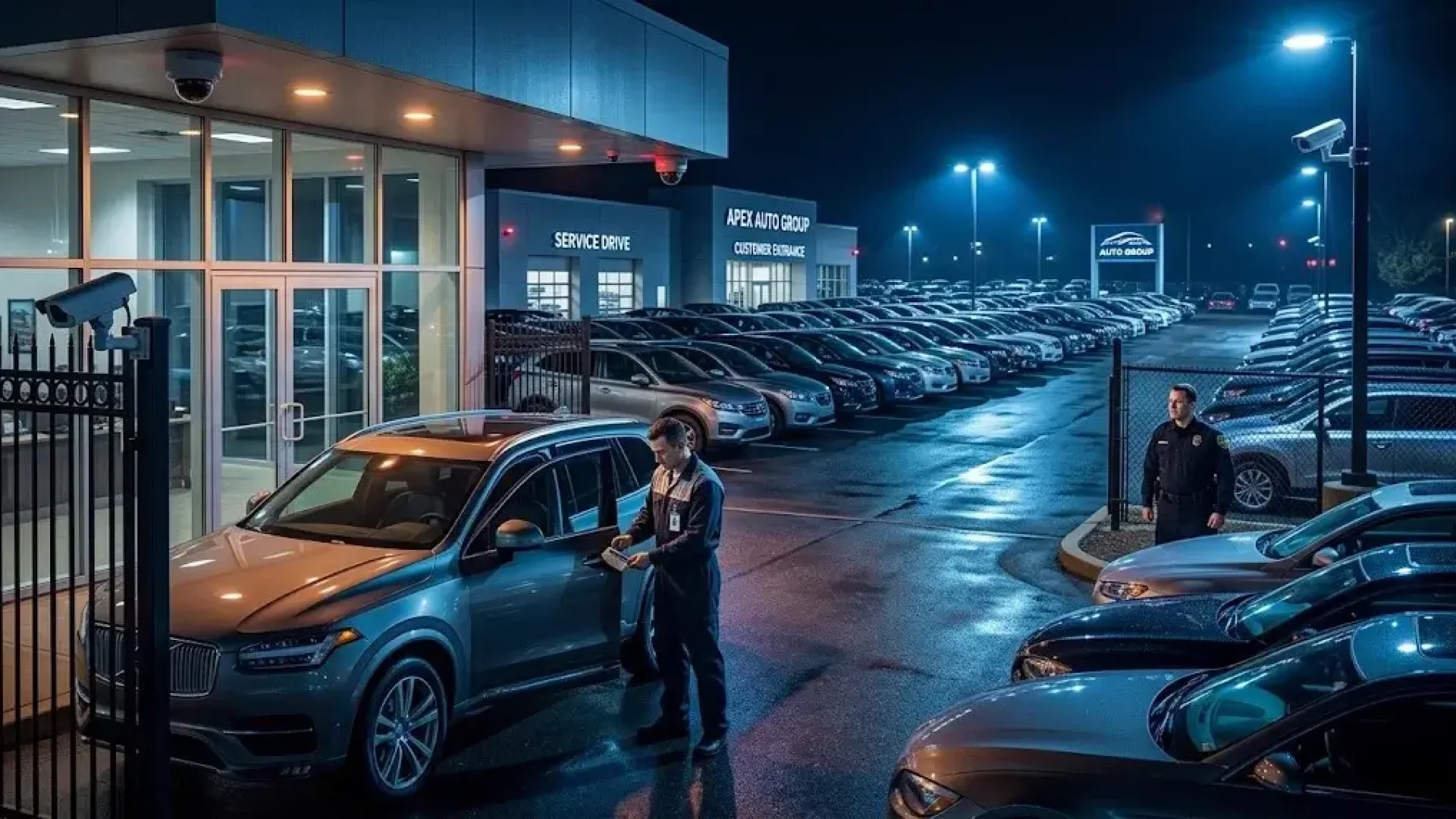
A Stolen Key Fob Signal Is All It Takes to Drive Away With a Customer’s Vehicle. Dealerships Are Discovering the Theft Starts Long Before the Car Leaves the Lot.
Criminal networks now deploy relay attack kits costing $8,000 to $10,000 that intercept a key fob’s signal and relay it to a vehicle, and organized rings can bypass a modern vehicle’s security gateway in under two minutes. Independent testing by Germany’s ADAC covered more than 800 vehicles and found that only about 15 percent were adequately protected against relay attacks — the remaining 85 percent could be opened and driven away using inexpensive signal-relay equipment.
The findings indicate that a dealership’s own inventory and service operations create exactly the conditions relay theft depends on: dozens of fobs stored close together, vehicles parked in predictable rows, and security features that are frequently left disabled.
What Happened?
According to dealership security analysts, relay theft has expanded beyond the residential driveway scenario most consumers are warned about, into the environment where the largest concentration of fobs and vehicles exists in one place: the dealership itself.
Typical exposures include:
- Key boxes and service drive fob storage sitting within relay range of the perimeter fence
- Ultra-wideband anti-relay protections left disabled after service or diagnostic work
- Overnight inventory rows targeted for specific high-value trims by organized rings
- Test-drive and loaner handoffs where fob custody isn’t consistently tracked
- Key programming tools and OEM diagnostic equipment themselves becoming theft targets
Unlike a single stolen vehicle, a dealership-targeted relay attack can affect multiple vehicles in one overnight window, because the fobs enabling the theft are concentrated in one building rather than scattered across individual homes.
Dealerships frequently fail to reactivate manufacturer-installed relay protections after routine service, since many of these features require a technician to manually re-enable them through diagnostic tools — leaving vehicles vulnerable even when the manufacturer built in a defense.
Because relay theft leaves no forced-entry damage and can be executed in minutes, affected dealerships may not detect a pattern until an inventory count comes up short.
Why It Matters to Auto Dealership Operators
The trend highlights a security issue dealers cannot afford to overlook:
The manufacturer’s anti-theft technology only protects a vehicle if the dealership’s own procedures keep it activated.
Modern dealership lot and service operations may rely on multiple layers of protection, including:
- Faraday-shielded key storage for lot and service department fobs
- Documented fob custody procedures for test drives and loaners
- Perimeter fencing and lighting sufficient to limit relay range
- Surveillance cameras across inventory rows and the service drive
- Verification that UWB and anti-relay features are reactivated after service
- On-site security personnel and roving overnight patrol
- Coordination with manufacturer and NHTSA theft advisories by brand
Each layer can provide protection.
But each layer also needs to be maintained, monitored, and considered as part of the dealership’s overall security strategy.
The Security Gap
A dealership can lock the front gate every night while dozens of key fobs sit in an unshielded drawer behind the service counter, well within range of relay equipment operating from the street.
That creates a gap between vehicle-level anti-theft technology and dealership key handling procedures.
The question is no longer simply whether the vehicles on the lot have factory security features.
The more important question is whether those features remain active and whether the fobs enabling them are physically protected around the clock.
What Auto Dealership Operators Should Review
1. Know Where Every Fob Physically Is
Maintain an accurate, real-time record of every key fob location — lot, service drive, loaner fleet — and store them in Faraday-shielded containers when not actively in use.
2. Monitor Relay Theft Advisories by Brand and Model
Relay vulnerability varies significantly by manufacturer and model year. Dealerships should have a process for tracking manufacturer bulletins, NHTSA advisories, and dealer association alerts tied to specific vehicles in inventory.
3. Protect the Physical Lot and Service Drive
Technology should complement — not replace — physical security measures such as perimeter fencing, lighting, shielded key storage, documented custody procedures for test drives and loaners, and after-hours patrol.
4. Identify High-Value Exposure and Connect Detection With Response
Determine which trims, inventory rows, and overnight windows carry the greatest relay theft risk and whether those areas receive appropriate monitoring and verification.
A perimeter camera alert has limited value if nobody is responsible for verifying it and determining what happens next.
Establish a clear after-hours response process with defined roles and escalation contacts.
The Bigger Lesson
The relay attack data is not simply a story about stolen vehicles.
It demonstrates how dealership security is becoming increasingly dependent on both vehicle-level technology and dealership-level key handling discipline.
Protecting inventory requires more than trusting the manufacturer’s built-in defenses.
Dealers need to understand what those systems do, how they can be disabled inadvertently during routine service, and how technology connects to the physical security operation from the fob drawer to the back row of the lot.
A More Complete Approach to Dealership Security
SPADE Security Services helps dealerships build security programs around the actual conditions of their lots, service departments, and key handling procedures.
Our approach can combine intelligent surveillance, remote monitoring, licensed security personnel, patrol, visible deterrence, access management, and response based on the dealership’s specific exposure.
The objective is not to replace one security layer with another.
It is to make the layers work together.
Because protecting a dealership’s inventory isn’t simply about trusting the fob in the ignition.
It’s about making sure the different layers of protection work together when the fob is sitting in a drawer and the lot is unattended.
Your vehicles are only as secure as the fobs that unlock them. Your security strategy should account for both.
Schedule a Dealership Security Consultation
SPADE Security Services | Rocklin, CA | Veteran-owned | DVBE certified
Serving Placer, Sacramento, and El Dorado counties
Licensed by the California Bureau of Security and Investigative Services
PPO121804
What should a dealership do first after discovering a relay-theft-related loss?
Dealers should preserve all available camera footage, document which vehicles and fobs were involved, file a police report, and notify the manufacturer and insurance carrier immediately.
They should also engage their security partner to evaluate whether shielded key storage or custody procedures need to be revised across the lot and service department.
Does having factory anti-theft technology mean dealership inventory is fully protected?
No. Factory anti-theft features are one layer of protection, and several are frequently left disabled after routine service.
Dealerships should also consider shielded key storage, documented fob custody procedures, perimeter security, after-hours patrol, and an established response process.
Why does the service department matter for dealership relay theft risk?
Service departments routinely handle diagnostic tools capable of disabling or re-enabling anti-relay features, and often store multiple customer and inventory fobs in one location during the day.
Without documented procedures, a vehicle can leave service with its factory relay protection still deactivated.
How can dealerships improve their overall security strategy against relay theft?
Start by identifying which trims, storage areas, and overnight windows carry the greatest relay theft exposure.
From there, security technology, personnel, monitoring, patrol, and response can be coordinated around the dealership’s actual lot layout and service workflow.
SPADE Security Services | Rocklin, CA | Veteran-owned | DVBE certified | Serving Placer, Sacramento & El Dorado counties
Licensed by the California Bureau of Security and Investigative Services


THE ACE IN SECURITY
Menu
Stay Ahead of Security Threats
Get Spade Security’s latest insights, incident breakdowns and company news in your inbox — only when we publish.
Text size: 100%