
Dealership Parts Departments Have Become a Quiet Favorite of Organized Retail Crime Rings. Most Operators Don't Track the Loss Back to the Service Drive.
Author
Pranil Shankar
Post Date
August 14, 2026
Views
181
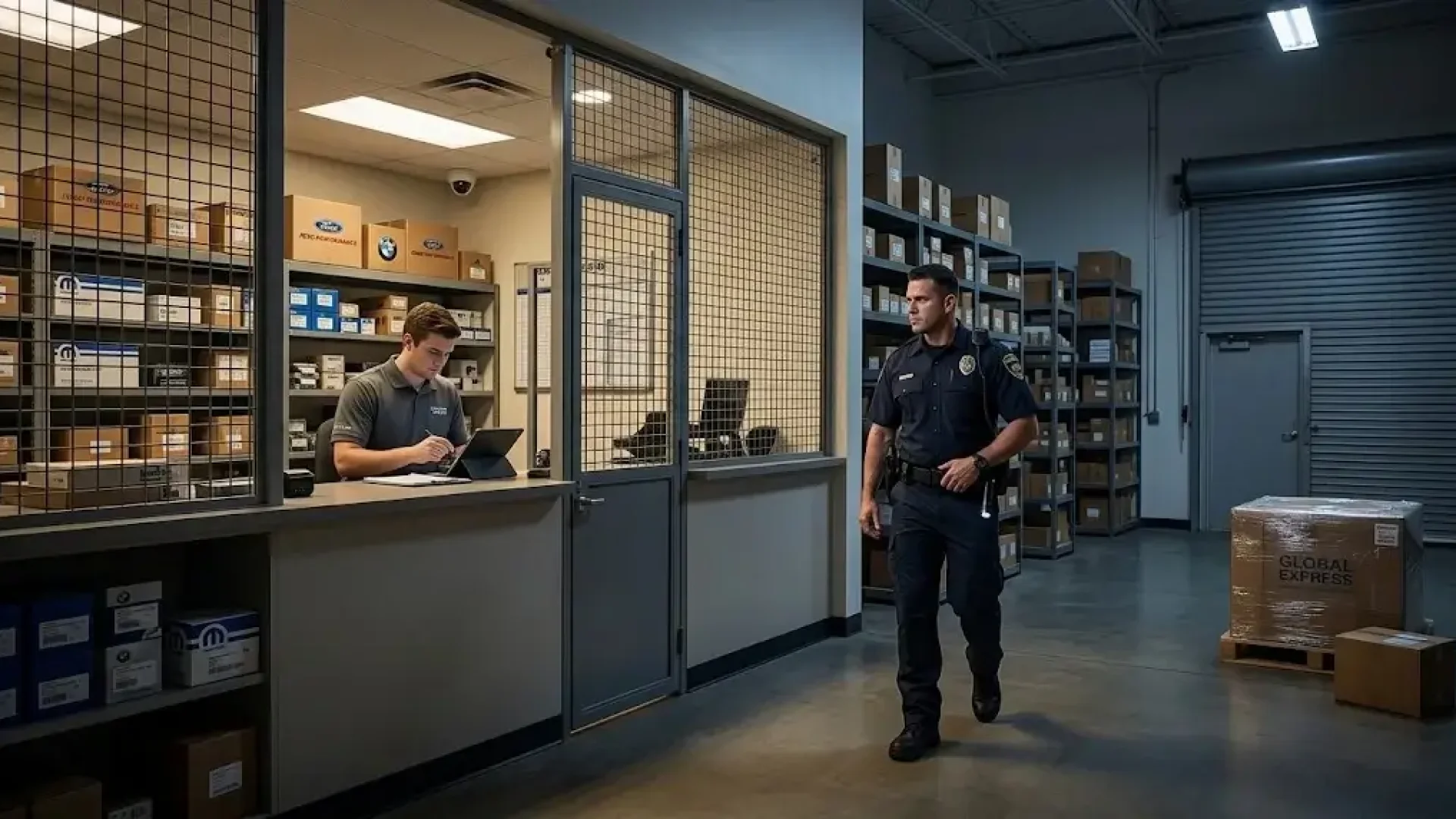
The Vehicles on the Lot Aren’t the Only Inventory Organized Crime Rings Want. Dealership Parts Counters Are Becoming a Favorite, Quieter Target.
Organized retail crime cost U.S. retailers an estimated $112.1 billion in the most recent reporting year and is responsible for nearly 40 percent of inventory shrinkage nationally, with ORC incidents up roughly 27 percent since 2020 and 66 percent of retailers reporting transnational ORC group involvement in thefts against their companies, according to organized retail crime industry data. High-value, easily-resold SKUs — including automotive parts like catalytic converters, infotainment units, and ADAS sensors — sit squarely within the categories these groups target.
The findings indicate that the parts department is an increasingly attractive environment for organized retail crime rings operating against dealerships, distinct from traditional vehicle theft off the lot.
What Happened?
According to dealership operations analysts, organized groups are increasingly targeting parts departments because of consistent stocking patterns, identifiable high-value SKUs, and the relative ease of moving parts through independent repair shops and online marketplaces.
Typical operations involve:
- Pre-operational surveillance of parts counter hours and delivery patterns
- Impersonation of service customers using legitimate appointment information
- Removal of high-value catalytic converters, infotainment units, and ADAS sensors
- Theft from parts delivery trucks parked overnight at the dealership
- Insider-assisted theft from inside the parts department itself
Unlike vehicle theft, parts theft is often absorbed into cost of goods sold or warranty replacement cycles — making it difficult to detect without a specific audit.
Northern California suburban dealerships carry meaningful exposure alongside other high-density metro markets where parts inventory turnover and resale demand are highest.
Because parts loss is frequently misclassified as inventory shrinkage or warranty replacement, affected dealerships may not detect the pattern until a comprehensive audit or insurance review surfaces the data.
Why It Matters to Auto Dealership Operators
The trend highlights a security issue dealers cannot afford to overlook:
The technology protecting your vehicles may not extend to the high-value parts supporting your service operation.
Modern dealership parts departments may rely on multiple layers of protection, including:
- Parts department access control and badge management
- Inventory management and serialized SKU tracking
- Surveillance cameras across counter, storage, and delivery areas
- Background-checked parts and delivery personnel
- Delivery vehicle verification and seal programs
- Alarm systems on parts storage and receiving areas
- On-site security personnel and roving patrol
Each layer can provide protection.
But each layer also needs to be maintained, monitored, and considered as part of the dealership’s overall security strategy.
The Security Gap
A dealership can lock the lot and gate every vehicle while the parts department door opens for a delivery driver who handed a clipboard to a clerk with no verification standard.
That creates a gap between lot security and parts security.
The question is no longer simply whether the inventory on the lot is protected.
The more important question is whether the parts, the deliveries, and the people handling them are continuously verified against an actual operational standard.
What Auto Dealership Operators Should Review
1. Know What High-Value Parts Are on Site
Maintain an accurate record of catalytic converters, infotainment units, ADAS sensors, and high-theft SKUs. Build the inventory audit cycle around those items.
2. Monitor Dealership Crime Advisories by Brand and Region
Parts theft patterns are brand-specific and regional. Dealerships should have a process for tracking manufacturer bulletins, dealer association alerts, and insurance carrier notifications tied to specific SKUs.
3. Protect the Physical Parts Department
Technology should complement — not replace — physical security measures such as controlled storage cage design, parts counter staffing, delivery driver verification, sealed delivery documentation, and after-hours patrol.
4. Identify High-Value Exposure and Connect Detection With Response
Determine which SKUs, delivery windows, and storage zones carry the greatest theft risk and whether those areas receive appropriate monitoring and verification.
A delivery door alert has limited value if nobody is responsible for verifying it and determining what happens next.
Establish a clear after-hours response process with defined roles and escalation contacts.
The Bigger Lesson
The parts theft data is not simply a story about stolen components.
It demonstrates how dealership security is becoming increasingly dependent on both lot protection and parts protection.
Protecting a dealership requires more than securing the vehicles on the display row.
Dealers need to understand what those systems do, how they extend across departments, where vulnerabilities exist, and how technology connects to the physical security operation from the parts counter to the service drive.
A More Complete Approach to Dealership Security
SPADE Security Services helps dealerships build security programs around the actual conditions of their lots, parts departments, and service operations.
Our approach can combine intelligent surveillance, remote monitoring, licensed security personnel, patrol, visible deterrence, access management, and response based on the dealership’s specific exposure.
The objective is not to replace one security layer with another.
It is to make the layers work together.
Because protecting a dealership isn’t simply about locking the lot.
It’s about making sure the different layers of protection work together when the parts department is open and the inventory is most exposed.
Your vehicles aren’t your only inventory. Your security strategy should account for both.
Schedule a Dealership Security Consultation
SPADE Security Services | Rocklin, CA | Veteran-owned | DVBE certified
Serving Placer, Sacramento, and El Dorado counties
Licensed by the California Bureau of Security and Investigative Services
PPO121804
What should a dealership do first after discovering organized parts theft?
Dealers should preserve all available camera footage and inventory records, file a police report, alert the manufacturer and insurance carrier, and conduct a comprehensive audit of the affected SKUs.
They should also engage their security partner to evaluate whether the exploited gap is limited to one area or extends across the parts and delivery workflow.
Does having parts department cameras and inventory software mean a dealership is fully protected?
No. Parts cameras and inventory software are one layer of protection.
Dealerships should also consider access-controlled storage, delivery driver verification, sealed delivery documentation, after-hours monitoring, background-checked personnel, and an established response process.
Why does after-hours security matter for dealership parts departments?
Parts storage and delivery areas remain exposed after the service department closes, especially during overnight delivery windows.
Without appropriate monitoring and response, suspicious activity may not be identified until after parts have been removed, deliveries have been opened, or inventory shrinkage has reached audit threshold.
How can dealerships improve their overall security strategy?
Start by identifying the SKUs, delivery windows, and storage zones carrying the greatest theft risk.
From there, security technology, personnel, monitoring, patrol, and response can be coordinated around the dealership’s actual parts and service operation.
SPADE Security Services | Rocklin, CA | Veteran-owned | DVBE certified | Serving Placer, Sacramento & El Dorado counties
Licensed by the California Bureau of Security and Investigative Services


THE ACE IN SECURITY
Menu
Stay Ahead of Security Threats
Get Spade Security’s latest insights, incident breakdowns and company news in your inbox — only when we publish.
Text size: 100%