
Construction Concrete Pours Are Being Targeted in the Hours Before They Happen. The Loss Is Measured in Both Dollars and Schedule.
Author
Pranil Shankar
Post Date
August 19, 2026
Views
185
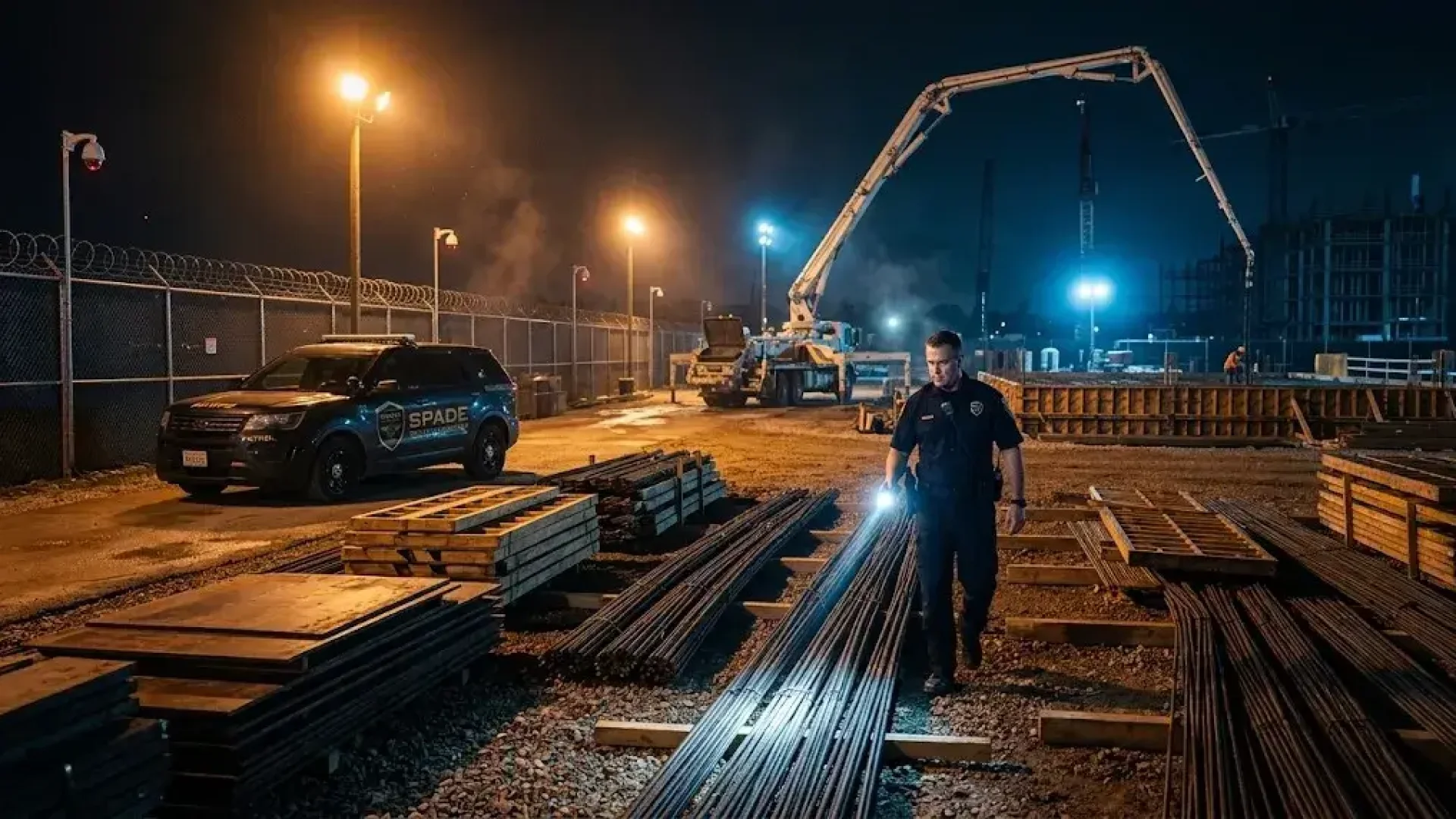
The Rebar Staged for Tomorrow’s Pour Doesn’t Guard Itself Overnight. A Missing Delivery Can Cost Builders More Than the Materials — It Can Cost the Schedule.
Nearly 89 percent of tradespeople report being victims of construction site theft, and industry estimates put the average project delay cost from theft at $10,000 per day — with documented cases of projects falling two weeks behind schedule before the slab is even poured, because staged materials like rebar and embeds went missing the night before. Recovery rates run below 25 percent for stolen equipment and below 7 percent for stolen tools and materials, according to National Equipment Register data.
The findings indicate that the most targeted window is not during active pouring — it is the night before, when rebar, embeds, and formwork sit staged and unmonitored.
What Happened?
According to construction risk analysts, organized and opportunistic groups are increasingly targeting the components of upcoming concrete pours because the staged materials sit on site for hours or days, are difficult to replace quickly, and create immediate schedule pressure when missing.
Typical incidents involve:
- Removal of rebar, anchor bolts, and embeds staged for the next day’s pour
- Tampering with formwork and joint materials prior to inspection
- Theft of copper ground wire from slab preparation areas
- Theft of vibrating equipment, screeds, and power tools staged for the pour
- Theft of fuel from generators and light plants running overnight
Unlike active construction theft, pre-pour theft is uniquely schedule-disruptive because the concrete is already scheduled, the crew is already mobilized, and the missing component cannot be substituted without redesign or replacement.
Northern California suburban and infrastructure projects carry meaningful exposure alongside other high-growth construction markets where concrete pour schedules run tight and staging windows are predictable.
Because pre-pour theft is often absorbed into project change orders or absorbed as overrun, affected builders may not detect the pattern until project closeout or insurance review.
Why It Matters to Construction Operators
The trend highlights a security issue builders and trade contractors cannot afford to overlook:
The technology protecting your site during the day may not extend to the overnight window before a scheduled pour.
Modern construction operations may rely on multiple layers of protection, including:
- Site perimeter fencing and controlled access points
- Construction-stage cameras with documented review
- Material staging and laydown area controls
- On-site security personnel and mobile patrol
- Alarm systems on staged equipment and storage containers
- Coordination with local law enforcement
- Pre-pour verification and inspection procedures
Each layer can provide protection.
But each layer also needs to be maintained, monitored, and considered as part of the project’s overall security strategy — especially around scheduled pour dates.
The Security Gap
A construction site can have cameras and a daytime site supervisor while the staged rebar for tomorrow’s pour sits in the dark behind a single unlocked gate.
That creates a gap between daytime security and overnight security.
The question is no longer simply whether the site is secure during working hours.
The more important question is whether the staged materials for the next critical activity remain secure through the overnight window when they are most vulnerable.
What Construction Operators Should Review
1. Know What Is Staged for the Next Critical Activity
Maintain an accurate record of rebar, embeds, equipment, and formwork staged for each scheduled pour. Build the overnight security plan around those specific items.
2. Monitor Project Risk and Regional Advisories
Pre-pour theft patterns are regional and seasonal. Builders should have a process for tracking contractor association bulletins, insurance carrier notifications, and subcontractor reports tied to specific upcoming pours.
3. Protect the Physical Site
Technology should complement — not replace — physical security measures such as lighting, controlled access, equipment immobilization, storage container locks, and after-hours patrol around critical pour dates.
4. Identify High-Value Exposure and Connect Detection With Response
Determine which pours, materials, and overnight windows carry the greatest incident risk and whether those activities receive appropriate monitoring, verification, and incident response.
A camera alert at the laydown yard at 2 a.m. has limited value if nobody is responsible for verifying it and determining what happens next.
Establish a clear overnight response process with defined roles and escalation contacts.
The Bigger Lesson
The pre-pour theft data is not simply a story about stolen rebar.
It demonstrates how construction security is becoming increasingly dependent on both daytime operations and overnight protection.
Protecting a construction site requires more than securing the project during the working day.
Builders need to understand what those systems do, how they extend through the overnight window, where vulnerabilities exist, and how technology connects to the physical security operation around each scheduled pour.
A More Complete Approach to Construction Security
SPADE Security Services helps builders and trade contractors build security programs around the actual conditions of their sites, schedules, and critical activities.
Our approach can combine intelligent surveillance, remote monitoring, licensed security personnel, patrol, visible deterrence, access management, and response based on the project’s specific exposure.
The objective is not to replace one security layer with another.
It is to make the layers work together.
Because protecting a construction site isn’t simply about staffing the daytime trailer.
It’s about making sure the different layers of protection work together through the overnight window before the next critical activity.
Your schedule depends on tomorrow’s pour. Your security strategy should protect it.
Schedule a Construction Security Consultation
SPADE Security Services | Rocklin, CA | Veteran-owned | DVBE certified
Serving Placer, Sacramento, and El Dorado counties
Licensed by the California Bureau of Security and Investigative Services
PPO121804
What should a builder do first after discovering pre-pour theft or tampering?
Builders should preserve all available camera footage, document the affected materials with photos and timestamps, file a police report, and notify the insurance carrier immediately.
They should also engage their security partner and concrete subcontractor to evaluate whether the pour can proceed or must be rescheduled based on what is missing or compromised.
Does having site cameras and a daytime trailer mean a construction project is fully protected?
No. Site cameras and daytime staffing are one layer of protection.
Builders should also consider overnight patrol, lighting, controlled gate access, equipment immobilization, storage container locks, after-hours monitoring, and an established response process.
Why does after-hours security matter for construction projects?
Staged materials, equipment, and formwork remain exposed during overnight hours, especially in the days immediately before a scheduled pour.
Without appropriate monitoring and response, theft or tampering may not be identified until the crew arrives and discovers the schedule cannot proceed.
How can construction operators improve their overall security strategy?
Start by identifying the scheduled activities, staged materials, and overnight windows carrying the greatest risk.
From there, security technology, personnel, monitoring, patrol, and response can be coordinated around the project’s actual schedule and critical activity dates.
SPADE Security Services | Rocklin, CA | Veteran-owned | DVBE certified | Serving Placer, Sacramento & El Dorado counties
Licensed by the California Bureau of Security and Investigative Services


THE ACE IN SECURITY
Menu
Stay Ahead of Security Threats
Get Spade Security’s latest insights, incident breakdowns and company news in your inbox — only when we publish.
Text size: 100%