
Equipment Rental Yards Are Losing Millions to a Type of Theft That Doesn't Trigger a Single Alarm. Here's the Vulnerability Most Sites Never Catch in Time.
Author
Pranil Shankar
Post Date
July 27, 2026
Views
376
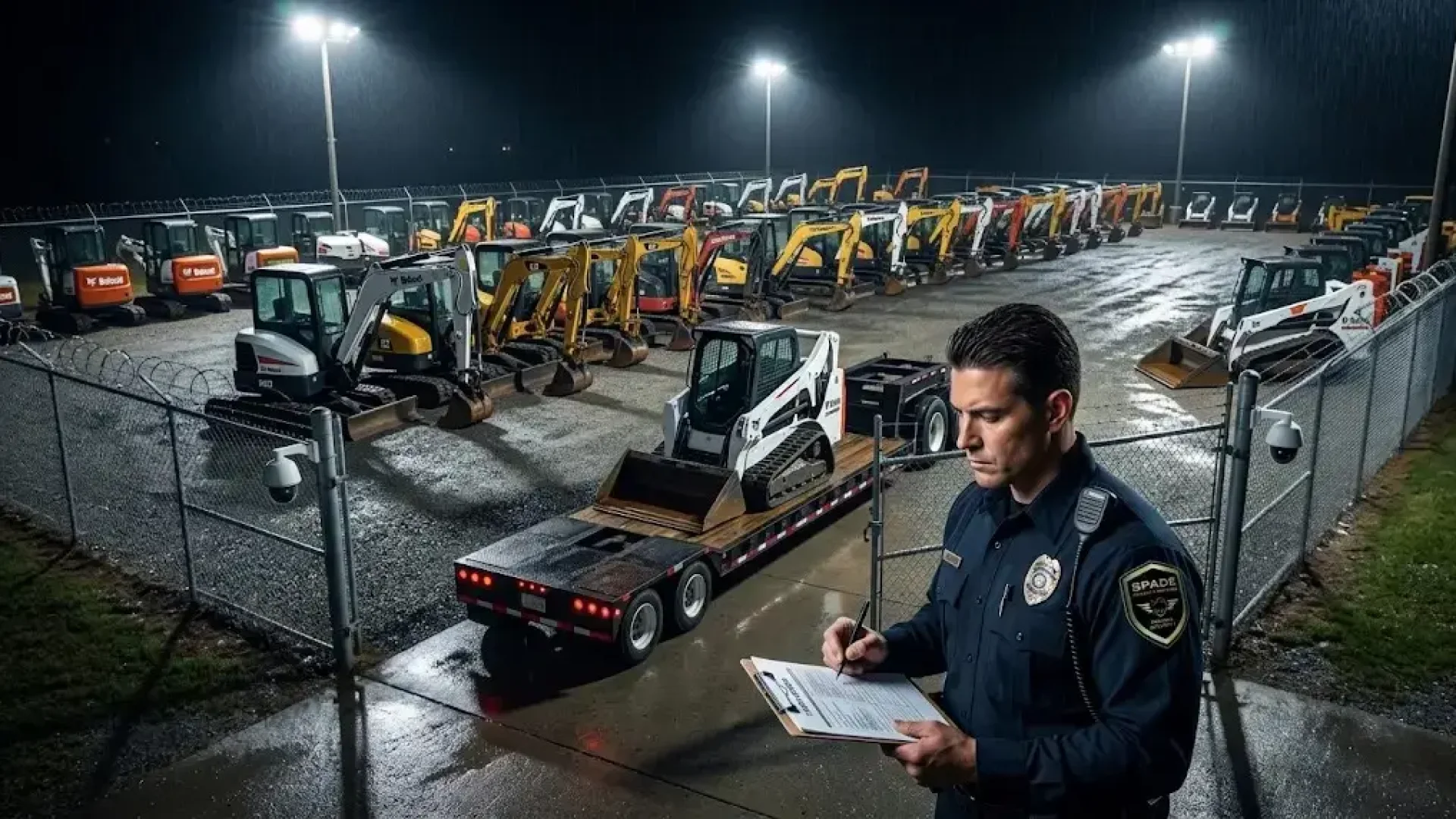
No Alarm Sounds When a Rental Yard Loses Its Inventory Overnight. Equipment Theft Investigators Say That Silence Is Exactly the Problem.
Construction equipment theft costs the U.S. industry an estimated $300 million to $1 billion annually, according to National Equipment Register (NER) and CONEXPO-CON/AGG data, with roughly 11,000 to 12,000 reported incidents a year and an average loss of about $30,000 per incident. Fewer than one in four stolen machines is ever recovered — and for single-item thefts, recovery rates fall below 7 percent.
Rental yards, where equipment sits staged between jobs, are an increasingly attractive entry point for organized theft rings — the security at most yards was built for inventory visibility, not theft prevention.
What Happened?
According to construction risk analysts, organized groups are increasingly targeting the yards where equipment sits between jobs because the security at most yards was designed for inventory visibility — not theft prevention.
Typical operations involve:
- Late-weekend yard surveillance to identify equipment staging patterns
- Impersonation of authorized pickup drivers using valid work orders
- Removal of mini-excavators, skid steers, and generators on lowboy trailers
- Forged rental extensions that delay reporting for 48 to 72 hours
- Resale of equipment through out-of-state auctions and online marketplaces
Unlike active job sites, rental yards often run reduced security staffing on weekends and holidays.
High-growth construction markets with significant rental fleet activity — including Northern California’s Sacramento and Placer County corridor — carry proportionally greater exposure simply because more equipment sits staged in those yards at any given time.
Because the equipment is documented as “on rent” for several days, affected yards may not report the theft as stolen until the equipment fails to return at the scheduled off-rent date.
Why It Matters to Construction Operators
The trend highlights a security issue construction operators cannot afford to overlook:
The technology and procedures protecting your equipment fleet can become part of the exposure if they are not reviewed against how equipment actually moves in and out.
Modern rental operations may rely on multiple layers of protection, including:
- Yard perimeter fencing and access gates
- Equipment telematics and GPS trackers
- Pickup and return documentation
- Surveillance cameras and recorded video
- Asset tags and serialized inventory systems
- After-hours alarm and intrusion monitoring
- Yard security personnel
Each layer can provide protection.
But each layer also needs to be maintained, monitored, and considered as part of the rental operation’s overall security strategy.
The Security Gap
A rental yard can have GPS on every piece of equipment while the gate that releases it to the wrong driver is staffed only by an unaided clerk.
That creates a gap between asset tracking and release verification.
The question is no longer simply whether the equipment is tracked.
The more important question is whether the people, vehicles, and work orders removing equipment are continuously verified against an actual operational standard.
What Construction Rental Operators Should Review
1. Know Who Is Picking Up Equipment
Maintain accurate records of authorized drivers, pickup contacts, and the work orders tied to each release. Verify identity at the gate — not just signature on paperwork.
2. Monitor Equipment Movement in Real Time
Telematics alerts should be tied to a documented response process. A GPS ping crossing a geofence at an unusual hour should not sit in an inbox until Monday morning.
3. Protect the Physical Yard
Technology should complement — not replace — physical security measures such as lighting, perimeter fencing, controlled gate access, equipment immobilization, and after-hours yard patrols.
4. Identify High-Value Exposure and Connect Detection With Response
Determine which units, lanes, and yard zones carry the greatest theft risk and whether those areas receive appropriate monitoring and verification after normal business hours.
A geofence alert has limited value if nobody is responsible for verifying it and determining what happens next.
Establish a clear after-hours response process with defined roles and escalation contacts.
The Bigger Lesson
The rental yard trend is not simply a story about stolen equipment.
It demonstrates how construction security is becoming increasingly dependent on both physical protection and verified release controls.
Protecting a rental fleet requires more than installing GPS units and cameras.
Operators need to understand what those systems do, how they are maintained, where vulnerabilities exist, and how technology connects to the physical security operation.
A More Complete Approach to Construction and Rental Yard Security
SPADE Security Services helps construction operators and rental yards build security programs around the actual conditions of their equipment, yards, and pickup operations.
Our approach can combine intelligent surveillance, remote monitoring, licensed security personnel, patrol, visible deterrence, access management, and response based on the site’s specific exposure.
The objective is not to replace one security layer with another.
It is to make the layers work together.
Because protecting a rental fleet isn’t simply about installing another GPS unit.
It’s about making sure the different layers of protection work together when the yard is closed and the equipment is most exposed.
Your equipment is your working capital. Your security strategy should be built around protecting it.
Schedule a Construction Security Consultation
SPADE Security Services | Rocklin, CA | Veteran-owned | DVBE certified
Serving Placer, Sacramento, and El Dorado counties
Licensed by the California Bureau of Security and Investigative Services
PPO121804
What should a rental yard operator do first if equipment is taken by an unauthorized driver?
Operators should immediately notify local law enforcement, alert the equipment manufacturer and telematics provider, freeze related work orders, and review gate camera footage and driver credential records.
They should also engage their security partner and insurance carrier to assess exposure across the rest of the fleet.
Does having GPS on every unit mean a rental yard is fully protected?
No. GPS tracking is one layer of protection.
Operators should also consider gate access control, driver verification, yard patrols, equipment immobilization, intrusion detection, after-hours monitoring, and an established response process.
Why does after-hours security matter for rental yards?
Yarded equipment remains exposed after employees leave the property, especially on weekends and holidays.
Without appropriate monitoring and response, suspicious activity may not be identified until after a unit has been loaded, transported, and absorbed into an out-of-state resale channel.
How can rental yard operators improve their overall security strategy?
Start by identifying the equipment types, pickup windows, and yard zones carrying the greatest risk.
From there, security technology, personnel, monitoring, patrol, and response can be coordinated around the rental operation’s actual release and return workflow.
SPADE Security Services | Rocklin, CA | Veteran-owned | DVBE certified | Serving Placer, Sacramento & El Dorado counties
Licensed by the California Bureau of Security and Investigative Services


THE ACE IN SECURITY
Menu
Stay Ahead of Security Threats
Get Spade Security’s latest insights, incident breakdowns and company news in your inbox — only when we publish.
Text size: 100%