
Apartment Residents Are 34 Percent More Likely to Have a Package Stolen Than the Average Household. Property Managers Are Watching It Become a Top Safety Complaint.
Author
Pranil Shankar
Post Date
August 26, 2026
Views
201
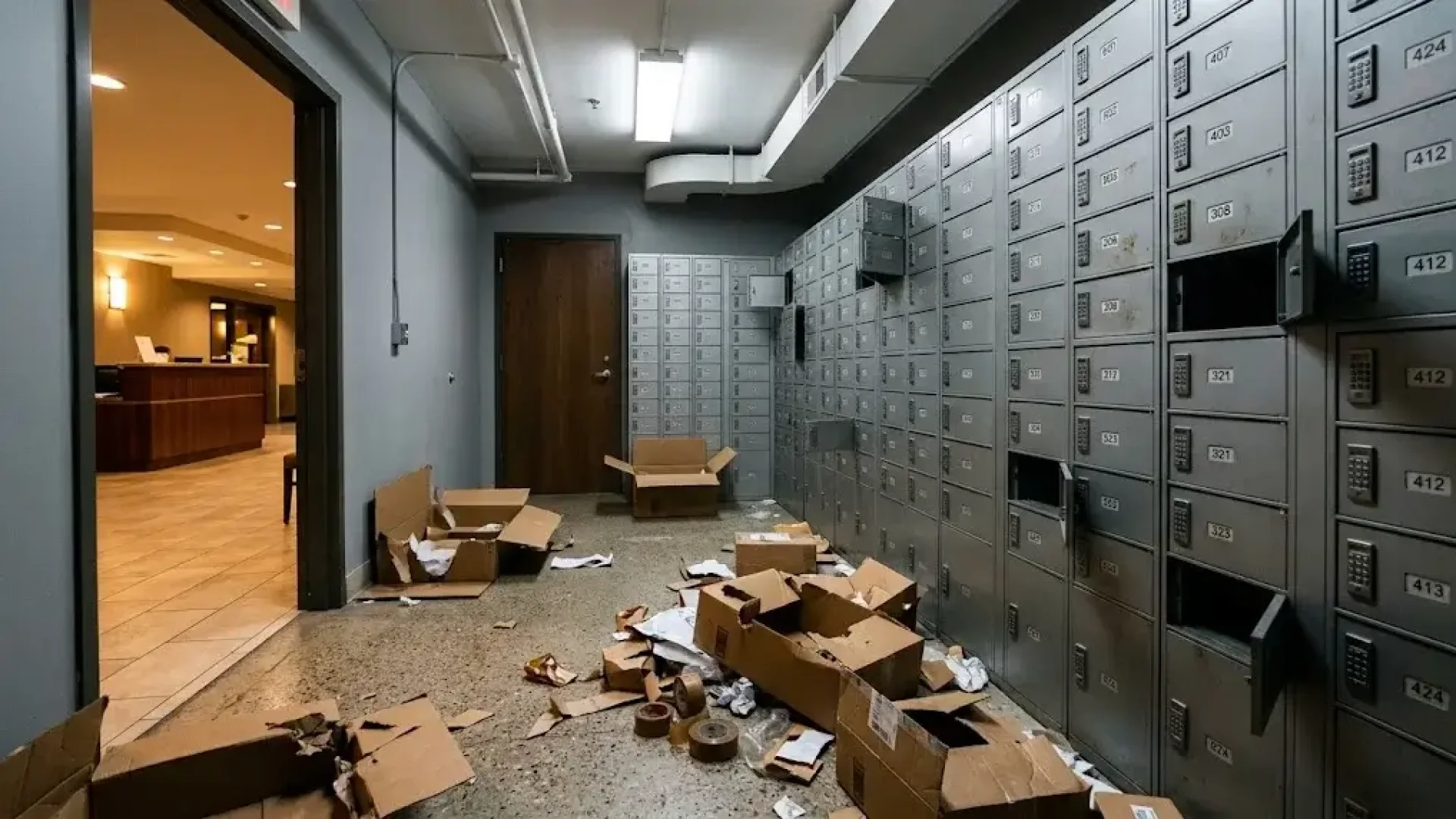
A $143 Stolen Package Rarely Stays a $143 Problem. Property Managers Are Discovering It’s Becoming the Complaint That Erodes Resident Trust the Fastest.
The average stolen package is now worth $143 — up 8 percent year-over-year — and Americans lost an estimated 104 million packages worth roughly $15 billion in the most recent reporting year, according to SafeWise’s national package theft data.
The U.S. Postal Service’s Office of Inspector General puts the annual floor even higher: at least 58 million packages stolen nationally, with fewer than 1 in 4 victims ever filing a police report — meaning most multifamily properties are almost certainly logging only a fraction of what’s actually happening on-site.
Industry reporting on multifamily package theft shows apartment residents are now 34.1 percent more likely to have a package stolen than the average U.S. household — and in a recent multifamily crime survey, package theft ranked as the second most common safety concern residents raised, trailing only vehicle break-ins.
What Happened?
According to delivery-security researchers, the same forces that made e-commerce convenient — dense delivery windows, unattended drop-offs, shared entry points — have made multifamily communities a disproportionately easy target compared to single-family homes.
Typical exposure looks like:
- Packages left in unmonitored lobbies or mailrooms for hours between delivery and pickup
- Couriers propping open secured doors for convenience during high-volume delivery runs
- Tailgating through gated resident entrances directly behind a delivery vehicle
- Parcel lockers left propped or unlocked after a resident’s retrieval
- Repeat offenders who monitor delivery patterns at a specific property over time
Unlike a break-in, package theft rarely trips an alarm or triggers a police response — it is discovered by the resident, not the property.
Multifamily properties across growing suburban markets carry meaningful exposure here, since delivery density per building is often higher than in single-family neighborhoods, concentrating the opportunity in a handful of predictable choke points.
Because most incidents go unreported to police, property managers typically learn about the scope of the problem only through resident complaints, online reviews, or a lease-renewal conversation — well after the pattern has already taken hold.
Why It Matters to Property Managers
The data highlights a security issue that’s easy to underestimate because no single incident looks serious on its own:
The systems protecting your building’s entrances may not extend to the narrow window between a package’s delivery and its pickup.
Modern multifamily security may rely on multiple layers of protection, including:
- Gated or controlled resident entry systems
- Parcel locker systems with individual access codes
- Surveillance cameras at mailrooms, lobbies, and entry points
- Delivery staging protocols with staff acknowledgment
- Patrol presence timed to peak delivery windows
- Resident notification systems tied to package arrival
Each layer can reduce exposure.
But each layer also needs to be maintained, monitored, and considered as part of the property’s overall resident-experience strategy — not treated as a one-time equipment purchase.
The Security Gap
A community can have a fully gated entrance and controlled resident access while a delivery van buzzes through directly behind a resident’s car, unlogged and unverified.
That creates a gap between perimeter access control and package accountability.
The question is no longer simply whether the property has a gate or a camera at the mailroom.
The more important question is whether the property controls what happens in the hours between a courier’s drop-off and a resident’s pickup — the exact window when most theft actually occurs.
What Property Managers Should Review
1. Know Your Actual Exposure Window
Track how long packages typically sit unclaimed in mailrooms or lobbies. The properties with the longest dwell time between delivery and pickup carry the highest risk — and usually don’t realize it until complaints spike.
2. Monitor Delivery Patterns, Not Just Delivery Zones
Theft clusters around predictable peak-delivery windows. Property managers should know when the bulk of daily deliveries arrive and align camera review and patrol timing to match — not spread evenly across the day.
3. Protect the Physical Handoff
Open shelving in an unmonitored lobby is not the same risk profile as individually coded parcel lockers under camera coverage. The handoff point itself — not just the building entrance — is where the actual theft happens.
4. Identify High-Complaint Buildings and Connect Detection With Response
Package theft is rarely distributed evenly across a portfolio — certain buildings or entrances absorb a disproportionate share. A camera alert at the mailroom has limited value if nobody is responsible for verifying it and following up with the resident.
The Bigger Lesson
The package theft data is not simply a story about missing deliveries.
It demonstrates how resident trust is increasingly shaped by small, frequent failures rather than rare, dramatic ones.
Protecting a multifamily property requires more than installing a locker system or adding a camera at the front door.
Property managers need to understand where packages actually sit exposed, how long they stay that way, and how technology connects to a real response — not just a recorded clip nobody reviews.
A More Complete Approach to Multifamily Security
SPADE Security Services helps property managers build security programs around the actual delivery patterns, entry points, and resident concerns of their communities.
Our approach can combine intelligent surveillance, remote monitoring, licensed security personnel, patrol, visible deterrence, access management, and response based on the property’s specific exposure.
The objective is not to replace one security layer with another.
It is to make the layers work together.
Because protecting a multifamily property isn’t simply about installing a locker system.
It’s about making sure the different layers of protection work together during the narrow window between delivery and pickup — the window where most residents’ trust is actually won or lost.
A stolen package is often the first thing a resident tells their neighbors about. Your security strategy should account for that.
Schedule a Multifamily Security Consultation
SPADE Security Services | Rocklin, CA | Veteran-owned | DVBE certified
Serving Placer, Sacramento, and El Dorado counties
Licensed by the California Bureau of Security and Investigative Services
PPO121804
What should a property manager do first after a spike in package theft complaints?
Managers should review available camera footage at mailrooms and entry points, document the pattern of incidents by building and time of day, and communicate proactively with affected residents.
They should also evaluate whether current parcel storage — open shelving versus individually coded lockers — matches the property’s actual delivery volume.
Does having a gated entrance mean a community is protected from package theft?
No. A gated entrance controls who drives onto the property — it does not control what happens to a package between delivery and pickup.
Properties should also consider parcel locker systems, mailroom camera coverage, delivery staging protocols, and patrol timed to peak delivery windows.
Why does delivery-window monitoring matter for multifamily properties?
Package theft is concentrated in the hours immediately following high-volume delivery periods, not spread evenly across the day.
Without monitoring aligned to those specific windows, incidents are often discovered by residents long before property staff are aware a pattern exists.
How can property managers improve package security without a full locker system overhaul?
Start by identifying the buildings and entrances with the highest complaint volume, then prioritize camera coverage, delivery staff protocols, and patrol timing around those specific pinch points.
A phased approach — beginning with the highest-exposure buildings — is often more practical than a portfolio-wide equipment replacement.
IMAGE GENERATION PROMPT:
ALT TEXT:
FILE NAME:
SPADE Security Services | Rocklin, CA | Veteran-owned | DVBE certified | Serving Placer, Sacramento & El Dorado counties
Licensed by the California Bureau of Security and Investigative Services


THE ACE IN SECURITY
Menu
Stay Ahead of Security Threats
Get Spade Security’s latest insights, incident breakdowns and company news in your inbox — only when we publish.
Text size: 100%