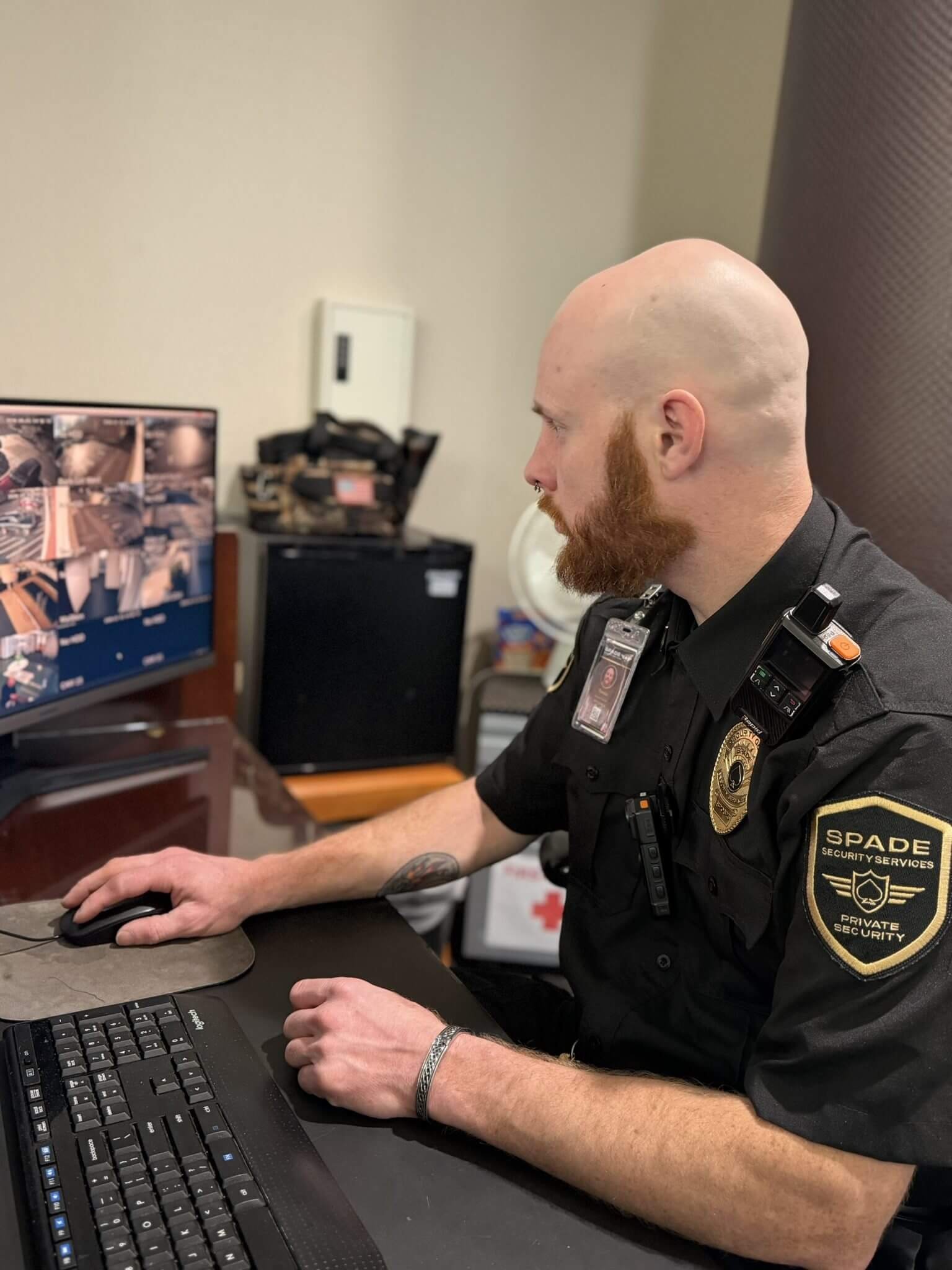
Your Warehouse Moves Fast. Your Security Needs to Keep Up.
Your facility is constantly moving—trucks arrive, trailers are staged, loads are transferred, and employees come and go. That movement creates opportunities for unauthorized access, cargo theft, and after-hours incidents.
SPADE gives your operations team greater visibility, stronger control, and a security response built around how your facility actually operates.
The Operation Doesn't Stop. Neither Does the Exposure.
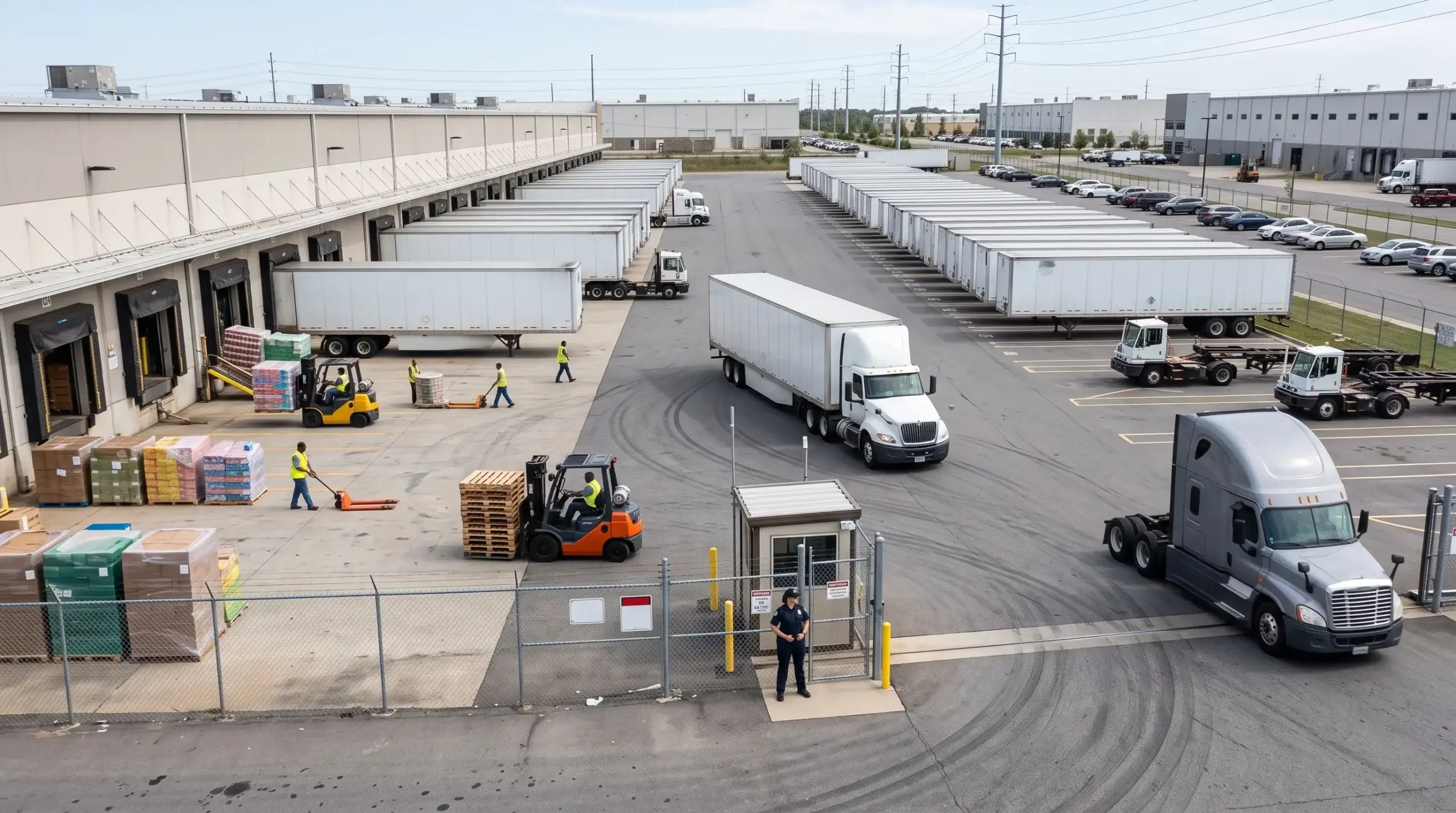
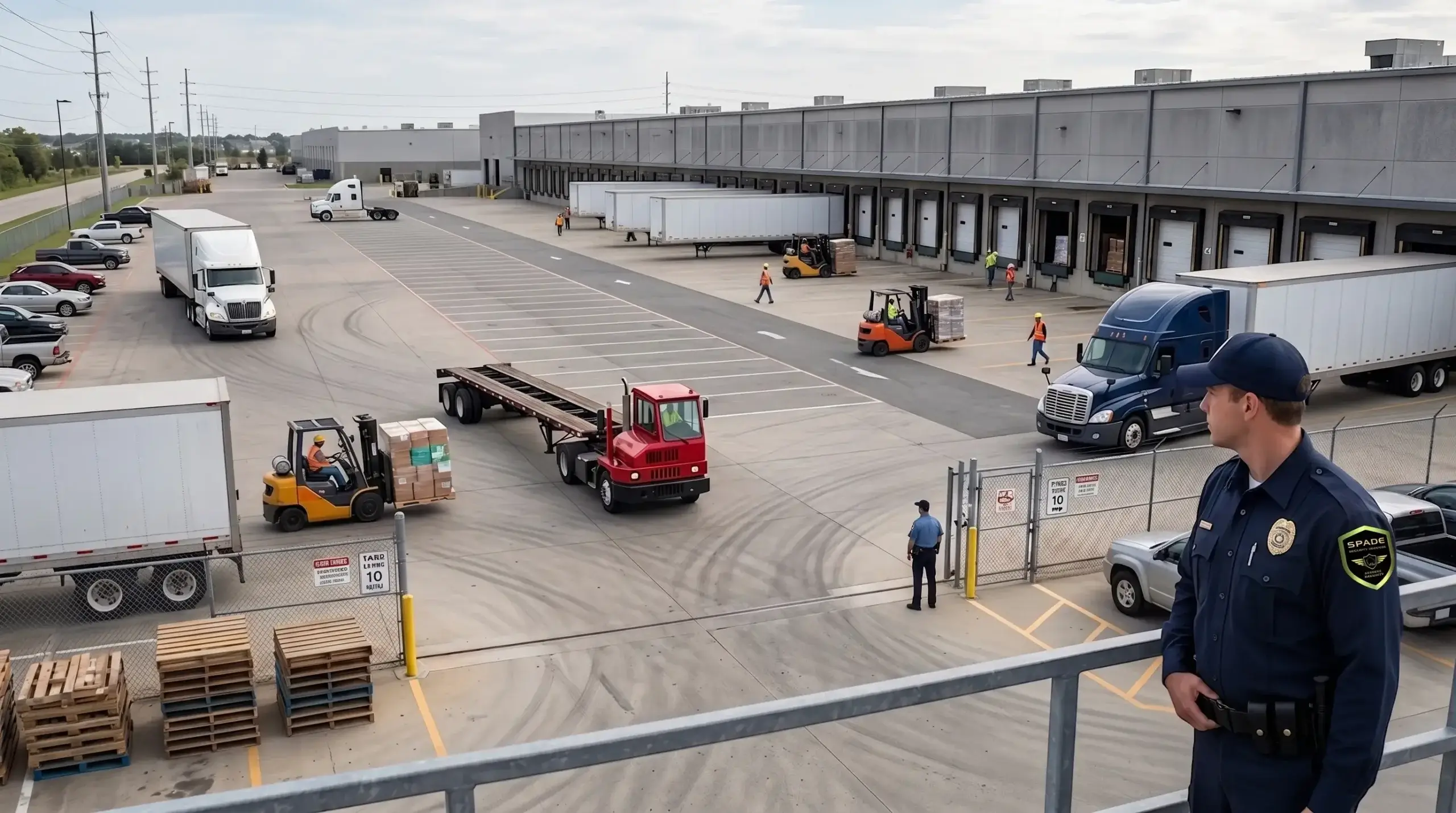
Warehouses and distribution facilities operate around the clock. cTrucks arrive. Loads are staged. Trailers sit overnight. Drivers come and go. Yard activity changes by the hour. When visibility drops, your operation becomes harder to protect.
Unauthorized Yard Access
Unverified vehicles, unknown individuals, and unauthorized access around loading areas and storage yards can create opportunities for theft and other security incidents.
Poor Vendor Communication
A security vendor that doesn’t communicate clearly leaves operations managers chasing answers instead of managing the facility.
After-Hours Visibility Gaps
Large yards and distribution facilities can have extensive perimeters, remote areas, parked trailers, and access points that are difficult to monitor continuously after normal operating hours.
Operational Disruption
A stolen trailer, compromised load, or security incident can create more than a security problem. It can delay shipments, interrupt operations, and force management into emergency response mode.
When Security Fails, Operations Pay the Price.
For a distribution or operations manager, security isn’t separate from the operation. It’s part of keeping trucks moving, inventory protected, and the facility running.
A compromised yard creates questions.
A missing trailer creates delays.
A poorly communicated incident creates another problem for management to solve.
SPADE approaches logistics security with that operational reality in mind.
Security Built Around the Way Your Facility Operates.
Monitor the Yard
Maintain visibility across loading areas, trailer storage, perimeter zones, access roads, and other areas that require attention when normal operations wind down.
Control Facility Access
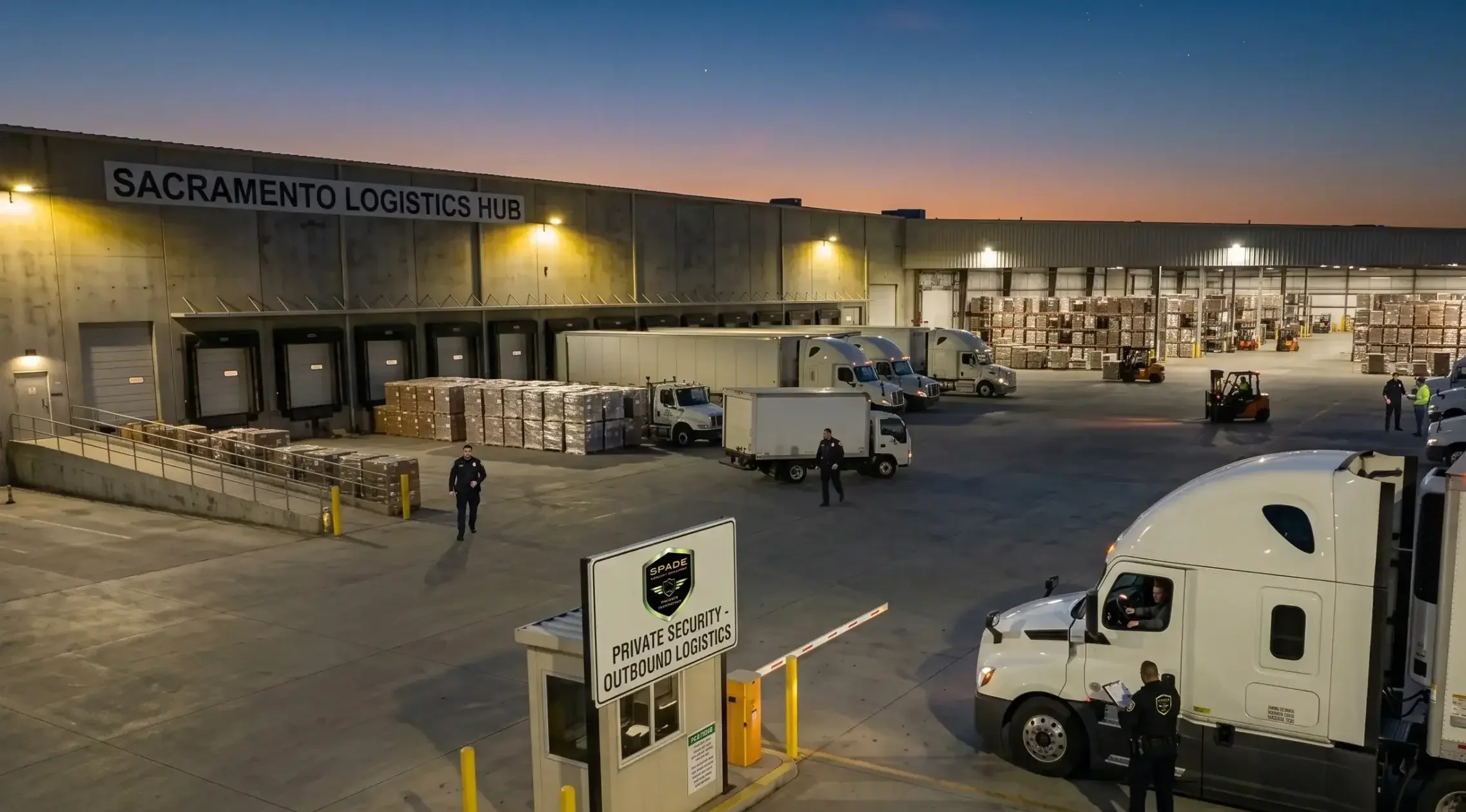
Security procedures can support verification of inbound and outbound activity, scheduled pickups, driver credentials, and other access requirements.
Identify Suspicious Activity
Detect unfamiliar vehicles, unauthorized individuals, unusual approaches, and other activity before a situation escalates.
Keep Operations Moving
The objective isn’t simply to document a security incident. It’s to reduce the interruptions, emergency calls, and operational consequences that follow one.
Your Facility Has a Rhythm.
Your Security Should Understand It.
A distribution center isn’t static.
The yard changes throughout the day. Loads are staged and moved. Trailers arrive and depart. Access points change with operations. Risk increases during overnight holds and unattended periods.
A security program that doesn’t understand that rhythm can become another operational complication.
SPADE works with logistics and warehousing operations that need security to support the way their facilities actually function—with coverage, communication, and response designed around operational conditions rather than a generic checklist.
The Goal Isn't More Security. It's Fewer Operational Problems.
An operations manager shouldn’t have to spend their day dealing with:
Unauthorized vehicles entering the yard
Unknown individuals around trailers or loading areas
Poor after-hours visibility
Missing or delayed security reports
Repeated emergency calls
Security vendors who don't communicate
Incidents that interrupt normal operations
The SPADE Advantage
Security Built for Logistics Operations
01
OPERATIONS-READY SECURITY TEAMS
Security personnel who understand the realities of active logistics environments—including trucks, trailers, loading areas, drivers, deliveries, and constantly changing facility conditions.
02
INTELLIGENT FACILITY COVERAGE
Security coverage positioned around the areas that matter most—including gates, yards, trailer storage, loading zones, access roads, and vulnerable perimeter areas.
03
PROACTIVE THREAT IDENTIFICATION
Identify suspicious vehicles, unauthorized access, unusual activity, and perimeter vulnerabilities before they escalate into operational incidents.
0
Delivering trusted security services for over 22 years.
+ years
0
Proudly serving and protecting over 98 active clients.
+clients
0
Maintaining a 96% client satisfaction rate.
% Rate
How
Operations
Managers
Measure
Security
That
Works
Security shouldn't be measured by how many guards are on-site or how many cameras are installed.
It should be measured by what changes because SPADE is there.
01
Yard Visibility
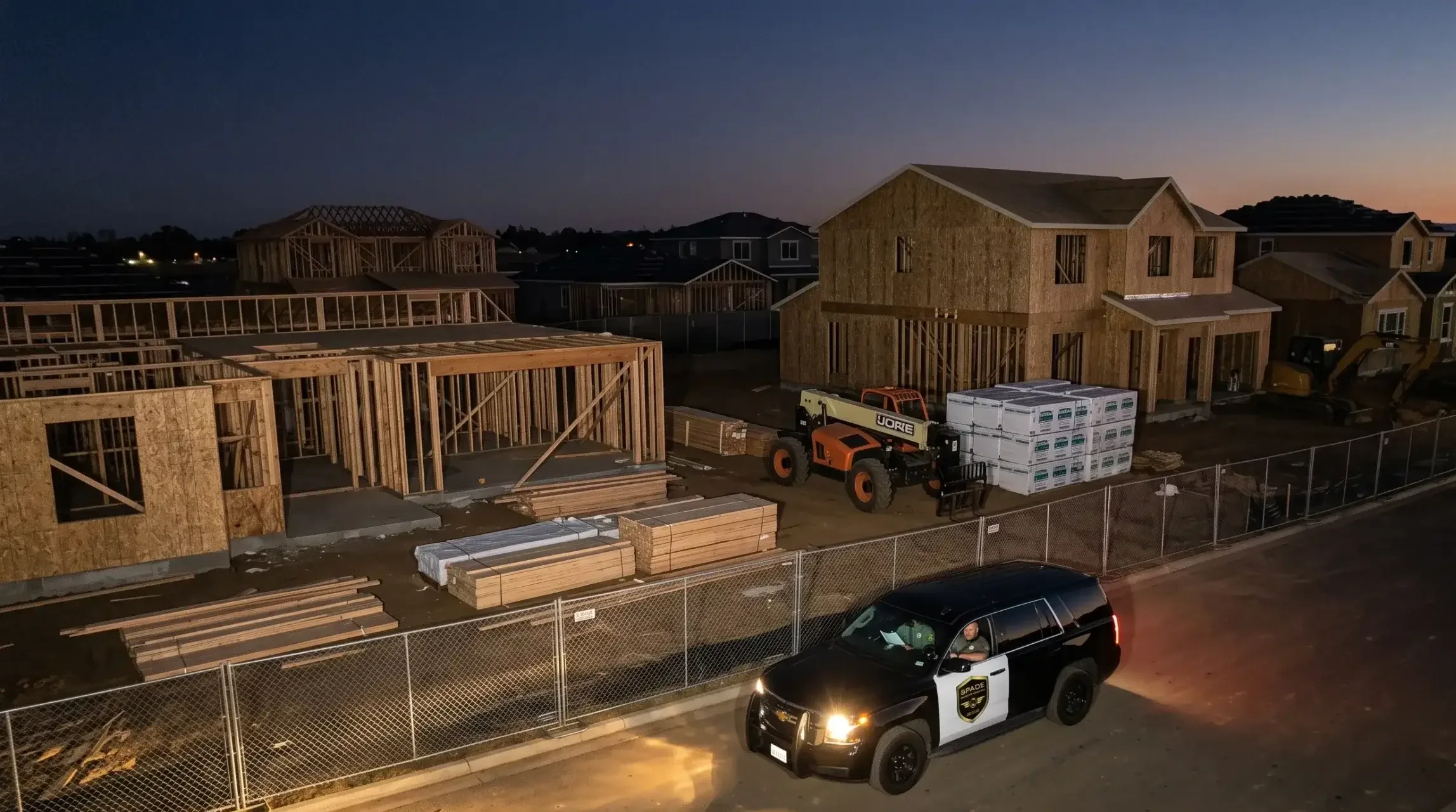
Maintain visibility across fencing, access roads, storage areas, temporary entrances, restricted areas, and other locations that change as construction progresses.
02
Access Control
Strengthen control over inbound and outbound activity through documented verification procedures for drivers, carriers, scheduled pickups, and facility access.
03
Asset & Cargo Protection
Reduce exposure around trailers, staged loads, inventory, equipment, and other high-value assets within the facility and yard.
04
After-hours Security
Identify suspicious vehicles, unauthorized individuals, unusual approaches, and other activity before they develop into larger incidents.
05
Earlier Threat Identification
Identify suspicious activity earlier and coordinate a rapid response before an intruder has time to steal equipment, damage property, or leave the site.
06
Operational Communication
Receive clear documentation and timely communication about incidents, observations, access activity, and security concerns.
07
Operational Continuity
Measure security by what it helps prevent: stolen trailers, compromised loads, unauthorized access, emergency disruptions, and unnecessary management intervention.
Our Useful Articles
Stay Ahead of the
Curve in
Logistics & Warehousing
Cargo Theft Prevention in Sacramento: Why Most Warehouse Security Programs Fail Before the Truck Leaves the Yard
Don't Let a Security Incident Disrupt the Operation.
Your facility is built around movement. Trucks need to move. Loads need to move. Inventory needs to move. Security problems shouldn’t stop that. SPADE helps logistics and warehousing operations improve visibility, identify suspicious activity earlier, and respond before security problems become operational disruptions.
Have Questions About
Logistics & Warehousing Security?
How does SPADE protect a warehouse or distribution facility after hours?
SPADE can combine security patrols, remote monitoring, intelligent surveillance, and response capabilities to maintain visibility when normal facility operations decrease.
Can SPADE help control access to our yard?
Yes. Security procedures can include documented verification for inbound and outbound loads, driver identification, scheduled pickup confirmation, and carrier credential verification.
How does SPADE handle overnight trailer and load security?
Security coverage can incorporate randomized patrol patterns during overnight holds, helping prevent predictable patrol schedules from being easily anticipated.
How does SPADE communicate security incidents?
SPADE can maintain incident documentation covering anomalies, unfamiliar vehicles, unknown individuals, access activity, and other observations so operational teams have a running record rather than isolated reports.
Can SPADE provide documentation for our security program?
Yes. SPADE’s logistics security approach includes detailed activity reporting covering security activity, observations, and access events.