
Apartment Complex Security in Sacramento
Author
Pranil Shankar
Post Date
June 10, 2026
Views
169
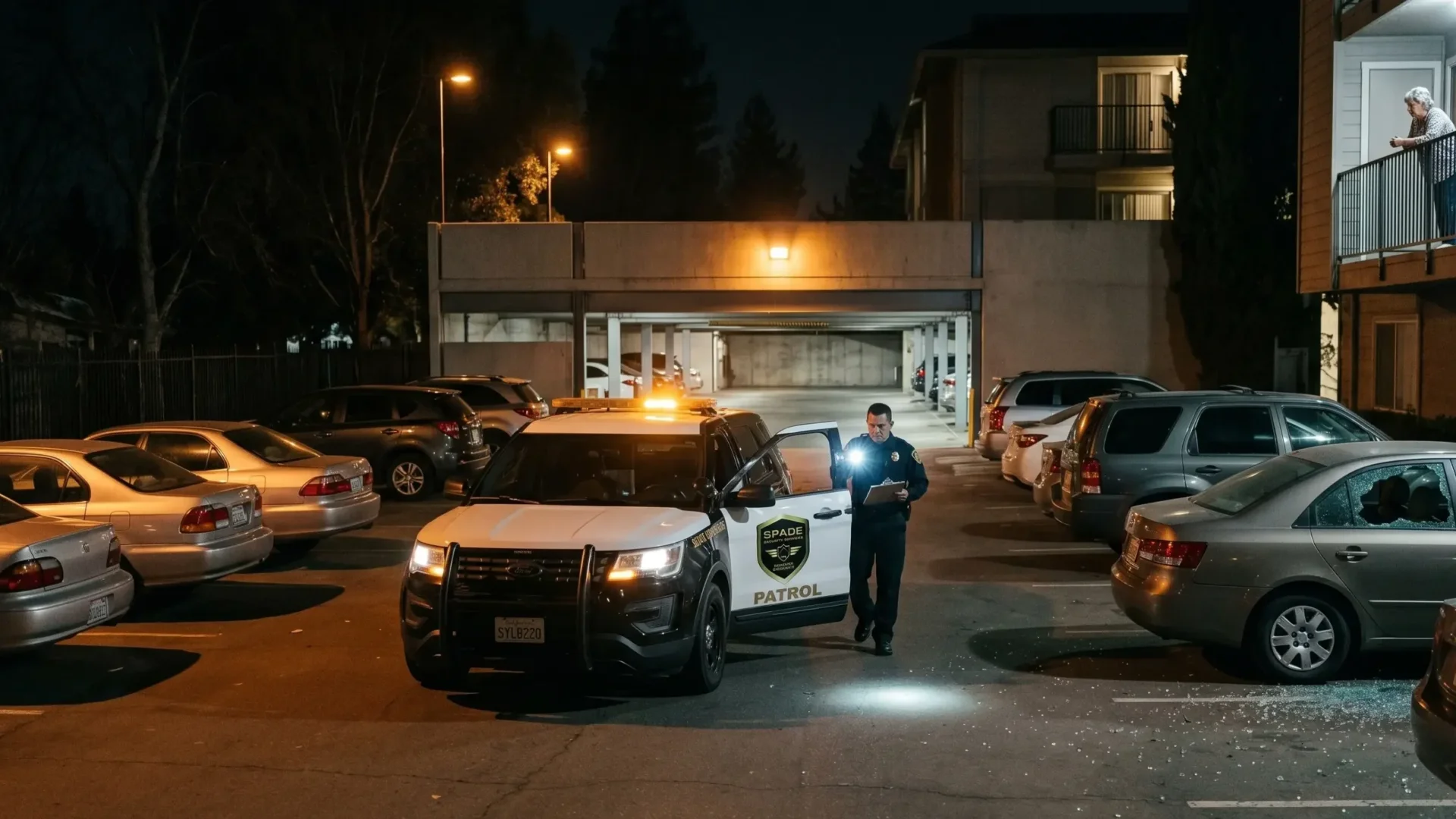
Your residents signed a lease. They agreed to the monthly rate, the pet policy, and the parking rules. What they did not sign away was the reasonable expectation that where they sleep at night is safe.
That expectation is legally significant in California, and it is operationally significant for every apartment complex manager in Sacramento, Elk Grove, and Rancho Cordova who carries accountability for what happens on the property between the hours their office is staffed and the hours it reopens.
In 2026, multifamily properties across Sacramento County are navigating a specific tension: residents and prospective tenants have rising expectations for visible security, while operating budgets are under pressure from rising costs across every line item. The managers who resolve that tension most effectively are not the ones who eliminate security spending to preserve margin — they are the ones who target security investment precisely at the hours, locations, and incident types that drive the highest liability and resident satisfaction impact.
This post explains what California law requires of apartment complex managers on security, what residents in Sacramento and Elk Grove expect based on market conditions in 2026, and what security programs mid-size multifamily properties are using to meet both standards.
What Is an Apartment Complex Manager’s Legal Obligation for Resident Safety in California?
California premises liability law requires landlords and property managers to maintain rental properties in a habitable and reasonably safe condition. That obligation extends to common areas — parking lots, lobbies, laundry rooms, pool areas, walkways — that the landlord controls and maintains.
The legal standard is foreseeability. If a crime type has occurred at your property or at comparable properties in your area, that crime type is foreseeable — and a failure to take reasonable preventive measures is the basis for negligence liability when a resident is harmed.
Courts in California have held apartment complex owners and managers liable for criminal acts committed against tenants in common areas when the evidence showed that the harm was foreseeable and security measures were inadequate. The defining factors in those cases are consistent: prior incidents at the property, complaints from residents that were documented but not addressed, and the absence of professional security measures that were standard for comparable properties in the market.
The practical implication for Sacramento apartment managers is straightforward. If your property has experienced vehicle break-ins, trespassing, package theft, or resident safety incidents, those incidents establish the foreseeability of future similar events. A documented, professional response to those incidents — including a contract with a licensed security provider — creates the record that demonstrates you took the obligation seriously.
What Security Incidents Are Most Common at Sacramento Apartment Complexes in 2026?
Understanding the specific incident types that drive liability and resident dissatisfaction at Sacramento multifamily properties allows managers to allocate security resources precisely rather than broadly.
Vehicle break-ins in parking structures and surface lots are the most frequently reported security incident at apartment complexes across Sacramento County. Resident complaints about vehicle theft and break-in accumulate faster than almost any other category and create a visible, ongoing demonstration of inadequate security that affects lease renewals and online reviews simultaneously.
Trespassing and unauthorized access at controlled entry points — particularly at gated communities where the gate mechanism provides a false sense of security — is the second most common category. Gates fail. Codes get shared. Pedestrian entry points at gated communities are routinely accessed by individuals who tailgate authorized residents. A guard who monitors and documents access at controlled entry points during high-risk hours is what makes a gated community functionally secure rather than just visually reassuring.
Package theft in lobbies and mail areas has become one of the most frequent resident complaints at multifamily properties as e-commerce volume has increased. Securing mail and package delivery areas during peak delivery hours is a low-cost security intervention with high resident satisfaction impact.
Domestic disturbances escalating in common areas and parking lots create the most acute liability exposure for apartment managers. A situation that begins inside a unit and moves to a common area requires a trained physical presence — not a call to a maintenance line. An escalating situation in a parking lot at 10 p.m. that results in an injury before law enforcement arrives is the scenario that generates the most significant legal and reputational consequences for an apartment complex.
What Security Program Elements Make the Most Impact for Sacramento Apartment Complexes?
The highest-return security investments for multifamily properties in Sacramento consistently fall into three categories.
Evening and overnight mobile patrol with documented lot checks. For apartment complexes where full overnight static staffing is not cost-justified, mobile patrol with documented parking lot checks during the highest-risk evening and overnight hours provides meaningful deterrence and the incident log that management needs for both insurance purposes and resident communication. A patrol officer who visits a complex three to five times between 9 p.m. and 5 a.m. and documents the condition of the parking lot, common areas, and entry points on each visit is creating a security record that a property without patrol cannot produce.
After-hours static coverage at gated entry points during highest-risk periods. For larger complexes where tailgating at the gate creates ongoing unauthorized access problems, a guard positioned at the pedestrian entry during evening hours — typically 8 p.m. to midnight — closes the gap that automated gate systems cannot address. Residents see the coverage. Unauthorized individuals encounter a human barrier. And documented access logs create a record for any subsequent incident investigation.
Rapid response capability from a security provider with local patrol presence. The most important question for any apartment complex manager evaluating security providers is not whether they can staff a guard. It is how quickly they can dispatch a patrol officer in response to a resident emergency call outside of scheduled patrol hours. A security company with local patrol presence in Sacramento County and documented response time commitments for non-emergency dispatch is a fundamentally different resource than a company that only provides scheduled shift coverage.
How Do I Justify Security Spending to My Ownership Group for My Sacramento Apartment Complex?
The conversation with ownership is most productive when it frames security spending as liability management rather than amenity spending.
The relevant comparison is not the cost of security versus zero. It is the cost of security versus the expected liability exposure from documented incidents that go unaddressed. For a Sacramento apartment complex that has experienced vehicle break-ins, trespassing, or escalated domestic incidents in common areas, each incident type establishes the foreseeability threshold that makes the next incident a potential liability claim.
A written security assessment from a licensed provider, documenting current incident history and recommended countermeasures with associated costs, gives ownership the information structure to make a risk-adjusted business decision. That document also becomes part of the property’s risk management record — useful for insurance carrier conversations and for any subsequent review of how management responded to known risks.
Why Sacramento Multifamily Managers Choose SPADE Security Services
SPADE Security Services is a veteran-owned, DVBE-certified physical security company headquartered in Rocklin, California. We provide mobile patrol, evening static coverage, and after-hours rapid response for apartment complexes and multifamily properties across Sacramento County — including Elk Grove, Rancho Cordova, Sacramento, and surrounding communities.
Our multifamily security programs are built around your specific property — your parking structure layout, your entry point vulnerabilities, your incident history, and the resident safety outcomes your ownership group expects. We generate patrol logs and incident reports in formats your insurance carrier and ownership group can use directly.
We offer a complimentary property security assessment for apartment complexes and multifamily properties in Sacramento County. We walk your property, review your current security posture, and give you a written recommendation your management team can evaluate and act on.
Schedule Your Free Property Assessment
Frequently Asked Questions
What is a landlord’s liability if a resident is assaulted in a common area of a Sacramento apartment complex?
Under California premises liability law, a landlord may be held liable for a criminal assault in a common area if the assault was foreseeable — based on prior incidents at the property, known criminal activity in the area, or complaints from residents that were not addressed. The landlord’s liability is evaluated against the standard of reasonable care: what security measures did the landlord take, and were they appropriate given the foreseeable risk? A professional security program with documented patrol activity and incident reports is the primary evidence of reasonable care. Properties without any documented security response to known incident patterns face the greatest exposure.
How do Sacramento residents find out about security incidents at apartment complexes they are considering?
Prospective residents in Sacramento increasingly research apartment complexes through Google reviews, Yelp, Nextdoor, and apartment listing platform reviews before signing a lease. Security incidents — particularly vehicle break-ins, trespassing, and safety concerns raised by current residents — appear in these reviews frequently and affect both leasing velocity and rental rate achievement. Properties with a documented security program and visible guard presence generate materially different reviews than comparable properties without it. For managers focused on occupancy and revenue, the resident satisfaction case for security investment is as strong as the liability case.
Does mobile patrol actually deter crime at Sacramento apartment complexes, or just document it?
Mobile patrol with unpredictable timing provides meaningful deterrent effect at multifamily properties in Sacramento. Documented research on patrol deterrence in residential environments consistently shows that the presence of visible patrol — even periodic rather than continuous — reduces opportunistic crime rates. The deterrent mechanism is uncertainty: a potential offender who does not know when a patrol vehicle will appear at a parking lot cannot safely plan around it. Properties where patrol timing is completely predictable see less deterrence than properties where patrol includes randomized visits outside the scheduled pattern.
What is the right security coverage for a 200-unit apartment complex in Elk Grove?
A 200-unit apartment complex in Elk Grove would typically benefit from a security program that includes evening and overnight mobile patrol with documented parking lot checks, static coverage at the primary pedestrian entry point during peak evening hours (typically 8 p.m. to midnight), and a rapid-response dispatch capability for resident-reported incidents outside scheduled patrol hours. The specific schedule and staffing level depends on the property’s incident history, parking structure configuration, and current entry control systems. SPADE provides coverage recommendations based on a property walk and incident history review for each specific complex.
Can SPADE Security Services serve apartment complexes that are part of a larger portfolio in Sacramento County?
Yes. SPADE Security Services provides security programs for individual properties and for portfolio management clients with multiple apartment complexes across Sacramento County and Placer County. For portfolio clients, we develop consistent reporting formats, centralized incident documentation, and flexible scheduling that can be managed across multiple properties. Contact us to discuss your portfolio structure and how we build a coordinated security program across your locations.
SPADE Security Services | Rocklin, CA | Veteran-owned | DVBE certified | Serving Placer, Sacramento & El Dorado counties
Licensed by the California Bureau of Security and Investigative Services

