
A Doral Burglary Crew Jammed the Alarms and Wheeled $200,000 in Phones Out in Recycling Bins. It Took Six Months to Catch Them.
Author
Pranil Shankar
Post Date
September 18, 2026
Views
115
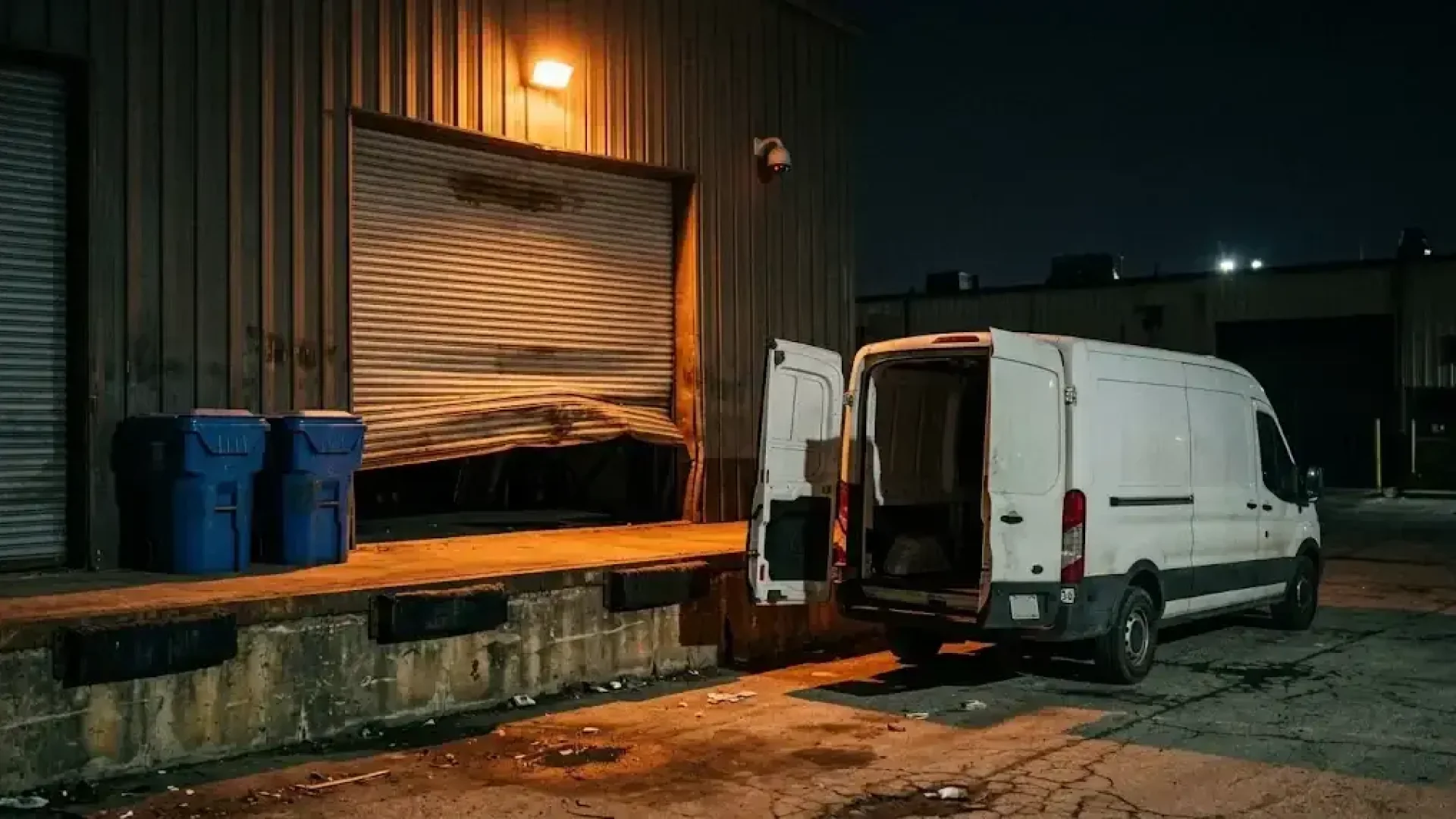
The alarm didn’t fail. It was never allowed to call anyone.
Security takeaway: A wireless alarm that can be jammed is a lock with the key taped to the door. Warehouse security has to assume a professional crew’s first move is to cut the signal — and build detection that doesn’t depend on a single radio getting through.
Six Months, Three Counties, Two Vans
From February through the end of August 2026, a three-man crew worked warehouse districts across Miami-Dade and Broward counties — Doral, Sweetwater, and Medley among them — according to the Miami-Dade Sheriff’s Office Organized Crimes Bureau.
On August 11 they hit Universal Freight Logistics on NW 78th Avenue in Doral and left with roughly $200,000 in iPhones and Samsung phones. On August 27 a 2013 Ford E-250 cargo van, valued at about $58,000, was stolen from Global Turbine Services on NW 33rd Street. Detectives had already put a black Dodge Caravan under surveillance the day before.
On August 31, investigators watched the crew casing a warehouse district near NW 108th Avenue and NW 17th Street and moved in. The driver struck a sheriff’s sergeant with the minivan, pinning his foot under a tire, before all three were taken into custody. One of the men had a 2016 federal conviction for a multistate burglary ring.
Their kit, per investigators: a crowbar, gloves and ski masks, swapped license plates, cargo vans, blue and black recycling bins to wheel merchandise out, and an electronic signal jammer to knock out cellular alarms and GPS.
Those are the documented facts, per Local 10’s report on the arrests.
What a Jammer Does to an Alarm System
Most modern commercial alarm panels report over cellular. Many cameras record to the cloud over Wi-Fi or LTE. Both are only as good as the radio link between the building and whoever is supposed to respond.
A jammer floods that link with noise. The sensors still trip. The panel still tries to dial. Nothing arrives. From the monitoring center’s side, the site simply goes quiet — which, at 2 a.m. on a Tuesday, looks exactly like a site where nothing is happening.
Jammers are illegal to sell, own, or use in the United States. That has not made them hard to buy, and it did not stop this crew from carrying one for six months.
Why Recycling Bins Are the Smartest Part of the Plan
Bins on wheels are the most ordinary object in a warehouse district. A van backed up to a roll-up door with bins going in and out looks like a night shift, a cleanout, or a tenant moving stock — to a neighbor, to a passing patrol, and to a camera clip reviewed the next morning.
The crew was not hiding. It was blending into what a loading dock is supposed to look like. That is a detection problem no alarm sensor solves; it takes a person who knows what normal looks like on that block at that hour.
Who Carries This Exposure
- Freight forwarders and 3PLs holding high-value electronics overnight between arrival and dispatch
- Small-bay industrial parks where dozens of tenants share one street and secure themselves separately
- Any warehouse whose alarm and cameras depend entirely on cellular or Wi-Fi to reach the outside world
- Operators who keep vans and box trucks parked on-site with keys or fobs inside the building
Five Things to Check Before the Weekend
1. Ask your alarm provider one question: what happens when the signal disappears?
A supervised system treats a lost connection as an event and calls it in. An unsupervised one treats silence as peace. If nobody can tell you which you have, assume the second.
2. Give the alarm a second way out.
Dual-path communicators (cellular plus wired internet), or a hardwired line, mean one jammer does not end the conversation.
3. Keep camera footage on the premises, not only in the cloud.
Jammed cameras that only upload will have nothing to upload. Local recording on a wired recorder keeps the evidence even when the uplink is gone.
4. Treat your own vehicles as inventory.
This crew stole a company van to do its work. Vans parked outside with keys inside the building are both a target and a tool.
5. Put a person on the block at night.
Someone who patrols the district knows which units run night shifts and which don’t. Bins going into a van at a dark unit at 2 a.m. is only obvious to a person who was there at 2 a.m. last week.
Detection Is Only as Good as Its Path Out
Every layer this crew defeated was a layer that worked in isolation. Sensors detected. Panels dialed. Cameras recorded. None of it reached a human being in time, because the whole chain hung on radios that a device in a minivan could silence.
Detection has to get out of the building. Response has to arrive. Documentation has to connect the August break-in to the February one. That is the difference between an alarm and a security program — and it is the reason SPADE’s Scan, Patrol, Advise, Defend, Encrypt model treats communication and response as layers in their own right, not assumptions.
How SPADE Approaches Warehouse Districts
SPADE Security Services builds logistics and warehouse programs on the assumption that the first thing a serious crew attacks is the connection. That means supervised, dual-path alarm monitoring that raises a flag when a site goes dark; remote video with human verification and on-site recording; and licensed mobile patrol that covers a district, not just a single door, during the hours these crews actually work.
The goal is simple: when the signal disappears, someone notices — and someone shows up.
Schedule a Warehouse Security Consultation
SPADE Security Services | Rocklin, CA | Veteran-owned | DVBE certified
Serving Placer, Sacramento, and El Dorado counties
Licensed by the California Bureau of Security and Investigative Services
PPO121804
What is a signal jammer, and are they legal?
A jammer broadcasts radio noise on the frequencies alarms, cameras, and GPS trackers use, so their signals never reach the network. Selling, owning, or using one is illegal in the United States under federal law — which has not kept them out of burglary crews’ hands.
How do I know if my alarm can be jammed?
Ask whether the system is supervised — meaning the monitoring center is alerted when the panel stops checking in — and whether it has a second communication path such as wired internet. A cellular-only, unsupervised panel goes silent under jamming and nobody is told.
Do cameras still help if the alarm is jammed?
Only if they record locally. Cameras that exist solely to upload to the cloud lose their footage along with their connection. A wired recorder on the premises preserves the evidence, and a monitored feed with human verification can still trigger a response if it has its own path out.
Why would burglars use recycling bins?
Because they look like work. Bins rolling between a warehouse door and a van are so ordinary that neighbors, cameras, and passing patrols read them as routine — which is exactly why a district needs someone who knows what routine actually looks like at that hour.
SPADE Security Services | Rocklin, CA | Veteran-owned | DVBE certified | Serving Placer, Sacramento & El Dorado counties
Licensed by the California Bureau of Security and Investigative Services

