
The Weeks Between "Building Complete" and "Tenant Moved In" Are the Most Expensive Gap in Commercial Construction. Most Owners Don't Staff for It.
Author
Pranil Shankar
Post Date
August 5, 2026
Views
169
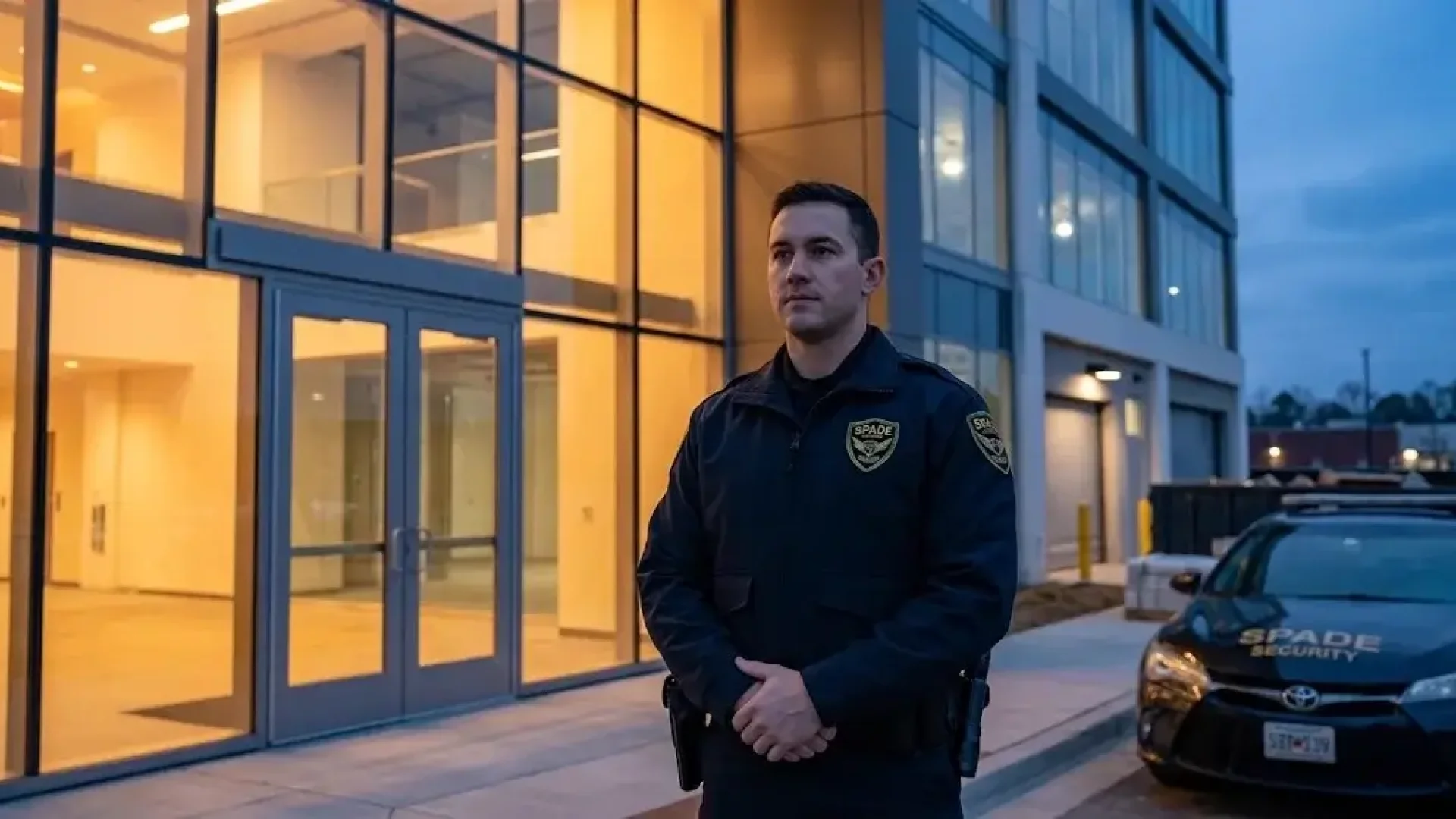
A Finished Building Still Isn’t a Secured Building. Property Owners Are Discovering That the Most Expensive Vulnerability Opens the Day Construction Ends.
The final weeks before occupancy are among the most vulnerable periods in the entire construction timeline. Copper wiring, HVAC units, electrical panels, and other newly installed building systems sit exposed while permanent staff, tenants, and round-the-clock supervision have not yet arrived. Across the San Francisco Bay Area, Silicon Valley, Sacramento, and the Central Valley, newly constructed warehouses and commercial buildings have become frequent targets of theft, vandalism, and trespassing during exactly this window — and vandalism damage during a copper strip can run into the thousands of dollars for materials worth only a small fraction of that in scrap value.
The findings indicate that the highest-risk period for a commercial building isn’t during active construction, when crews and equipment are on site daily — it’s the gap after the shell and systems are complete but before a tenant has moved in and taken over the space.
What Happened?
According to commercial construction risk analysts, shell and spec buildings — along with suites mid-way through tenant improvement buildout — are increasingly targeted in the handoff period between substantial completion and occupancy, when criminals know valuable systems have been installed but a full-time presence hasn’t started.
Typical incidents involve:
- Copper wiring and electrical panel theft from completed but unoccupied suites
- HVAC unit and rooftop equipment theft or stripping for scrap value
- Vandalism to finished lobbies, restrooms, and tenant-improvement buildout
- Trespassing and unauthorized occupancy in completed but unstaffed buildings
- Theft of fixtures, appliances, and materials staged for final punch-list work
Unlike active-construction theft, this window is uniquely exposed because general contractor security measures have typically wound down while property management or tenant security hasn’t yet started.
Newly constructed commercial and industrial buildings across Northern California — including Placer, Sacramento, and El Dorado counties — carry meaningful exposure during this handoff, particularly on projects where tenant move-in has been delayed relative to the original schedule.
Because the responsibility for security during this period often falls between the general contractor, the developer, and the incoming tenant, affected owners may not detect a loss until a final walkthrough or the tenant’s own move-in inspection.
Why It Matters to Construction and Commercial Property Operators
The trend highlights a security issue developers, general contractors, and property managers cannot afford to overlook:
The security measures that protected your project during construction typically end before a new layer of protection has begun.
Modern handoff-period protection may rely on multiple layers of protection, including:
- Extended site security through substantial completion and into occupancy
- Surveillance cameras with documented review during the vacancy window
- Secured openings and commercial-grade hardware on completed entrances
- Lighting programs that simulate occupancy in finished spaces
- Documented handoff procedures between contractor, developer, and tenant security
- After-hours patrol scheduled specifically around the completion-to-occupancy window
- Coordination with local law enforcement on newly completed properties
Each layer can provide protection.
But each layer also needs to be maintained, monitored, and considered as part of the project’s overall security strategy through the full handoff period — not just during active construction.
The Security Gap
A construction site can have daily supervision and site security through the final punch list, only for that coverage to end the day a certificate of occupancy is issued — while the tenant’s own security program doesn’t start until move-in day, weeks later.
That creates a gap between construction-phase security and occupancy-phase security.
The question is no longer simply whether the building was secure while it was being built.
The more important question is who is responsible for the building’s security in the weeks after construction ends and before a tenant physically occupies the space.
What Construction and Commercial Property Operators Should Review
1. Know the Exact Length of the Handoff Window
Maintain an accurate record of substantial completion dates, expected tenant move-in dates, and who is contractually responsible for security during the gap between them.
2. Monitor Regional Theft and Vandalism Patterns
Handoff-period theft patterns are regional and project-specific. Developers should have a process for tracking contractor association bulletins, insurance carrier notifications, and reports from similar projects nearby.
3. Protect the Physical Building During the Gap
Technology should complement — not replace — physical security measures such as secured openings, lighting, documented patrol, and equipment immobilization specifically scheduled for the post-completion, pre-occupancy period.
4. Identify High-Value Exposure and Connect Detection With Response
Determine which systems, suites, and completion phases carry the greatest theft and vandalism risk and whether those areas receive appropriate monitoring during the handoff window.
A motion alert inside a newly completed suite has limited value if nobody is responsible for verifying it and determining what happens next.
Establish a clear handoff response process with defined roles and escalation contacts spanning contractor, developer, and tenant.
The Bigger Lesson
The handoff-period theft data is not simply a story about copper wiring.
It demonstrates how commercial construction security is becoming increasingly dependent on both construction-phase protection and occupancy-phase protection working together, without a gap between them.
Protecting a newly completed commercial building requires more than securing it during active construction.
Developers and property managers need to understand where contractor security responsibility ends, where tenant security responsibility begins, and how technology connects to a physical security presence for everything in between.
A More Complete Approach to Construction and Commercial Property Security
SPADE Security Services helps developers, general contractors, and property managers build security programs around the actual conditions of their projects — including the handoff period between completion and occupancy.
Our approach can combine intelligent surveillance, remote monitoring, licensed security personnel, patrol, visible deterrence, access management, and response based on the project’s specific exposure.
The objective is not to replace one security layer with another.
It is to make the layers work together.
Because protecting a newly completed building isn’t simply about securing it during construction.
It’s about making sure the different layers of protection work together in the weeks after the crews leave and before the tenant moves in.
Your building is most exposed the moment it’s finished. Your security strategy should account for that.
Schedule a Construction Security Consultation
SPADE Security Services | Rocklin, CA | Veteran-owned | DVBE certified
Serving Placer, Sacramento, and El Dorado counties
Licensed by the California Bureau of Security and Investigative Services
PPO121804
What should a developer do first after discovering theft or vandalism in a newly completed building?
Developers should preserve all available camera footage, document the damage with photos and timestamps, file a police report, and notify the insurance carrier and incoming tenant immediately.
They should also engage their security partner to evaluate whether the handoff-period security plan needs to be revised for remaining or future projects.
Does having construction-phase site security mean a newly completed building is protected until move-in?
No. Construction-phase security typically ends at substantial completion, before the handoff window even begins.
Developers should also consider extended patrol, secured openings, camera coverage, and a documented handoff plan that spans contractor, developer, and tenant responsibility.
Why does the completion-to-occupancy window matter for commercial construction security?
Newly installed copper, HVAC, and fixtures sit exposed in a building that no longer has daily construction crews but doesn’t yet have tenant staff or security.
Without appropriate monitoring and response during this window, theft or vandalism may not be identified until the tenant’s own move-in walkthrough.
How can developers and property managers improve their handoff-period security strategy?
Start by identifying the exact length of the gap between substantial completion and tenant occupancy for each project.
From there, security technology, personnel, monitoring, patrol, and response can be coordinated around that specific window rather than assuming construction-phase or tenant-phase security already covers it.
SPADE Security Services | Rocklin, CA | Veteran-owned | DVBE certified | Serving Placer, Sacramento & El Dorado counties
Licensed by the California Bureau of Security and Investigative Services


THE ACE IN SECURITY
Menu
Stay Ahead of Security Threats
Get Spade Security’s latest insights, incident breakdowns and company news in your inbox — only when we publish.
Text size: 100%