
K-12 Campuses Have Achieved Near-Universal Access Control. The Incidents Still Getting Through Involve People Who Were Already Let In.
Author
Pranil Shankar
Post Date
August 24, 2026
Views
131
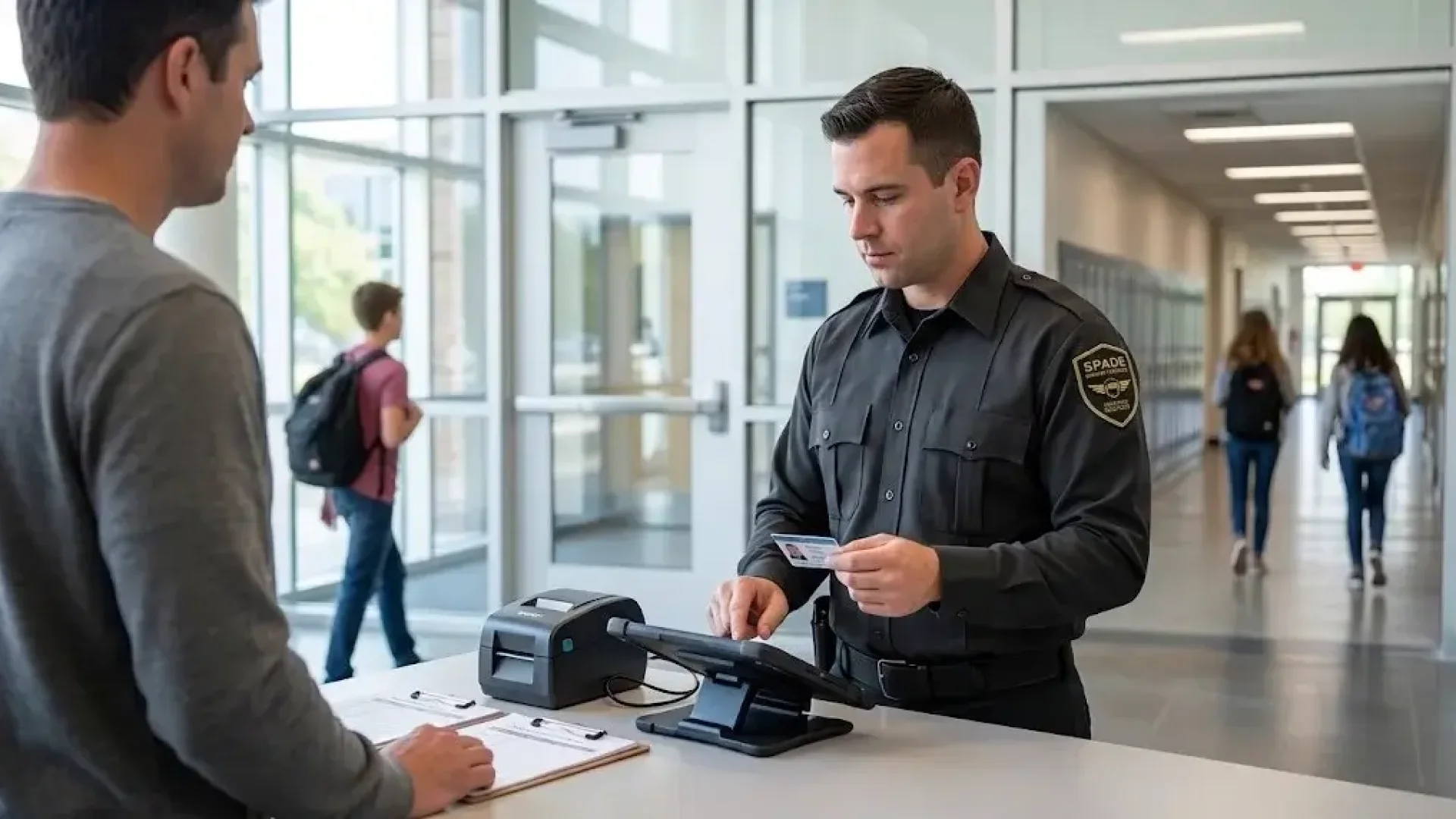
Nearly Every School in the Country Now Locks Its Doors. The Incidents Still Making Headlines Involve People the Building Already Let In.
According to National Center for Education Statistics data, 97 percent of U.S. public schools now control access to buildings during school hours and 97 percent require visitors to sign or check in and wear a badge, with 93 percent using security cameras to monitor the campus — among the highest security-technology adoption rates of any facility type. Yet monitoring and responding to incidents remains the top use of that security data, cited by the large majority of K-12 and higher-education security professionals, and a meaningful share of documented incidents involve individuals who already held legitimate access — students, former students, parents, or attendees at a sanctioned event — rather than unauthorized intruders. Budget limitations remain the top challenge cited by 74 percent of K-12 respondents in closing the remaining gaps.
The findings indicate that the security question at most campuses is no longer simply who can get through the front door — it is what happens once someone with legitimate access does something they shouldn’t.
What Happened?
According to campus security analysts, access control and visitor check-in adoption at K-12 schools has plateaued near saturation over the past several years, while the category of incidents actually reaching students and staff has shifted toward people the system was never designed to stop.
Typical exposures include:
- Non-custodial parents or family members with a legitimate reason to be near campus escalating a dispute
- Former students or expelled individuals attempting to re-enter familiar buildings
- Visitors and vendors who badge in correctly but move beyond their authorized areas
- Sanctioned events — athletics, performances, open houses — where crowd volume outpaces staff verification capacity
- Staff and contractor credentials that remain active after employment ends
Unlike a straightforward break-in, these incidents are difficult to prevent through access control alone because the person involved was never flagged as unauthorized at the point of entry.
Northern California school districts — including those across Placer, Sacramento, and El Dorado counties — carry the same exposure pattern as districts nationally, with high access-control adoption paired with limited staffing to monitor behavior once someone is inside.
Because most of these incidents involve someone with a plausible reason to be present, districts may not recognize the pattern until an incident report, a parent complaint, or a post-event review surfaces it.
Why It Matters to Education Operators
The trend highlights a security issue school and district administrators cannot afford to overlook:
The technology controlling who enters your campus may not extend to monitoring what happens once someone is legitimately inside.
Modern K-12 security programs may rely on multiple layers of protection, including:
- Controlled building access and visitor badge systems
- Security cameras with documented review
- Staff and contractor credential management
- Event-specific staffing and crowd management plans
- Emergency drills and written response procedures
- Coordination with local law enforcement and school resource officers
- Behavioral threat assessment and reporting programs
Each layer can provide protection.
But each layer also needs to be maintained, monitored, and considered as part of the campus’s overall security strategy — particularly at the moments when volume or familiarity lowers scrutiny.
The Security Gap
A campus can require every visitor to badge in at the front office while a school event three hours later draws hundreds of people through a side gate that nobody is specifically staffing.
That creates a gap between credentialed access and sustained monitoring.
The question is no longer simply whether the campus controls who enters.
The more important question is whether the people who are on campus — visitors, staff, contractors, and event attendees alike — remain accounted for and monitored for the duration of their presence.
What Education Operators Should Review
1. Know Who Is On Campus at Any Given Moment
Maintain an accurate, real-time record of visitors, contractors, and staff on site — and reconcile that record against every event, after-hours activity, and shift change.
2. Monitor Behavioral and Threat Assessment Advisories
Campus risk patterns evolve with the school calendar. Districts should have a process for tracking law enforcement bulletins, state education safety guidance, and reports from staff and students that signal elevated risk.
3. Protect the Physical Campus During High-Volume Events
Technology should complement — not replace — physical security measures such as event-specific staffing, controlled entry points during games and performances, visible security presence, and coordinated crowd management.
4. Identify High-Value Exposure and Connect Detection With Response
Determine which entry points, events, and time windows carry the greatest risk of legitimate-access incidents and whether those moments receive appropriate staffing and verification.
A camera alert during a crowded event has limited value if nobody is responsible for verifying it and determining what happens next.
Establish a clear incident response process with defined roles and escalation contacts.
The Bigger Lesson
The access-control saturation data is not simply a story about badge readers and visitor logs.
It demonstrates how K-12 campus security is becoming increasingly dependent on both credentialed entry and sustained behavioral monitoring.
Protecting a campus requires more than controlling the front door.
Districts need to understand what those systems do, where they stop being effective, and how technology connects to a physical security presence for the moments — events, dismissals, disputes — when access alone isn’t the deciding factor.
A More Complete Approach to Education Security
SPADE Security Services helps school districts and education operators build security programs around the actual conditions of their campuses, calendars, and events.
Our approach can combine intelligent surveillance, remote monitoring, licensed security personnel, patrol, visible deterrence, access management, and response based on the campus’s specific exposure.
The objective is not to replace one security layer with another.
It is to make the layers work together.
Because protecting a campus isn’t simply about badging visitors in at the front office.
It’s about making sure the different layers of protection work together when the gym is full, the parking lot is crowded, and the front office can’t see every gate.
Your campus is safest when access control and active monitoring work together. Your security strategy should reflect that.
Schedule an Education Security Consultation
SPADE Security Services | Rocklin, CA | Veteran-owned | DVBE certified
Serving Placer, Sacramento, and El Dorado counties
Licensed by the California Bureau of Security and Investigative Services
PPO121804
What should a district do first after a legitimate-access incident on campus?
Administrators should ensure the safety of students and staff, preserve camera footage and visitor logs, document the incident, and notify law enforcement and the affected families as required.
They should also engage their security partner to evaluate whether the exploited gap is limited to one event or reflects a broader staffing and monitoring pattern.
Does having badge access and visitor sign-in mean a campus is fully protected?
No. Badge access and visitor sign-in are one layer of protection.
Districts should also consider event-specific staffing, behavioral threat assessment programs, credential deactivation procedures, camera review, and an established response process.
Why do school events matter for campus security planning?
Athletics, performances, and open houses draw volumes of people that exceed a campus’s normal daily traffic, often through entry points that are not the primary badge-controlled doors.
Without event-specific staffing and monitoring, incidents may not be identified until after a dispute has escalated or an unauthorized area has been accessed.
How can school districts improve their overall security strategy?
Start by identifying the entry points, events, and time windows carrying the greatest legitimate-access risk.
From there, security technology, personnel, monitoring, patrol, and response can be coordinated around the district’s actual calendar and campus footprint.
SPADE Security Services | Rocklin, CA | Veteran-owned | DVBE certified | Serving Placer, Sacramento & El Dorado counties
Licensed by the California Bureau of Security and Investigative Services

