
Multi-Tenant Office Buildings Are Bleeding Money Through a Security Layer Most Operators Don't Even Track. Key Control Is the Quiet Liability.
Author
Pranil Shankar
Post Date
August 21, 2026
Views
134
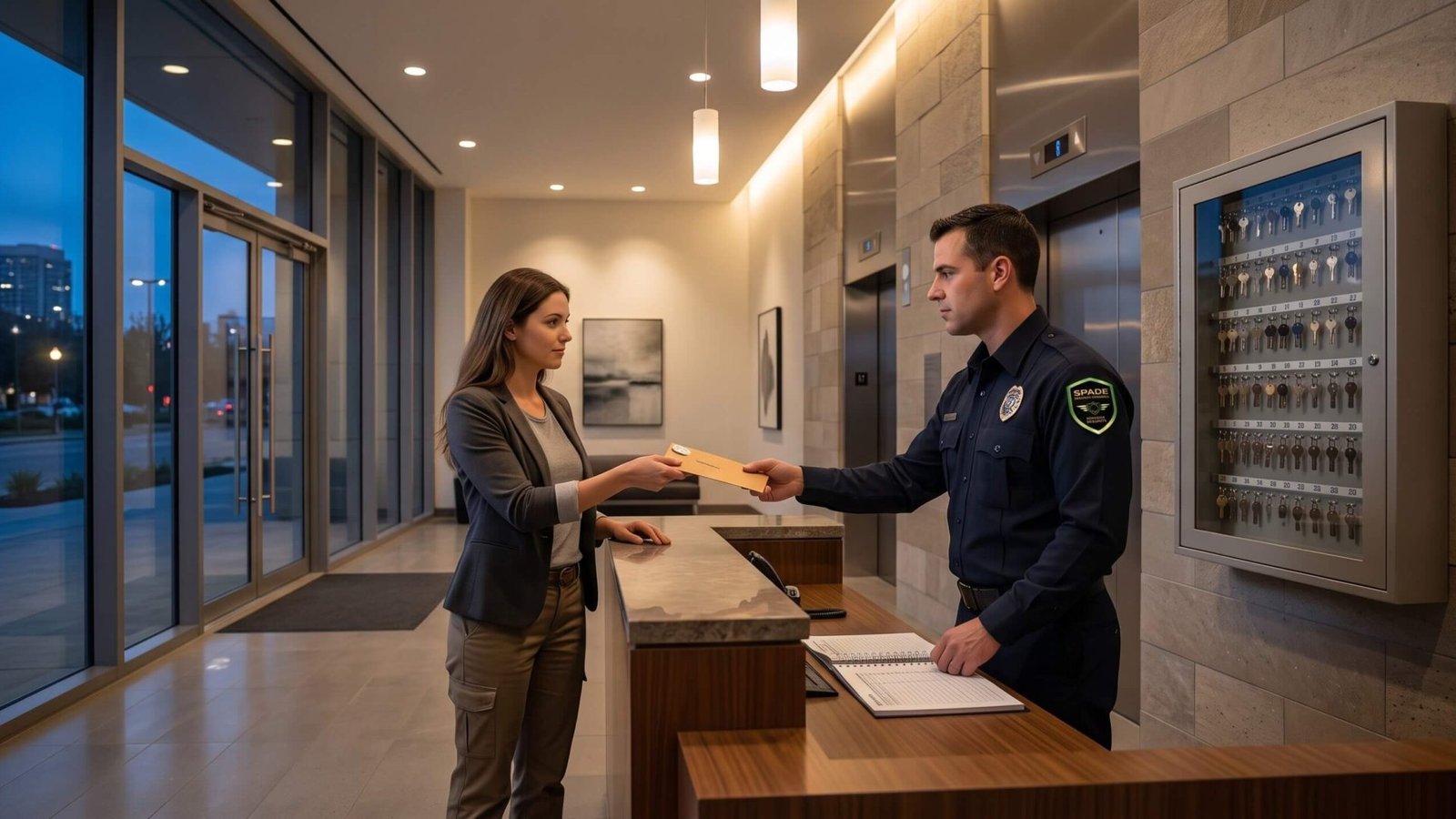
A Key That Was Never Returned Doesn’t Stop Opening the Door. Property Managers Are Discovering That Untracked Credentials Are a Six-Figure Liability Hiding in Plain Sight.
Rekeying a single commercial lock typically runs $100 to $233 plus a trip charge — and for a multi-tenant office building with hundreds of doors, those costs compound every time a tenant moves out or a key goes missing. Large-scale rekeying projects triggered by lost master keys have run as high as $500,000 in documented cases, according to locksmith and access-control industry reporting.
The findings indicate that the most common path of unauthorized access is not forced entry, credential hacking, or alarm defeat — it is a key that should have been collected, deactivated, or never issued in the first place.
What Happened?
According to building operations analysts, the key control problem at multi-tenant office buildings has expanded with the rise of flexible leasing, sublease activity, and after-hours access programs that distribute keys, fobs, and temporary credentials across an increasingly mobile tenant population.
Typical exposures include:
- Tenant move-outs where keys are not returned or accounted for
- Sublease arrangements where key issuance bypasses building management
- Cleaning and after-hours contractor keys that are copied or retained
- Magnetic stripe and older RFID credentials that can be cloned with off-the-shelf tools
- Master key systems that expose the entire building when a single sub-master is compromised
Unlike camera or alarm issues, key control failures are typically discovered only after the unauthorized access has already occurred.
Suburban and mid-rise office properties — including those across Northern California — carry meaningful exposure as flexible leasing and sublease activity distribute keys and credentials across an increasingly mobile tenant population.
Because most unauthorized access is not reported as a crime, affected buildings may not detect the pattern until a tenant complaint, audit, or incident surfaces the issue.
Why It Matters to Commercial Property Operators
The trend highlights a security issue multi-tenant office operators cannot afford to overlook:
The technology controlling access to your building may be compromised by keys and credentials you don’t even know have been issued.
Modern office operations may rely on multiple layers of protection, including:
- Master key systems with documented issuance and return tracking
- Tenant-managed access control with periodic credential rotation
- Visitor management systems with documented host accountability
- Contractor and cleaning crew credentialing procedures
- Surveillance cameras with documented review of access events
- After-hours patrol and tenant escorts where applicable
- Periodic rekeying and credential audits
Each layer can provide protection.
But each layer also needs to be maintained, monitored, and considered as part of the property’s overall security strategy.
The Security Gap
A multi-tenant office building can have controlled elevator access while a former tenant’s key sits in a residential drawer three counties away, still programmed to open a suite door.
That creates a gap between access control issuance and access control recovery.
The question is no longer simply whether the building has controlled access.
The more important question is whether the credentials granting access are continuously tracked, recovered, and deactivated as tenant relationships change.
What Commercial Property Operators Should Review
1. Know What Keys and Credentials Are Outstanding
Maintain an accurate record of every key, fob, and credential issued to tenants, contractors, and staff — and reconcile that record against every move-out, sublease, and contract change.
2. Monitor Tenant and Contractor Credentialing Advisories
Credential cloning and key duplication techniques continue to evolve. Operators should have a process for tracking security association bulletins, manufacturer notifications, and tenant feedback that signal elevated risk in specific suites or floors.
3. Protect the Physical Building
Technology should complement — not replace — physical security measures such as commercial-grade lock sets, master key system audits, suite-level access controls, controlled elevator programming, and after-hours patrol.
4. Identify High-Value Exposure and Connect Detection With Response
Determine which suites, floors, and tenant relationships carry the greatest credential exposure and whether those areas receive appropriate monitoring and verification.
A tenant move-out alert has limited value if nobody is responsible for verifying key return and credential deactivation.
Establish a clear move-out and contract change response process with defined roles and escalation contacts.
The Bigger Lesson
The key control data is not simply a story about locks.
It demonstrates how commercial property security is becoming increasingly dependent on both access technology and credential lifecycle management.
Protecting a multi-tenant office building requires more than installing an access control system.
Operators need to understand what those systems do, how credentials are issued and recovered, where vulnerabilities exist, and how technology connects to the physical security operation across every tenant transition.
A More Complete Approach to Commercial Property Security
SPADE Security Services helps commercial property operators build security programs around the actual conditions of their buildings, tenants, and credential lifecycles.
Our approach can combine intelligent surveillance, remote monitoring, licensed security personnel, patrol, visible deterrence, access management, and response based on the property’s specific exposure.
The objective is not to replace one security layer with another.
It is to make the layers work together.
Because protecting a multi-tenant office building isn’t simply about issuing access cards.
It’s about making sure the different layers of protection work together when a tenant moves out and the next one hasn’t moved in yet.
Your access control is only as strong as your credential recovery. Your security strategy should reflect that.
Schedule a Commercial Property Security Consultation
SPADE Security Services | Rocklin, CA | Veteran-owned | DVBE certified
Serving Placer, Sacramento, and El Dorado counties
Licensed by the California Bureau of Security and Investigative Services
PPO121804
What should a property manager do first after discovering unauthorized access via a former credential?
Managers should preserve all available camera footage and access logs, file a police report, notify the affected tenant, and immediately audit the credential inventory for the involved suites and floors.
They should also engage their security partner to evaluate whether rekeying, credential rotation, or master key system review is required across the property.
Does having an access control system and tenant-issued fobs mean an office building is fully protected?
No. Access control systems and tenant fobs are one layer of protection.
Operators should also consider master key tracking, move-out credential recovery, contractor credentialing, periodic rekeying, surveillance review of access events, and an established response process.
Why does after-hours security matter for multi-tenant office buildings?
Office suites, common areas, and tenant storage spaces remain exposed during after-hours and weekend windows, especially when former credentials remain active.
Without appropriate monitoring and response, unauthorized access may not be identified until after a suite has been entered, materials have been removed, or tenant data has been compromised.
How can commercial property operators improve their overall security strategy?
Start by identifying the suites, floors, and tenant transitions carrying the greatest credential exposure.
From there, security technology, personnel, monitoring, patrol, and response can be coordinated around the property’s actual tenant lifecycle and credential management workflow.
SPADE Security Services | Rocklin, CA | Veteran-owned | DVBE certified | Serving Placer, Sacramento & El Dorado counties
Licensed by the California Bureau of Security and Investigative Services

