
Vacant Commercial Properties Are Being Squatted and Stripped Faster Than Owners Can Respond. The Window Between Vacancy and Incident Is Now Measured in Days.
Author
Pranil Shankar
Post Date
August 17, 2026
Views
136
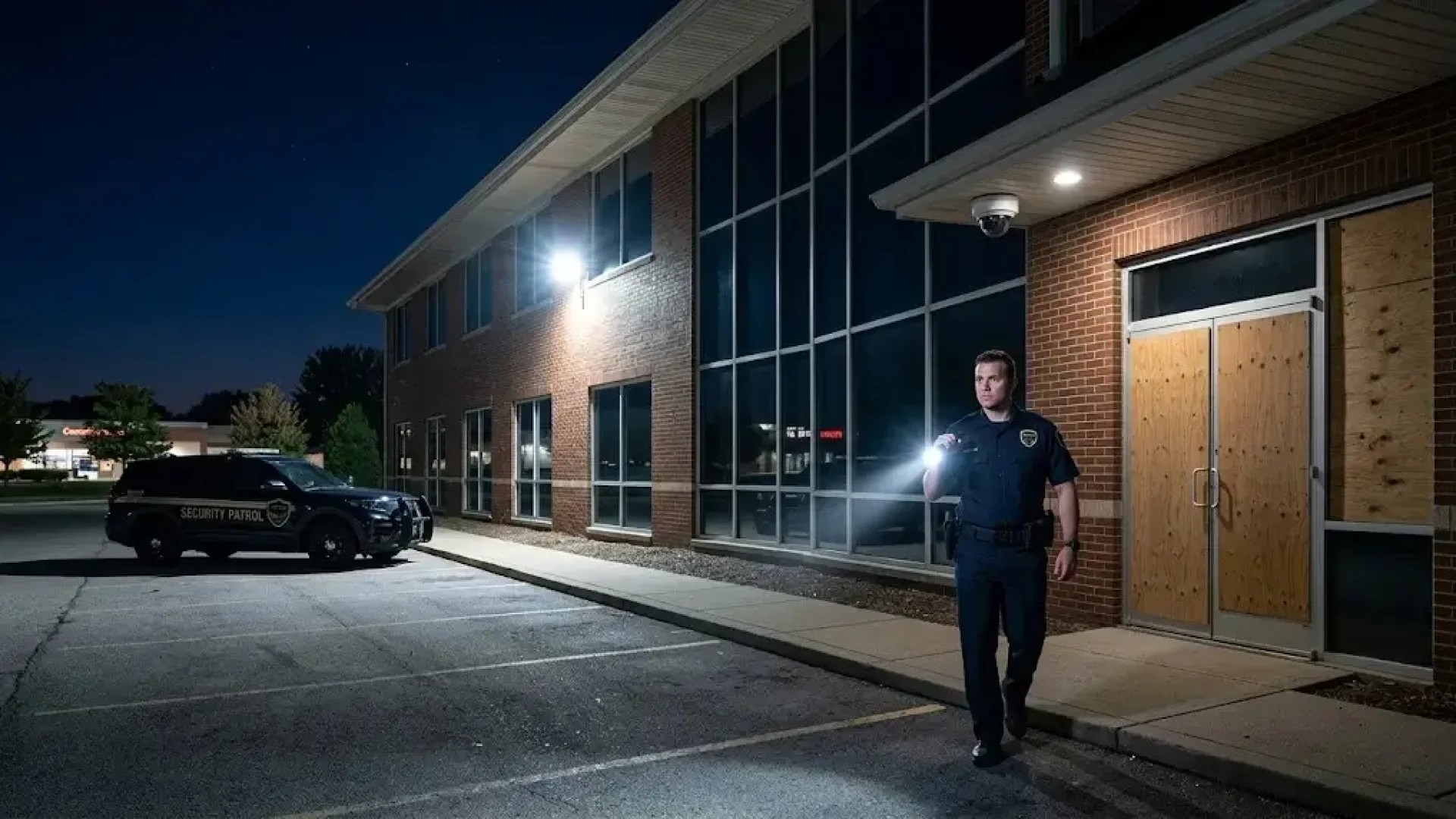
An Empty Building Doesn’t Stay Empty for Long. Property Owners Are Discovering That Squatters and Scrappers Move in Within Days of the Last Tenant Leaving.
Vacant commercial properties see fire incidents at a rate 60 percent higher than occupied buildings, according to National Fire Protection Association data, and arson accounts for 14 percent of all structure fires in unoccupied commercial buildings. When break-ins occur, structural damage alone averages an estimated $15,000 per incident, based on FBI property crime data — before accounting for stripped copper, plumbing, and HVAC components.
The findings indicate that the security challenge has shifted from managing active tenants to managing properties that are technically between leases — and that most commercial insurance policies begin excluding or restricting vandalism and theft coverage once a building has sat vacant for 60 days.
What Happened?
According to commercial real estate investigators, organized and opportunistic groups are increasingly targeting vacant properties because the systems supporting occupied buildings are typically turned off or reduced during the transition period.
Typical incidents involve:
- Unauthorized occupancy in vacant suites, loading areas, and basement spaces
- Stripping of copper wiring, plumbing fixtures, and HVAC components
- Vandalism of lobby finishes, elevator interiors, and tenant improvements
- Use of vacant properties for unauthorized activities creating liability exposure
- Graffiti and structural damage during extended vacancy periods
Unlike incidents at active buildings, vacant property incidents frequently go undetected until the next owner visit, broker walk-through, or neighbor complaint.
Suburban office, retail, and flex properties — including those across Northern California — carry meaningful exposure as commercial vacancy rates remain elevated in many markets.
Because most incidents are not reported immediately, affected owners may not detect the loss until the property is re-leased, sold, or scheduled for demolition.
Why It Matters to Commercial Property Operators
The trend highlights a security issue owners and property managers cannot afford to overlook:
The technology protecting an active building is typically reduced or removed when the building goes vacant.
Modern vacancy management may rely on multiple layers of protection, including:
- Vacant-property surveillance cameras with documented review
- Boarded or secured openings with commercial-grade hardware
- Lighting programs that simulate occupancy
- After-hours patrol and randomized visit schedules
- Alarm systems with cellular backup and remote verification
- Coordination with local law enforcement and code enforcement
- Documentation and chain-of-custody for removed fixtures and materials
Each layer can provide protection.
But each layer also needs to be maintained, monitored, and considered as part of the property’s overall vacancy security strategy.
The Security Gap
A commercial property can have active cameras and alarm during occupancy while sitting dark and unmonitored for the weeks between the last tenant exit and the next broker showing.
That creates a gap between occupancy security and vacancy security.
The question is no longer simply whether the building was secure when occupied.
The more important question is whether the property remains secure when the systems supporting occupancy are turned off.
What Commercial Property Operators Should Review
1. Know the Vacancy Exposure for Each Property
Maintain an accurate record of vacancy dates, expected re-leasing timelines, and the security posture in place during the transition. Build the plan around the longest realistic vacancy window.
2. Monitor Vacant Property Crime Advisories
Vacancy crime patterns are regional and seasonal. Operators should have a process for tracking insurance carrier notifications, code enforcement bulletins, and neighborhood association reports that signal elevated risk in specific submarkets.
3. Protect the Physical Building
Technology should complement — not replace — physical security measures such as commercial-grade lock sets, secured openings, perimeter control where applicable, lighting programs, and documented patrol during the vacancy period.
4. Identify High-Value Exposure and Connect Detection With Response
Determine which openings, systems, and components carry the greatest removal risk and whether those areas receive appropriate monitoring, verification, and incident response during the vacancy window.
A motion alert inside a vacant suite has limited value if nobody is responsible for verifying it and determining what happens next.
Establish a clear vacancy response process with defined roles and escalation contacts.
The Bigger Lesson
The vacant property data is not simply a story about empty buildings.
It demonstrates how commercial property security is becoming increasingly dependent on both occupancy protection and vacancy protection.
Protecting a commercial property requires more than managing the active building.
Operators need to understand what those systems do, how they transition between phases, where vulnerabilities exist, and how technology connects to the physical security operation when no one is occupying the property.
A More Complete Approach to Commercial Property Security
SPADE Security Services helps commercial property operators build security programs around the actual conditions of their buildings, vacancies, and tenant transitions.
Our approach can combine intelligent surveillance, remote monitoring, licensed security personnel, patrol, visible deterrence, access management, and response based on the property’s specific exposure.
The objective is not to replace one security layer with another.
It is to make the layers work together.
Because protecting a commercial property isn’t simply about managing the active building.
It’s about making sure the different layers of protection work together when the last tenant leaves and the property is most exposed.
Your property is most vulnerable between tenants. Your security strategy should account for that.
Schedule a Commercial Property Security Consultation
SPADE Security Services | Rocklin, CA | Veteran-owned | DVBE certified
Serving Placer, Sacramento, and El Dorado counties
Licensed by the California Bureau of Security and Investigative Services
PPO121804
What should a property owner do first after discovering a vacant property incident?
Owners should preserve all available camera footage, file a police report and code enforcement notification, document damage with photos and timestamps, and notify the insurance carrier immediately.
They should also engage their security partner to evaluate whether the vacancy security plan should be revised to close the exploited gap.
Does having cameras and an alarm system mean a vacant property is fully protected?
No. Vacant property cameras and alarms are one layer of protection — and they are often reduced or removed precisely when vacancy risk begins.
Owners should also consider commercial-grade lock sets, secured openings, lighting programs, patrol visits, after-hours monitoring, and an established response process.
Why does after-hours security matter for vacant properties?
Vacant properties remain exposed for the entire vacancy period, often for weeks or months depending on the leasing or sales pipeline.
Without appropriate monitoring and response, incidents may not be identified until after unauthorized occupancy, fixture stripping, or vandalism has already occurred.
How can commercial property operators improve their overall security strategy?
Start by identifying the properties, openings, and components carrying the greatest vacancy risk.
From there, security technology, personnel, monitoring, patrol, and response can be coordinated around the property’s actual transition timeline and vacancy exposure.
SPADE Security Services | Rocklin, CA | Veteran-owned | DVBE certified | Serving Placer, Sacramento & El Dorado counties
Licensed by the California Bureau of Security and Investigative Services

