
Parking Lot Crime Has Become the Leading Driver of Property Liability Claims at Commercial Real Estate. Most Operators Are Funding the Risk Without Realizing It.
Author
Pranil Shankar
Post Date
August 7, 2026
Views
136
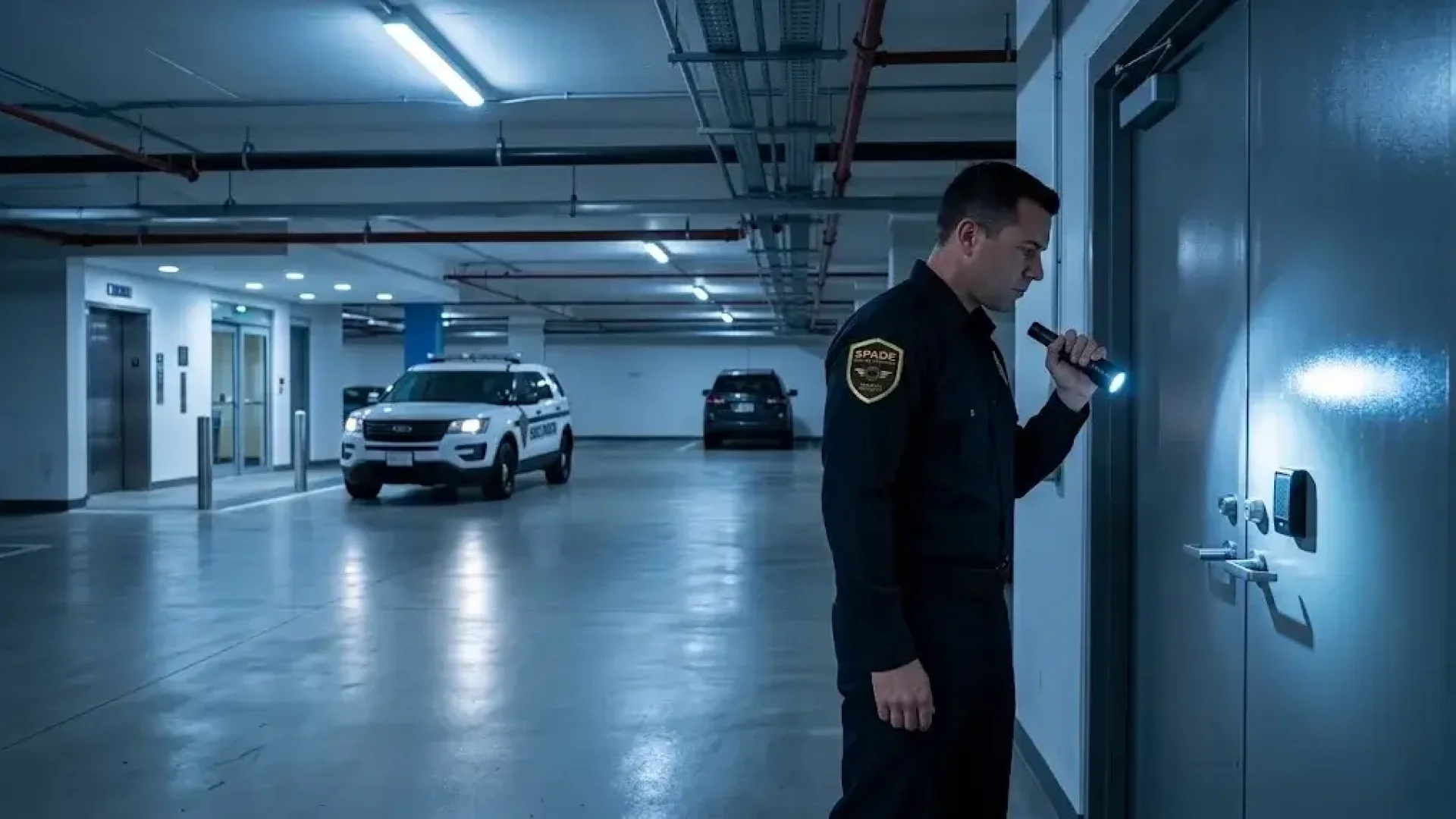
A Parking Lot Doesn’t Look Like a Liability Until the Claims Start Arriving. Commercial Property Insurers Say It’s Now the Single Biggest Driver of Payouts.
More than 7 percent of all violent victimizations in the United States occur in parking lots or garages, and parking facilities account for a documented 47 percent of all auto thefts, according to FBI crime data and industry loss tracking. Theft and related offenses in parking facilities cost an estimated $4.5 billion nationally each year, and negligent security settlements tied to parking-lot incidents routinely range from $55,000 to more than $500,000.
The findings indicate that the parking facility — not the building — is increasingly where the incident occurs and where the liability is determined.
What Happened?
According to insurance investigators, organized and opportunistic crime in commercial parking facilities has expanded beyond traditional vehicle break-ins to include assault, carjacking, catalytic converter theft, and organized retail crime facilitated through parking structures.
Typical incidents involve:
- Vehicle break-ins targeting valuables left in plain view
- Catalytic converter theft in under three minutes from parked vehicles
- Assault and carjacking in poorly lit garage levels and stairwells
- Organized retail crime using parking facilities as transfer points
- Vehicle tampering and key fob relay theft in unattended lots
Unlike street-level incidents, parking facility crime frequently occurs in spaces that are technically private property — creating liability questions that fall on the owner or operator.
Suburban office and retail parking structures — including those across Northern California — carry meaningful exposure as tenant traffic and vehicle inventory concentrate in facilities that were often designed primarily for capacity, not security.
Because most incidents are reported to police but rarely prosecuted, affected operators may not connect the rising claim count to the parking environment until renewal time.
Why It Matters to Commercial Property Operators
The trend highlights a security issue commercial property operators cannot afford to overlook:
The technology protecting your building may not extend to the asset driving your largest liability exposure.
Modern parking facilities may rely on multiple layers of protection, including:
- Surface and structure-mounted surveillance cameras
- Lighting design across levels, ramps, and stairwells
- Patrol and roving guard presence
- Access control at garage entries and elevator lobbies
- Emergency call stations on each level
- License plate recognition and vehicle tracking
- Coordination with local law enforcement
Each layer can provide protection.
But each layer also needs to be maintained, monitored, and considered as part of the property’s overall security strategy.
The Security Gap
A commercial property can have a fully staffed lobby while the parking structure one floor below has a documented dead zone where cameras don’t reach and lighting falls short.
That creates a gap between building security and arrival security.
The question is no longer simply whether the building is secure once the tenant is inside.
The more important question is whether the journey from the vehicle to the lobby is continuously protected.
What Commercial Property Operators Should Review
1. Know What the Parking Facility Actually Sees
Maintain an accurate record of camera coverage, lighting levels, and patrol frequency across every level and zone. Verify the documentation against a recent after-hours walk-through.
2. Monitor Liability and Claims Advisories
Parking-related claims evolve with regional crime patterns. Operators should have a process for tracking insurance carrier notifications, security association bulletins, and tenant feedback that signals elevated risk in specific zones.
3. Protect the Physical Facility
Technology should complement — not replace — physical security measures such as lighting upgrades, mirrored sight lines, controlled elevator access, signage, and roving patrol during high-risk hours.
4. Identify High-Value Exposure and Connect Detection With Response
Determine which levels, zones, and operating hours carry the greatest incident risk and whether those areas receive appropriate monitoring and verification.
A camera alert at a stairwell has limited value if nobody is responsible for verifying it and determining what happens next.
Establish a clear after-hours response process with defined roles and escalation contacts.
The Bigger Lesson
The parking liability data is not simply a story about one category of property.
It demonstrates how commercial property security is becoming increasingly dependent on both building protection and arrival protection.
Protecting a commercial property requires more than securing the lobby.
Operators need to understand what those systems do, how they extend across the property, where vulnerabilities exist, and how technology connects to the physical security operation from the moment a tenant or visitor parks.
A More Complete Approach to Commercial Property Security
SPADE Security Services helps commercial property operators build security programs around the actual conditions of their buildings, parking facilities, and tenant arrival patterns.
Our approach can combine intelligent surveillance, remote monitoring, licensed security personnel, patrol, visible deterrence, access management, and response based on the property’s specific exposure.
The objective is not to replace one security layer with another.
It is to make the layers work together.
Because protecting a commercial property isn’t simply about staffing the lobby.
It’s about making sure the different layers of protection work together from the parking facility to the tenant suite.
Your tenants arrive through your parking facility. Your security strategy should be built around that.
Schedule a Commercial Property Security Consultation
SPADE Security Services | Rocklin, CA | Veteran-owned | DVBE certified
Serving Placer, Sacramento, and El Dorado counties
Licensed by the California Bureau of Security and Investigative Services
PPO121804
What should a commercial property operator do first after a parking facility incident?
Operators should preserve all camera footage, file a police report, document the incident timeline against lighting and patrol records, and notify the insurance carrier immediately.
They should also engage their security partner to evaluate whether the exploited gap is limited to that level or extends across the facility.
Does having garage cameras and overhead lighting mean a parking facility is fully protected?
No. Garage cameras and overhead lighting are one layer of protection.
Operators should also consider emergency call stations, patrol presence, stairwell access control, license plate recognition, after-hours monitoring, and an established response process.
Why does after-hours security matter for parking facilities?
Parking structures and surface lots remain exposed after tenants and visitors leave the property, especially during overnight hours when most incidents occur.
Without appropriate monitoring and response, suspicious activity may not be identified until after a vehicle has been broken into, a converter has been cut, or an assault has occurred.
How can commercial property operators improve their overall security strategy?
Start by identifying the parking zones, levels, and hours carrying the greatest incident risk.
From there, security technology, personnel, monitoring, patrol, and response can be coordinated around the property’s actual arrival and departure patterns.
SPADE Security Services | Rocklin, CA | Veteran-owned | DVBE certified | Serving Placer, Sacramento & El Dorado counties
Licensed by the California Bureau of Security and Investigative Services

