
Port-Adjacent Drayage Theft Has Tripled Since 2024. Inland Warehouses Are Discovering the Risk Travels Up the Highway With the Container.
Author
Pranil Shankar
Post Date
August 3, 2026
Views
130
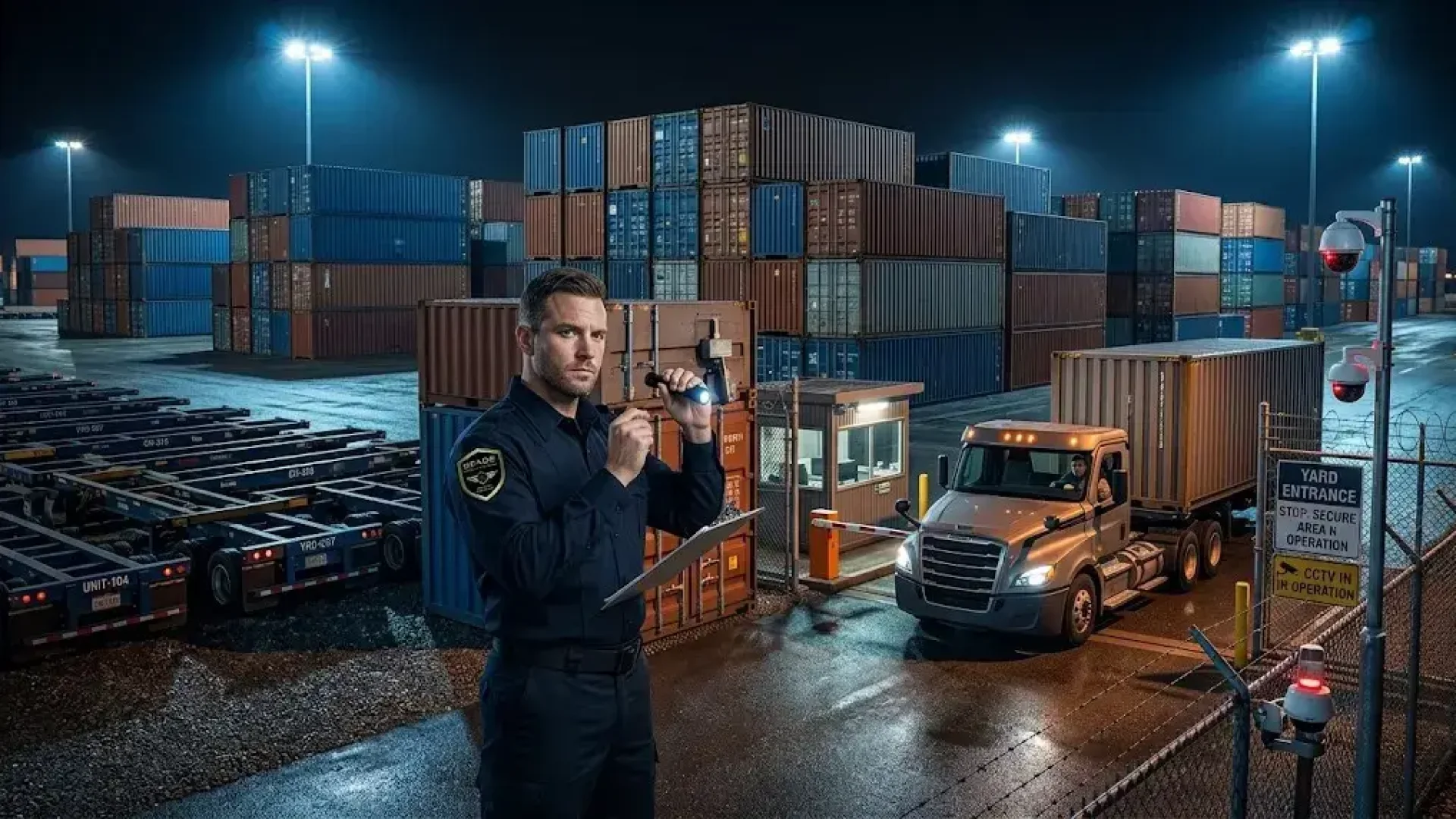
A Container Doesn’t Stop Being a Target Once It Clears the Port Gate. Inland Warehouse Operators Are Learning the Risk Follows the Freight Home.
Cargo theft losses more than doubled year-over-year to $304.6 million in the second quarter of 2026 alone, up from $135.7 million in Q2 2025, according to Verisk CargoNet’s supply chain crime tracking — even as the raw number of reported incidents fell 26 percent, reflecting a shift toward fewer, higher-value hits. The average value among thefts with a reported commodity value reached $564,009. Port drayage and consolidation facilities generate the highest volume of these custody-gap incidents, driven by short runs, frequent driver changes, and unattended trailer drops.
The findings indicate that the threat does not end at the port — it follows the container up the highway and into the inland warehouse yard.
What Happened?
According to supply chain investigators, organized groups are increasingly targeting drayage moves — the short-haul trucking of containers between ports and inland warehouses — because of predictable lane timing, container identification patterns, and the relative ease of removing a chassis from a yard overnight.
Typical operations involve:
- Surveillance of port terminal exit timing for high-value container lanes
- Tracking of chassis movements via public-facing freight visibility tools
- Impersonation of legitimate drayage carriers at inland drop yards
- Removal of containers and chassis during overnight dwell periods
- Re-routing to secondary yards and cross-dock operations outside the original carrier’s network
Unlike traditional cargo theft, drayage theft exploits the visibility of modern freight tracking itself — the same data legitimate operators use to plan pickups is used to plan thefts.
According to investigators, the most affected corridors run through the Ports of Los Angeles and Long Beach, the Port of Oakland, the Port of Savannah, and the Port of New York and New Jersey, with inland yards in California’s Central Valley and Northern California representing a growing share of reported incidents.
Because containers are routinely misrouted or delayed, affected operators may not detect a theft until the consignee reports a missing unit several days later.
Why It Matters to Logistics Operators
The trend highlights a security issue inland warehouse operators cannot afford to overlook:
The technology tracking your freight can also be used to plan its theft.
Modern drayage operations may rely on multiple layers of protection, including:
- Container and chassis GPS tracking
- Driver and carrier verification at the gate
- Yard perimeter fencing and lighting
- Surveillance cameras with documented review
- Sealed container and chassis documentation
- After-hours alarm and intrusion monitoring
- Yard security personnel and mobile patrol
Each layer can provide protection.
But each layer also needs to be maintained, monitored, and considered as part of the operation’s overall security strategy.
The Security Gap
An inland warehouse can have GPS on every container while the chassis parked overnight in the back row is removed by a truck that arrived with valid paperwork for a different unit.
That creates a gap between freight tracking and yard integrity.
The question is no longer simply whether the container is tracked.
The more important question is whether the people, vehicles, and paperwork moving containers in and out are continuously verified against an actual operational standard.
What Inland Warehouse Operators Should Review
1. Know Which Containers Are on the Property
Maintain an accurate record of every container, chassis, and seal number on the yard — and reconcile that record against actual physical presence every shift.
2. Monitor Drayage Risk Advisories by Lane
Container theft patterns are lane-specific. Operators should have a process for tracking carrier alerts, port authority bulletins, and insurance carrier advisories tied to specific origin-destination corridors.
3. Protect the Physical Yard
Technology should complement — not replace — physical security measures such as lighting, perimeter fencing, controlled gate access, container seals, and after-hours yard patrols.
4. Identify High-Value Exposure and Connect Detection With Response
Determine which containers, lanes, and yard zones carry the greatest theft risk and whether those areas receive appropriate monitoring and verification after normal operating hours.
A GPS geofence alert has limited value if nobody is responsible for verifying it and determining what happens next.
Establish a clear after-hours response process with defined roles and escalation contacts.
The Bigger Lesson
The drayage theft trend is not simply a story about port-side crime.
It demonstrates how logistics security is becoming increasingly dependent on both freight visibility and yard verification.
Protecting containers requires more than installing GPS units and cameras.
Operators need to understand what those systems do, how they can be exploited, where vulnerabilities exist, and how technology connects to the physical security operation.
A More Complete Approach to Drayage and Yard Security
SPADE Security Services helps logistics operators build security programs around the actual conditions of their yards, chassis rows, and drayage operations.
Our approach can combine intelligent surveillance, remote monitoring, licensed security personnel, patrol, visible deterrence, access management, and response based on the facility’s specific exposure.
The objective is not to replace one security layer with another.
It is to make the layers work together.
Because protecting containers isn’t simply about installing another GPS unit.
It’s about making sure the different layers of protection work together when the yard is closed and the freight is most exposed.
Your freight travels through public data. Your security strategy should account for that.
Schedule a Logistics Security Consultation
SPADE Security Services | Rocklin, CA | Veteran-owned | DVBE certified
Serving Placer, Sacramento, and El Dorado counties
Licensed by the California Bureau of Security and Investigative Services
PPO121804
What should an inland warehouse operator do first after discovering a missing container or chassis?
Operators should immediately notify local law enforcement and the carrier, preserve yard camera footage and gate logs, and confirm the last documented seal and BOL match against the original pickup record.
They should also engage their security partner and insurance carrier to assess whether the incident pattern affects other lanes or carriers.
Does having container GPS and a gate camera mean an inland yard is fully protected?
No. Container tracking and gate cameras are one layer of protection.
Operators should also consider seal verification, driver and carrier credentialing, yard patrols, perimeter control, intrusion detection, after-hours monitoring, and an established response process.
Why does after-hours security matter for inland yards handling drayage freight?
Containers and chassis remain exposed after employees leave the property, especially during overnight dwell periods between port pickup and consignee delivery.
Without appropriate monitoring and response, suspicious activity may not be identified until after a chassis has been removed, a seal has been broken, or a container has been re-routed.
How can inland warehouse operators improve their overall security strategy?
Start by identifying the lanes, container types, and dwell windows carrying the greatest risk.
From there, security technology, personnel, monitoring, patrol, and response can be coordinated around the yard’s actual drayage workflow and exposure profile.
SPADE Security Services | Rocklin, CA | Veteran-owned | DVBE certified | Serving Placer, Sacramento & El Dorado counties
Licensed by the California Bureau of Security and Investigative Services

