
How AI-Assisted Threat Detection Is Changing School Safety in California — And Why Rocklin Led the Way
Author
Pranil Shankar
Post Date
July 1, 2026
Views
232
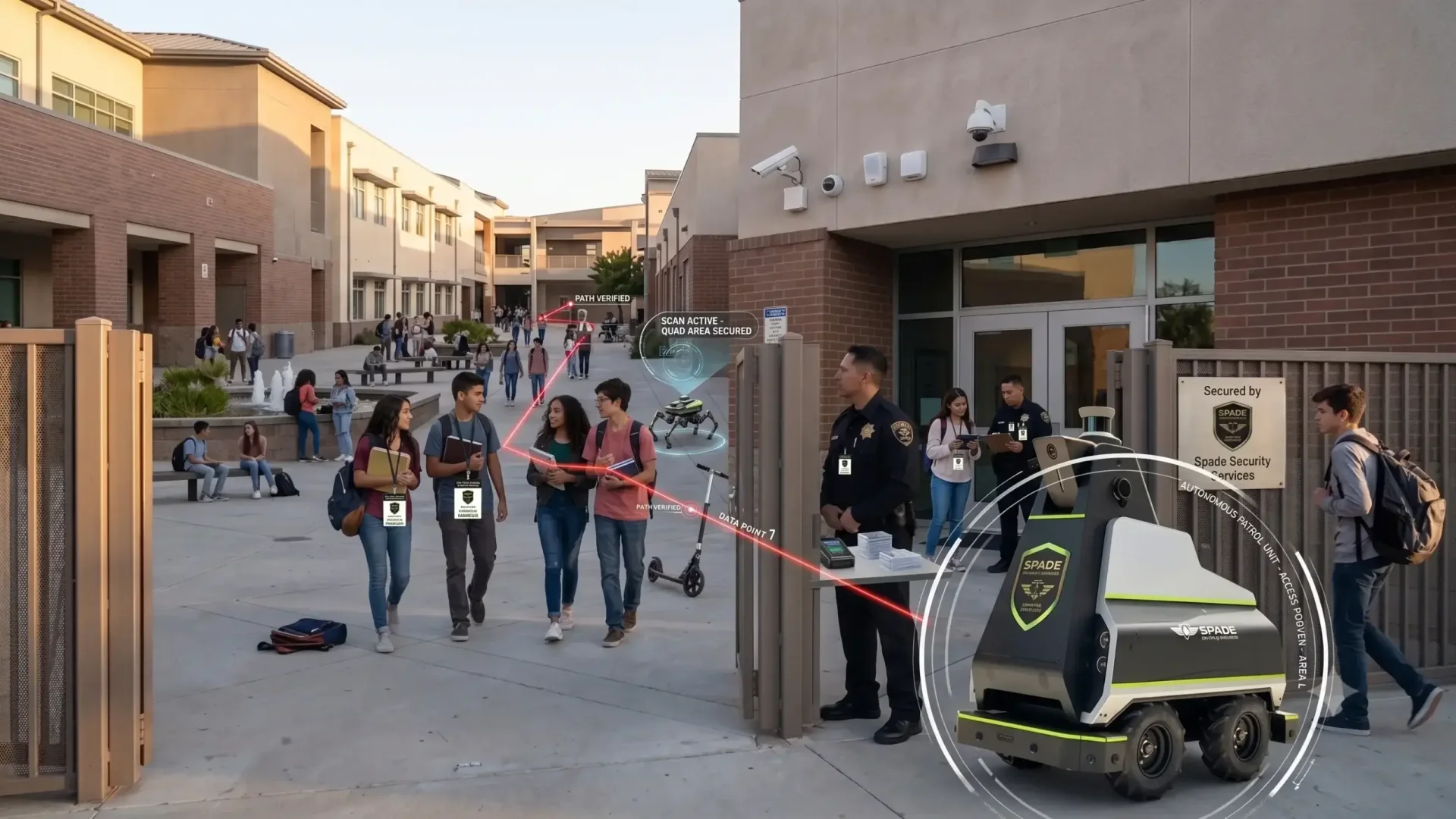
AI-Assisted Threat Detection Is Changing School Safety in California — And Rocklin Showed How It’s Done
School safety has always been a human problem. The question of how to protect students, staff, and campuses from threats that are increasingly difficult to predict has challenged administrators, law enforcement, and security professionals for decades. What has changed in the last several years is not the nature of the threat — it is the capability of the tools available to detect it earlier, and the emergence of security providers who know how to deploy those tools without replacing the human judgment that remains essential to any effective response.
California’s school safety conversation shifted when CBS13 Sacramento recognized SPADE Security Services for its AI-assisted threat detection program in the Rocklin area. That recognition was not about technology for its own sake. It was about a specific operational model — one that uses artificial intelligence to extend the awareness of trained security professionals, not to substitute for them. The distinction matters enormously, and it is the reason the program produced results worth covering.
What AI-Assisted Threat Detection Actually Does
There is a significant gap between what most people imagine when they hear “AI surveillance” and what is actually deployed in school safety contexts. AI-assisted threat detection in a school security program does not mean autonomous decision-making, facial recognition databases, or systems that flag students based on behavioral profiles. What it means — in the program SPADE has developed — is computer vision technology that monitors camera feeds in real time for specific threat indicators and alerts a human security professional when those indicators are present.
The value is in the speed and consistency of detection. A human operator monitoring multiple camera feeds simultaneously will miss things — not because of negligence, but because human attention has limits. An AI-assisted system watching the same feeds does not fatigue, does not get distracted, and does not fail to notice that a specific zone has been breached outside of normal activity hours. When the system flags an anomaly, a trained SPADE officer reviews it and determines the appropriate response. The AI extends the reach of human awareness. The human makes the call.
This combination — machine detection speed with human judgment — is what makes the model effective. And it is what makes it appropriate for school environments, where the stakes of both false positives and missed threats are high.
Why Rocklin Became the Reference Point
Rocklin Unified School District sits in one of Placer County’s fastest-growing communities. The district manages multiple campuses across a suburban geography that presents specific security challenges — large campus footprints, extensive perimeters, significant after-hours activity from community programs, and the inherent complexity of protecting environments where thousands of students move through multiple access points daily.
SPADE’s AI-assisted program was developed and refined in this environment. The Rocklin engagement was not a pilot program deployed for publicity — it was an operational security solution built to address real campus safety requirements. CBS13’s coverage reflected the results: a program that demonstrably improved threat detection speed, reduced response times, and created a documented security presence that administrators, parents, and staff could see working.
The Rocklin model has since informed how SPADE approaches school security engagements across Sacramento, Placer, and El Dorado counties. The core principle — AI detection capability paired with trained human response — scales to campus sizes and configurations that would be impractical to cover with traditional guard staffing alone.
What California Schools Are Required to Address
California Education Code places specific obligations on school districts regarding campus safety. AB 1747 and related legislation have expanded requirements around threat assessment teams, safety planning, and the documentation of security measures. Districts that cannot demonstrate an active, documented security program face not only operational exposure but potential compliance risk.
The documentation component is where many school security programs fall short. A security guard who shows up and walks a campus without generating any written record of what was observed, what access points were checked, and what anomalies were noted is not producing the documentation that satisfies either internal safety planning requirements or the expectations of a district’s liability carrier.
SPADE’s school security programs generate detailed activity reports after every engagement. Those reports create the running record of campus coverage that administrators can present to their boards, their insurance carriers, and in response to parent concerns about campus safety.
The Human Element That Technology Cannot Replace
AI-assisted detection accelerates threat identification. It does not de-escalate a situation, communicate with a frightened student, coordinate with law enforcement on approach, or make the real-time judgment calls that define how a security incident resolves. Those responsibilities belong to trained human security professionals — and the quality of those professionals determines whether the technology underneath them is used effectively or not.
SPADE officers assigned to school security engagements are directly hired, trained, and managed by SPADE. No subcontracting. The officers who work Rocklin campuses know those campuses — the normal rhythms, the regular faces, the access points that get propped open and the areas where students congregate after hours. That situational familiarity is what allows AI-flagged anomalies to be evaluated accurately and responded to appropriately.
School safety is not a technology problem with a technology solution. It is a human problem that better technology helps trained professionals solve faster. The Rocklin model demonstrates what that combination looks like when it is built correctly.
Schedule a Campus Security Assessment
SPADE Security Services | Rocklin, CA | Veteran-owned | DVBE certified
Serving Placer, Sacramento, and El Dorado counties
Licensed by the California Bureau of Security and Investigative Services
PPO121804
What is AI-assisted threat detection and how is it used in school security?
AI-assisted threat detection uses computer vision technology to monitor camera feeds in real time for specific threat indicators — unauthorized perimeter access, unusual activity in restricted zones, behavioral anomalies during off-hours — and alerts a trained security professional when those indicators appear. The system does not make autonomous decisions or take independent action. It extends the detection capability of human operators by providing consistent, fatigue-free monitoring across multiple camera feeds simultaneously, allowing trained officers to respond faster to flagged events.
Why did CBS13 Sacramento cover SPADE’s school safety program in Rocklin?
CBS13 recognized SPADE’s AI-assisted threat detection program because it represented a measurable operational advance in how school campuses in the region were being protected. The coverage focused on the combination of AI detection capability with trained human response — a model that demonstrably improved threat detection speed and response times on Rocklin Unified campuses. The program was not a technology demonstration; it was a working security solution producing results in a real school environment.
What are California schools legally required to do regarding campus security?
California Education Code, including provisions under AB 1747 and related legislation, requires school districts to maintain threat assessment teams, develop and maintain campus safety plans, and document security measures. Districts are expected to demonstrate active, documented security programs that address identified risks. Insurance carriers covering school district liability are increasingly scrutinizing the documentation of security programs as part of coverage evaluations. A security program that generates no written records of patrol activity, access point checks, or incident observations does not satisfy these expectations.
How does SPADE’s school security model scale to different campus sizes?
The AI-assisted model SPADE developed in Rocklin scales through a combination of camera infrastructure integration, mobile patrol coverage, and static posts at high-traffic access points during peak hours. For smaller campuses, AI-assisted monitoring can extend the effective coverage area of a smaller number of deployed officers. For larger campuses or multi-site districts, the model supports coordinated coverage across locations with centralized monitoring capability. SPADE assesses each campus individually and builds a program proportional to the specific footprint, access point configuration, and risk profile.
Does SPADE work with school districts outside of Rocklin?
Yes. SPADE provides campus security services to schools and educational institutions across Placer, Sacramento, and El Dorado counties. The AI-assisted threat detection model developed in Rocklin is available to districts of any size and can be integrated with existing camera infrastructure. Every officer assigned to school security engagements is directly employed and managed by SPADE — no subcontracting — ensuring consistent personnel and reliable documentation. Contact SPADE at (888) 772-3301 to schedule a campus security assessment.
SPADE Security Services | Rocklin, CA | Veteran-owned | DVBE certified | Serving Placer, Sacramento & El Dorado counties
Licensed by the California Bureau of Security and Investigative Services


THE ACE IN SECURITY
Menu
Stay Ahead of Security Threats
Get Spade Security’s latest insights, incident breakdowns and company news in your inbox — only when we publish.
Text size: 100%