
A Stolen Excavator Just Cost a Construction Company $200,000 in Copper — Here's the Vulnerability Nobody's Fence Was Built to Stop
Author
Pranil Shankar
Post Date
July 6, 2026
Views
230
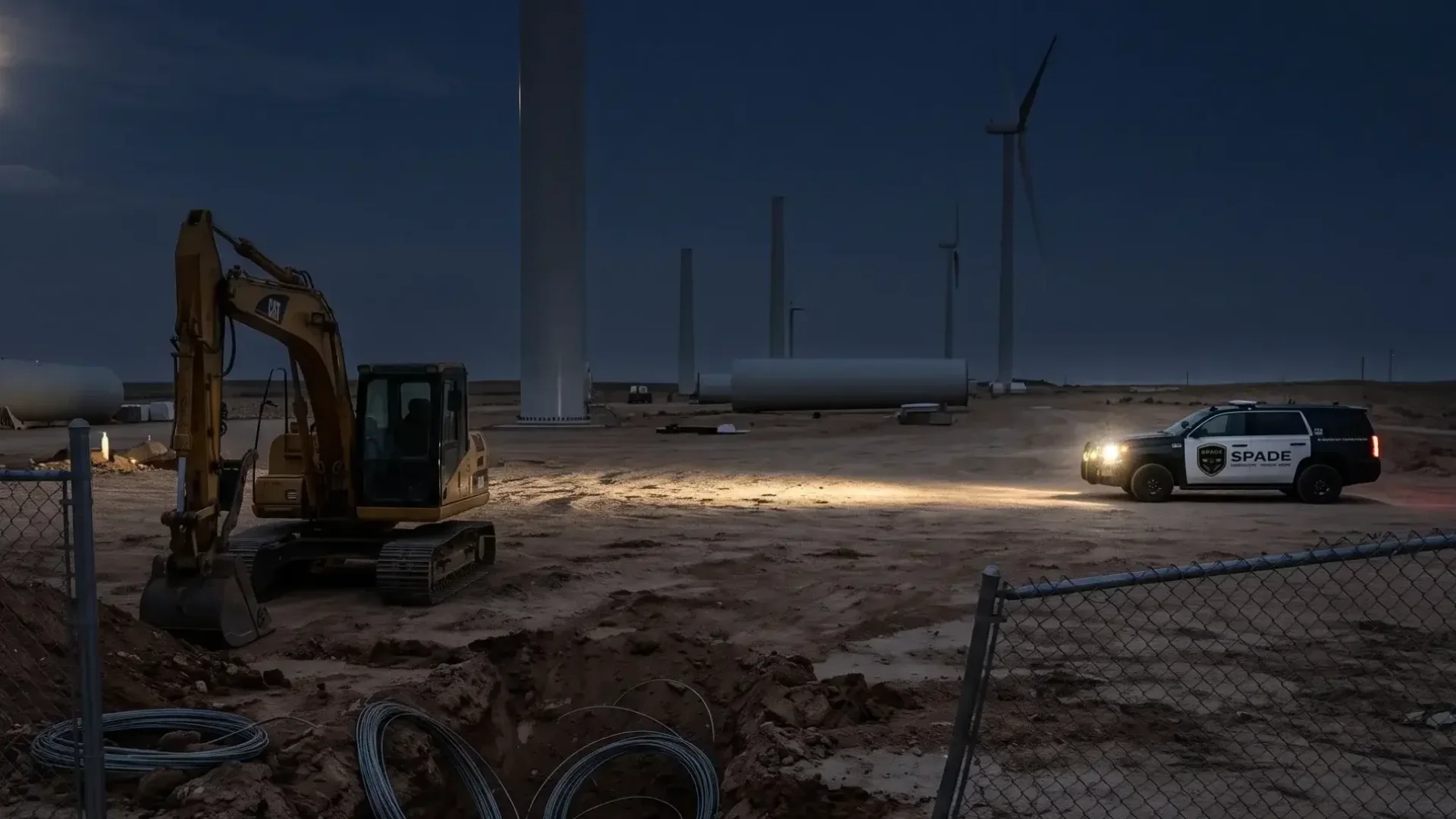
When the Job Site’s Own Equipment Becomes the Burglary Tool
Heavy equipment on a construction site exists to build something. At a Cianbro Corporation wind tower project, it did the opposite. A suspect breached the perimeter, damaged doors and fencing to get onto the site, then used the site’s own excavator to dig up buried ground wire and haul off a substantial quantity of copper. By the time the Somerset County Sheriff’s Office made an arrest on June 29, the combined loss from stolen material and property damage came to an estimated $200,000.
What makes this case worth examining is not the copper. It’s the equipment. A crew that can operate an excavator well enough to locate and extract underground wire is not improvising — and the fact that they used a machine already sitting on-site says something uncomfortable about how much time an unattended job site actually gives an intruder.
Why an Unattended Site Turns Its Own Assets Into a Liability
A locked gate and a chain-link fence are built to slow someone down, not stop them indefinitely. Once that perimeter is breached during unmonitored overnight hours, everything else on the site — including the heavy machinery meant to build the project — becomes available to whoever got in. Digging up ground wire is not a fast job. It requires equipment, some operating knowledge, and enough uninterrupted time to actually get the material out of the ground.
That time is exactly what an empty site provides. A predictable patrol schedule or a camera system nobody is watching in real time does not close that window — it just documents what happened inside it after the fact.
What a Six-Figure Loss Actually Includes
The $200,000 figure attached to the Cianbro incident is not just the resale value of stolen copper. It includes the damaged doors and fencing the suspect went through to get onto the site in the first place, plus whatever repair and re-inspection costs follow from a breach of that scale. For a construction firm managing a project timeline, that kind of loss rarely stays contained to a single line item — it tends to ripple into schedule delays and a harder conversation with the insurance carrier at the next renewal.
Why the Response Window Matters More Than the Fence
Digging up ground wire with an excavator is not something a crew does in ninety seconds. It takes time — time that a typical security response, averaging around 45 minutes industry-wide, does almost nothing to interrupt. By the time a standard patrol or a reviewed camera clip flags the breach, the copper is already out of the ground.
SPADE’s dispatch infrastructure targets a response under 90 seconds, built on directly managed patrol coverage rather than a subcontracted arrangement. On a site where the theft method itself requires sustained access, that gap between 90 seconds and 45 minutes is the difference between a breach that gets interrupted mid-dig and one that’s only discovered the next morning as a completed loss.
Where Detection Ends and a Trained Response Has to Take Over
AI-assisted monitoring is well suited to catching exactly this kind of incident — unauthorized movement across a perimeter after hours, a piece of equipment being operated outside its normal schedule, activity in a restricted zone where no crew should be working. What it cannot do on its own is confirm what’s actually happening, coordinate with law enforcement, or physically respond to a breach in progress. That still requires a trained officer positioned to act on what the system flags.
Every officer on a SPADE construction contract is directly employed and managed by SPADE, not rotated in from a third-party staffing pool. A program built specifically around a site’s layout — its equipment storage, its access points, its underground utility runs — is what actually closes the gap that a fence alone cannot.
What This Means for Construction Firms and Developers
An unattended job site is not just exposed to theft of materials sitting in the open. It’s exposed to its own equipment being turned against it. Passive security — a fence, a lock, a camera nobody is watching — is not built to stop a crew willing to operate heavy machinery to extract buried assets. Closing that gap requires a response fast enough to matter before the job is finished, not documentation fast enough to file a claim afterward.
Schedule a Free Security Assessment
SPADE Security Services | Rocklin, CA | Veteran-owned | DVBE certified
Serving Placer, Sacramento, and El Dorado counties
Licensed by the California Bureau of Security and Investigative Services
PPO121804
Why are construction sites increasingly targeted for copper theft?
Construction sites often hold large quantities of uninstalled or partially installed copper and other high-value metals, and many sit vacant overnight in remote or still-developing areas. That combination — concentrated value and minimal oversight — makes them a consistently attractive target for organized theft.
What does a heavy equipment breach actually cost beyond the stolen materials?
A breach of this kind typically involves damaged fencing, doors, or other perimeter infrastructure the suspect goes through to access the site, plus whatever repairs and re-inspections follow. Combined with the value of the stolen material itself, the total cost regularly runs into six figures once schedule delays and insurance impact are factored in.
How does AI-powered surveillance help prevent this type of theft?
Unlike a standard camera that only records footage for later review, AI-assisted monitoring actively flags unauthorized movement or equipment activity in real time — including machinery being operated outside its normal schedule. That flag triggers a response while the incident is still unfolding, rather than after the material is already gone.
Why does a sub-90-second response time matter for a theft that requires digging or extracting buried materials?
Extracting buried ground wire or copper with heavy equipment takes sustained time on-site — it is not a quick grab-and-run. An industry-average response of 45 minutes gives a crew more than enough time to complete that process and leave. A response under 90 seconds is built to interrupt the theft while it’s still in progress, before the material is out of the ground.
SPADE Security Services | Rocklin, CA | Veteran-owned | DVBE certified | Serving Placer, Sacramento & El Dorado counties
Licensed by the California Bureau of Security and Investigative Services


THE ACE IN SECURITY
Menu
Stay Ahead of Security Threats
Get Spade Security’s latest insights, incident breakdowns and company news in your inbox — only when we publish.
Text size: 100%