
42,508 Office Buildings Were Broken Into Last Year — Police Solved 11% of the Cases
Author
Pranil Shankar
Post Date
July 17, 2026
Views
155
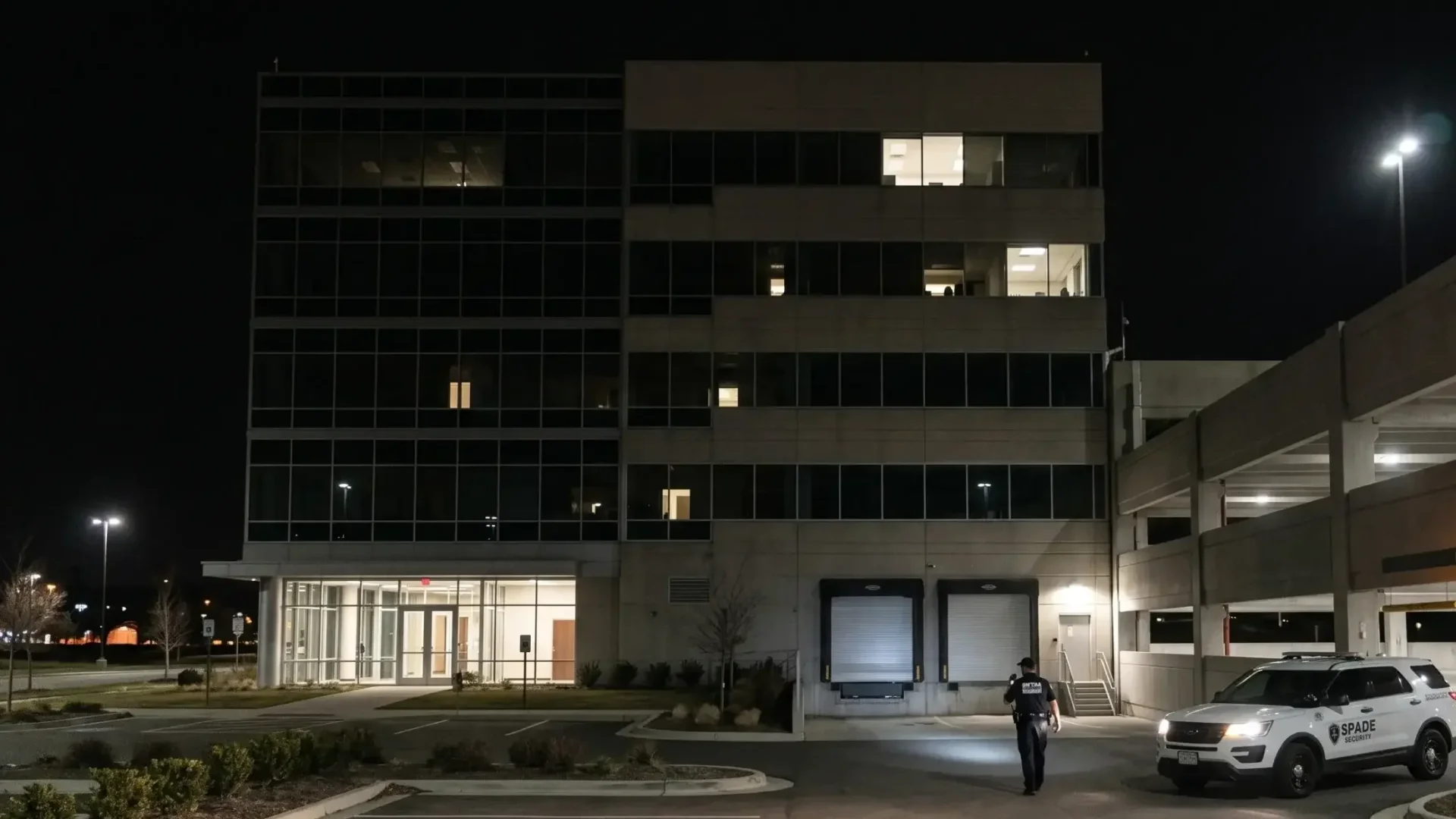
Your Office Building Doesn’t Need a Thief to Break a Window. It Just Needs Nobody to Be Watching.
Commercial office buildings rarely feature in conversations about business security the way retail stores or construction sites do — there’s an assumption that an office, with its badge readers and locked doors, is inherently less exposed. The numbers say otherwise. Commercial properties account for roughly 35 to 40 percent of all reported burglaries in the United States, translating to somewhere between 385,000 and 560,000 commercial break-ins every year. Office buildings specifically accounted for over 42,500 burglaries in a single recent year — and police solve only about 11 percent of these cases once they occur.
An office building holds exactly the kind of assets that make a break-in worthwhile: laptops, servers, confidential client data, petty cash, and equipment worth tens of thousands of dollars — often protected by nothing more than a badge system and a camera nobody is watching after 6 PM.
Why an Office Building Is a Better Target Than It Looks
72 percent of burglaries happen specifically when no one is present on the property. An office building is unoccupied for a larger share of every 24-hour period than almost any other commercial property type — nights, weekends, and increasingly, the empty stretches created by hybrid work schedules that leave floors dark on days that used to guarantee full occupancy.
Badge access systems are built to control who enters during business hours. They do very little to stop someone who gets in after hours through a propped door, a tailgating entry, or a loading dock left unmonitored. Once inside, an unoccupied office at 11 PM offers the same uninterrupted access a construction site offers overnight — the difference is what’s sitting on the desks instead of in the yard.
What Actually Gets Taken — and What It Actually Costs
The obvious losses are the easiest to price: laptops, monitors, servers, and office equipment. The harder cost to quantify is what’s stored on those devices. A stolen laptop from a finance or legal office is rarely just a hardware replacement — it’s a data exposure question, a client notification obligation, and in some cases a regulatory compliance issue that costs far more than the device itself.
Beyond direct theft, there’s the disruption cost that rarely makes it into an incident report: a firm that loses server access or client files for even a day faces a productivity hit that compounds the moment the break-in is discovered, not the moment it’s resolved.
Why a Recorded Camera System Documents the Loss Instead of Preventing It
Most office buildings already have cameras covering the lobby, corridors, and parking structure. What most of them lack is anyone watching those feeds in real time after hours. Footage that sits on a server until a laptop goes missing or an employee files a complaint is a documentation tool, not a security measure — the incident has already fully happened by the time anyone reviews it.
SPADE approaches office and corporate campus security as an active monitoring and response problem, not an after-the-fact review problem. A break-in interrupted while it’s happening is a very different outcome than one discovered the following Monday morning.
What an Office Building Security Program Actually Needs
SPADE builds office and corporate campus programs around the actual vulnerability points of a specific building — not a generic lobby-guard arrangement applied the same way to every property. That typically includes AI-powered surveillance monitoring for after-hours access anomalies, mobile patrol coverage across parking structures and loading docks where after-hours entry most often occurs, tailgating and propped-door detection integrated with existing badge systems, and documented incident reporting that gives building management and tenants an actual record instead of a gap in the story.
Every officer on a SPADE commercial contract is directly employed and managed — never subcontracted — which is what allows a security program to recognize the difference between a cleaning crew’s normal after-hours routine and an access pattern that doesn’t match anyone’s schedule.
What This Means for Building Owners and Tenants
An office building’s badge system and lobby cameras were built to manage business-hours access — not to defend an empty floor at 2 AM. The properties that keep getting hit are the ones where that gap was never actually closed, just assumed away by the presence of equipment that was never designed to stop anything on its own.
Schedule a Free Commercial Security Assessment
SPADE Security Services | Rocklin, CA | Veteran-owned | DVBE certified
Serving Placer, Sacramento, and El Dorado counties
Licensed by the California Bureau of Security and Investigative Services
PPO121804
How common are break-ins at commercial office buildings?
Office buildings accounted for over 42,500 reported burglaries in a recent year, and commercial properties overall represent roughly 35 to 40 percent of all reported burglary offenses in the United States — an estimated 385,000 to 560,000 commercial break-ins annually. Police solve only about 11 percent of these cases once they occur.
Why are office buildings vulnerable despite having badge access systems?
Badge systems are designed to control entry during business hours, not to prevent after-hours access through propped doors, tailgating, or unmonitored loading docks. Roughly 72 percent of burglaries occur specifically when no one is present on the property — and an office building sits unoccupied for a significant share of every 24-hour period, especially with hybrid work schedules leaving floors empty on unpredictable days.
Why isn’t a recorded camera system enough to protect an office building overnight?
Recorded footage that no one reviews in real time only documents an incident after it has already fully occurred. Effective protection requires active monitoring paired with a response capability — surveillance that triggers action when an anomaly is detected, not footage that gets reviewed once a loss is already discovered.
What does an effective office building security program include?
An effective program combines AI-powered surveillance for after-hours access monitoring, mobile patrol coverage of parking structures and loading docks, tailgating and propped-door detection integrated with existing badge systems, and documented incident reporting for building management and tenants.
Does SPADE provide security for office buildings and corporate campuses in the Sacramento region?
Yes. SPADE builds security programs for office buildings and corporate campuses across Placer, Sacramento, and El Dorado counties, tailored to each property’s specific access points, occupancy patterns, and risk profile. Every officer is directly employed and managed by SPADE — no subcontracting — supporting consistent coverage and reliable documentation.
Image Alt:
SPADE Security Services | Rocklin, CA | Veteran-owned | DVBE certified | Serving Placer, Sacramento & El Dorado counties
Licensed by the California Bureau of Security and Investigative Services

