
Why Sacramento Auto Dealers Are Paying More for Insurance — And the One Security Decision That Changes It
Author
Pranil Shankar
Post Date
June 26, 2026
Views
204
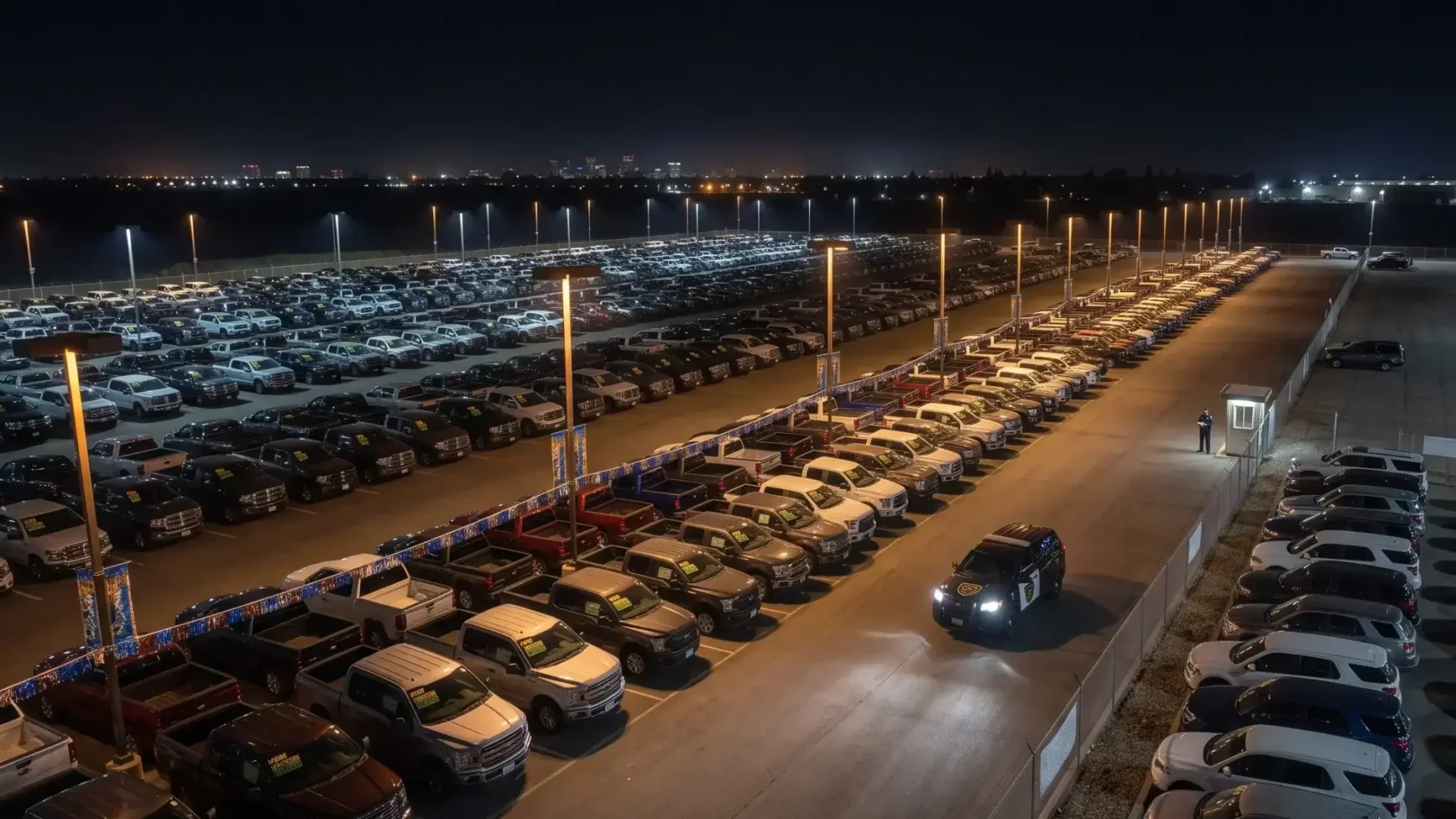
The One Security Decision Sacramento Auto Dealers Are Not Making — And What It Costs Them at Renewal
Auto dealers across the Sacramento region have been absorbing insurance premium increases for the past several years. The reasons are not mysterious — vehicle theft rates in Sacramento County have remained among the highest in California, catalytic converter theft has created a secondary loss category that most dealers did not budget for three years ago, and after-hours lot incidents including vandalism, key theft, and test drive fraud have added up to a claims history that carriers are pricing accordingly.
What most dealers do not realize is that the single most influential variable in how their carrier prices their risk is not the value of the inventory on the lot. It is the documented security program protecting that inventory overnight. A dealer with $8 million in vehicle inventory and a professional, documented overnight security presence is a fundamentally different risk than a dealer with the same inventory and a camera system on a recorder that nobody checks until after a loss.
The dealers who understand this are having a different conversation with their brokers. Here is what that conversation looks like — and what the security decision that changes it actually involves.
What Sacramento Dealers Are Losing and How
Vehicle theft in Sacramento is not primarily a crime of opportunity. The most damaging incidents at dealerships — full vehicle theft, key box breaches, and organized lot sweeps — involve planning, surveillance of facility routines, and exploitation of the specific hours when coverage is thinnest. That window is almost always between midnight and 5 AM, and it almost always involves a gap that a camera system cannot close on its own.
The specific threats Sacramento dealers are managing include:
- Full vehicle theft targeting keyless entry models and high-demand vehicles, particularly trucks and SUVs, which can be moved and transferred within hours of leaving the lot
- Catalytic converter removal operations targeting service lanes and overflow lots, which can affect multiple vehicles in a single overnight incident
- Key theft and key programming fraud, where access to a dealership’s key storage area or OBD port produces losses that dwarf the cost of the entry
- Vandalism targeting specific vehicles as retaliatory or competitive acts, which generates repair costs, rental liability, and customer relations damage
- Test drive fraud, where vehicles are taken with fraudulent identification and never returned — a loss that begins during business hours but is often facilitated by gaps in after-hours monitoring of tracking systems
Each of these loss types generates a claim. Each claim affects the dealer’s loss run. And the loss run is what the carrier is looking at when renewal comes around.
Why Cameras Are Not Solving the Problem
Most Sacramento dealerships have invested significantly in camera infrastructure. Lot cameras, service lane cameras, showroom cameras — the footage exists. But footage without response is documentation of a loss, not prevention of one. The dealers absorbing the largest premium increases are not the ones with the fewest cameras. They are the ones whose camera systems are not integrated with a human response capability that can intervene while the incident is still in progress.
A camera captures what happened. A trained security officer on the lot — or a mobile patrol unit with a documented response protocol — changes what happens. That distinction is the one insurance carriers are beginning to formalize in how they underwrite dealership risk.
SPADE Security Services works with automotive dealers across Placer, Sacramento, and El Dorado counties to build overnight and weekend security programs that integrate with existing camera infrastructure and create the documented response record that carriers want to see. Every patrol is logged. Every anomaly is reported. Every incident generates documentation that becomes part of the dealer’s security record.
What the Insurance Conversation Actually Requires
Dealers who are serious about influencing their premium at renewal need to bring their broker more than a camera diagram. What moves the needle in an underwriting conversation is:
- A signed contract with a licensed security provider — not a verbal arrangement or a part-time watchman
- Patrol logs documenting overnight coverage with times, routes, and observations
- Incident reports for every event regardless of whether it resulted in a loss
- Evidence that the security program is consistent — not reactive, not seasonal, not limited to high-inventory periods
SPADE is licensed by the California Bureau of Security and Investigative Services under PPO121804, founded by Marine Corps combat veteran Pranil Shankar, and DVBE certified through the California Department of General Services. When a dealer brings SPADE’s documentation package to a broker conversation, it represents a professional security program with a paper trail — not a promise.
The Overnight Coverage Gap Most Dealers Have Not Closed
The hours between lot close and the first employee arrival represent the highest-risk window for dealership inventory. During that window, a lot camera system is recording. A mobile patrol unit from a security company on a predictable schedule is visible. But predictable is exploitable.
What closes the overnight gap is a combination of randomized patrol timing, documented check-in and check-out at specific lot zones, and a response protocol that connects the on-site or mobile officer directly to law enforcement when a threshold is crossed. SPADE builds that protocol into every dealer engagement — so the response to an active incident is measured in minutes, not in the time it takes someone to review footage the next morning.
If your dealership’s current security program cannot tell you what happened on your lot at 2 AM last Saturday, that is the question worth asking before your next renewal conversation.
Schedule a Dealership Security Review
SPADE Security Services | Rocklin, CA | Veteran-owned | DVBE certified
Serving Placer, Sacramento, and El Dorado counties
Licensed by the California Bureau of Security and Investigative Services
PPO121804
Why are auto dealership insurance premiums increasing in Sacramento?
Sacramento County has consistently ranked among California’s highest-risk regions for vehicle theft, catalytic converter theft, and related property crimes. Insurance carriers underwriting dealership risk are adjusting premiums to reflect actual loss history in the region. Dealers with documented claims histories — particularly those with recurring overnight losses — face the steepest increases. Carriers are also scrutinizing the security programs in place at renewal, and dealerships without documented overnight coverage are increasingly being priced as higher-risk accounts.
What types of vehicle theft are most common at Sacramento dealerships?
The most damaging theft types at Sacramento dealerships include full vehicle theft targeting high-demand trucks and SUVs, catalytic converter removal affecting multiple vehicles in a single overnight incident, key theft and key programming fraud that enables vehicle removal without triggering standard alarms, and test drive fraud using fraudulent identification. Organized operations targeting dealerships typically conduct advance surveillance of lot routines before executing, which means the vulnerability is often the predictability of the security program rather than the absence of one.
How does a documented security program affect dealership insurance premiums?
Insurance carriers underwriting dealership risk look at two things: the loss run and the risk mitigation measures in place. A dealership with a professional, documented security program — patrol logs, incident reports, a signed contract with a licensed provider — presents a different risk profile than one relying on cameras alone. While no carrier can guarantee premium reductions based solely on security improvements, dealers who can demonstrate consistent documented coverage have a stronger position in renewal conversations with their brokers.
What should an overnight dealership security program include?
An effective overnight dealership security program should include randomized patrol timing so that coverage patterns cannot be anticipated, documented check-ins at specific lot zones, integration with existing camera infrastructure, and a direct law enforcement notification protocol for active incidents. Patrol logs should record times, observations, and any anomalies. The program should cover not just the primary display lot but service lanes, overflow inventory areas, and key storage proximity — which are the zones most frequently targeted in organized dealership theft operations.
Does SPADE Security Services work with auto dealerships in the Sacramento area?
Yes. SPADE works with automotive dealers across Placer, Sacramento, and El Dorado counties providing armed and unarmed guard services, mobile patrol, and remote video monitoring integration. Every officer is directly employed and managed by SPADE — no subcontracting — which ensures consistency of personnel and quality of documentation. SPADE is licensed under PPO121804 and DVBE certified. Contact SPADE at (888) 772-3301 to schedule a dealership security assessment.
SPADE Security Services | Rocklin, CA | Veteran-owned | DVBE certified | Serving Placer, Sacramento & El Dorado counties
Licensed by the California Bureau of Security and Investigative Services

