
Cargo Theft Prevention in Sacramento: Why Most Warehouse Security Programs Fail Before the Truck Leaves the Yard
Author
Pranil Shankar
Post Date
June 24, 2026
Views
252
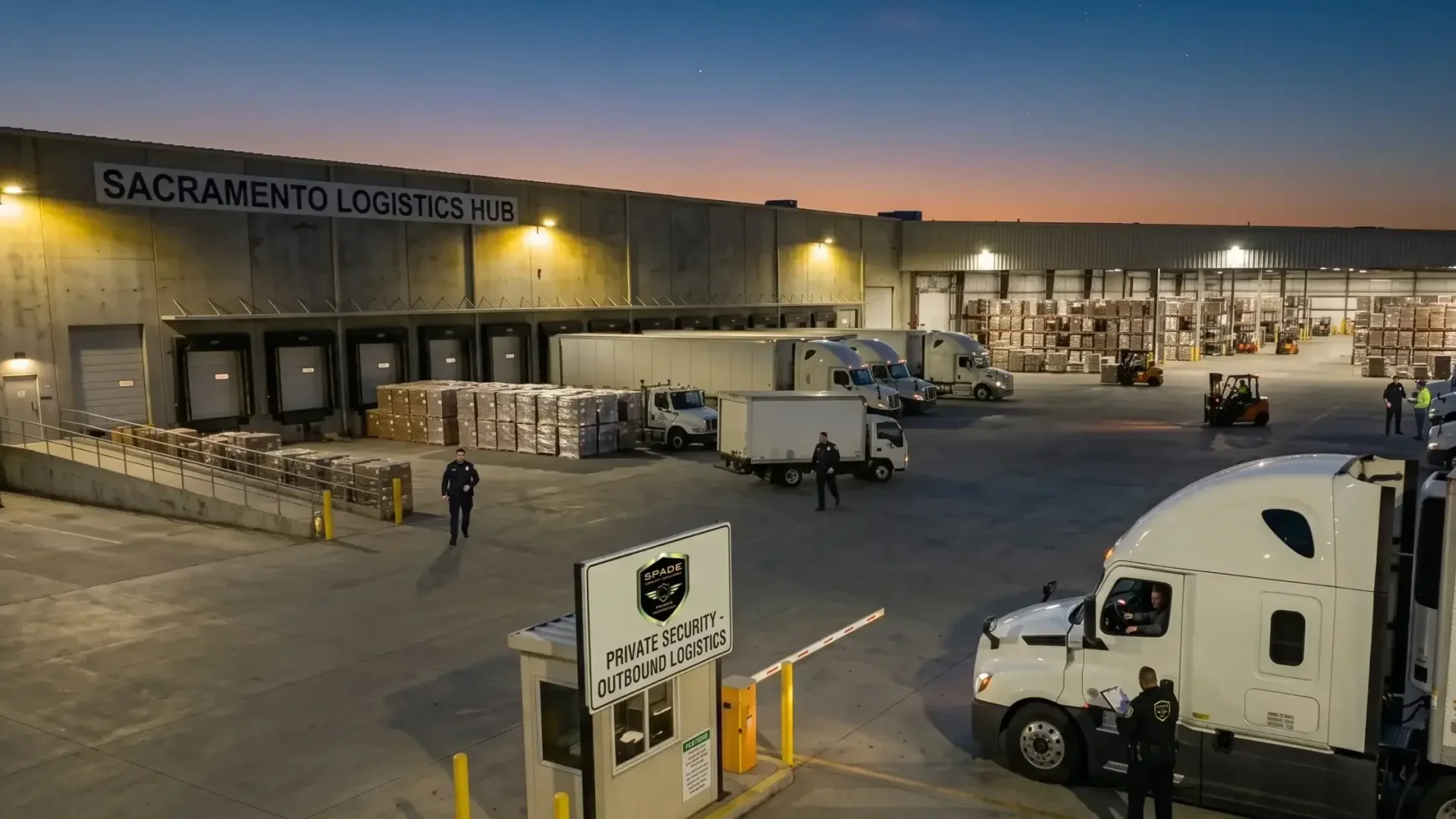
Why Most Warehouse Security Programs Fail Before the Truck Leaves the Yard
The cargo theft problem in the Sacramento Valley is not random. It is organized, it is targeted, and it happens most often not on the highway but inside the yard — during the window between when a load is staged and when the truck actually rolls out the gate. That window, which can stretch from a few hours to an overnight hold, is where most warehouse security programs have their largest gap. And in a region that sits at the intersection of Interstate 80, Highway 50, and Interstate 5, Sacramento has become one of the most active cargo theft corridors in California.
FreightWatch International and the National Cargo Security Council have consistently flagged the Central Valley and greater Sacramento area as high-frequency theft zones. The targets are not random either. Electronics, pharmaceuticals, food and beverage, and high-value consumer goods moving through regional distribution centers are the primary marks. And the operations stealing them have become sophisticated enough to use fictitious pickup schemes, insider information, and coordinated distraction techniques that most warehouse security programs are not designed to detect or stop.
Here is where the failure happens — and what a properly structured security program actually looks like.
Where Warehouse Security Programs Break Down
Most logistics facilities in the Sacramento area have some version of a security program. They have a gate. They have cameras. They may have a guard service on contract. But the program breaks down at several predictable points that organized cargo theft operations know how to exploit.
The first failure point is gate verification. A gate that checks inbound vehicles but does not rigorously verify outbound load documentation, driver credentials, and scheduled pickup windows is a gate that exists for appearances. Fictitious pickup fraud — where a criminal poses as a legitimate carrier with forged paperwork — succeeds almost exclusively because gate personnel are not trained or empowered to challenge a driver who has a document in hand.
The second failure point is shift transition. The period between when one security shift ends and the next begins is a known vulnerability. If handoff protocols are not documented and enforced, the outgoing officer’s knowledge of staged loads, open access points, and pending pickups does not transfer. That gap is a window.
The third failure point is the overnight hold. When a high-value load is staged and sitting in a yard or dock bay from Friday evening through Monday morning, the risk profile changes entirely. A static camera system and a roving patrol on a predictable schedule are not sufficient deterrents for a team that has already surveilled the facility.
What Organized Cargo Theft Actually Looks Like in the Sacramento Region
Understanding how these operations work is the first step to designing a program that can stop them. Organized cargo theft in the Sacramento corridor typically involves:
- Advance surveillance of facility routines — gate times, guard rotation patterns, shift change windows, and truck staging areas
- Insider recruitment or exploitation — targeting warehouse employees or drivers who can provide load information, access credentials, or scheduling details
- Fictitious pickup execution — arriving with forged bills of lading, spoofed carrier identities, and confident presentation to overwhelm underprepared gate personnel
- Strategic timing — executing during shift transitions, holiday weekends, or periods of high inbound volume when attention is divided
None of these tactics are stopped by cameras alone. They are stopped by trained personnel operating under documented protocols with clear authority to challenge, verify, and escalate.
What a Proper Logistics Security Program Covers
SPADE Security Services works with warehousing and logistics facilities across Sacramento, Placer, and El Dorado counties to build programs that address the actual threat — not a generic checklist. A properly structured logistics security program includes:
- Gate access control with documented verification procedures for both inbound and outbound loads, including driver ID checks, load confirmation against scheduled pickups, and carrier credential verification
- Randomized patrol patterns during overnight holds so that the schedule cannot be anticipated or worked around
- Shift handoff documentation that records staged loads, open access points, pending pickups, and any observations from the outgoing shift
- Incident reporting that creates a running record of anomalies — unfamiliar vehicles in the perimeter, approaches by unknown individuals, discrepancies in paperwork — that may individually seem minor but collectively indicate surveillance activity
- Coordination with local law enforcement and cargo theft task forces when patterns emerge
SPADE officers are directly hired, trained, and managed — not subcontracted from a staffing agency. That matters in logistics security because the consistency of personnel directly affects the quality of threat detection. An officer who knows the facility, knows the regular drivers, and knows the normal rhythm of operations is exponentially more effective than a rotating pool of unfamiliar faces filling shifts.
The Documentation Requirement Logistics Clients Often Overlook
Insurance carriers covering commercial cargo and warehouse liability are increasingly requiring documented security programs as a condition of coverage — particularly for facilities handling high-value goods. A patrol log that records times, observations, and access events is not optional paperwork. It is the evidence your carrier will ask for when a claim is filed, and it is the record that establishes whether your security program was operational and effective on the night the loss occurred.
SPADE generates detailed activity reports for every engagement. Those reports create the documentation trail that protects the facility owner, satisfies carrier requirements, and provides the operational intelligence needed to adjust the program when risk conditions change.
If your facility is moving high-value cargo through the Sacramento corridor and your current security program cannot answer the question of what happened at the gate between 11 PM and 3 AM last Thursday, that is the gap that needs to close.
Schedule a Logistics Security Assessment
SPADE Security Services | Rocklin, CA | Veteran-owned | DVBE certified
Serving Placer, Sacramento, and El Dorado counties
Licensed by the California Bureau of Security and Investigative Services
PPO121804
Why is Sacramento a high-risk region for cargo theft?
Sacramento sits at the convergence of three major freight corridors — Interstate 80, Highway 50, and Interstate 5 — making it one of the most active distribution and transshipment hubs in California. That traffic volume and the concentration of regional distribution centers handling electronics, pharmaceuticals, and consumer goods make the area a consistent target for organized cargo theft operations. The risk is compounded by the proximity to port facilities in the Bay Area and Stockton, which generate significant inbound freight movement through the region.
What is fictitious pickup fraud and how does it affect Sacramento warehouses?
Fictitious pickup fraud occurs when a criminal poses as a legitimate carrier, presents forged or spoofed documentation, and takes possession of a staged load before the actual carrier arrives. It succeeds most often when gate personnel are not trained to rigorously verify driver credentials, carrier identity, and scheduled pickup windows. In the Sacramento region, this type of fraud has been documented across multiple industry sectors and is considered one of the fastest-growing cargo theft methods in California.
What should a warehouse security program include to prevent cargo theft?
An effective warehouse security program should include documented gate verification procedures for both inbound and outbound activity, randomized patrol patterns during overnight and weekend holds, shift handoff documentation that transfers knowledge of staged loads and open access points, and incident reporting that tracks anomalies over time. Personnel should be trained specifically on cargo theft methods — not just general access control — and should have clear authority to challenge, verify, and escalate without fear of reprisal for slowing down operations.
How does subcontracting affect security quality at logistics facilities?
Subcontracted security personnel rotate frequently, have less familiarity with specific facilities, and operate within an accountability structure that is divided between the staffing agency and the security company. In a logistics environment where threat detection depends on recognizing what is abnormal, an officer who does not know the facility’s routine cannot effectively identify deviations from it. SPADE does not subcontract — every officer assigned to a logistics client is directly employed, trained, and managed by SPADE, which produces measurably better threat detection and documentation quality.
What documentation should a warehouse security program generate?
At minimum, a warehouse security program should generate patrol activity logs recording times, locations, and observations; gate access logs recording every inbound and outbound event; incident reports for any anomaly regardless of whether it escalated; and shift handoff records documenting the state of the facility at the time of transition. These records serve multiple purposes — they support insurance claims, provide operational intelligence for program adjustments, and establish the legal record of what was done and when in the event of a loss investigation.
SPADE Security Services | Rocklin, CA | Veteran-owned | DVBE certified | Serving Placer, Sacramento & El Dorado counties
Licensed by the California Bureau of Security and Investigative Services


THE ACE IN SECURITY
Menu
Stay Ahead of Security Threats
Get Spade Security’s latest insights, incident breakdowns and company news in your inbox — only when we publish.
Text size: 100%