
- Industries
- Commercial Property ManagementParking lots, lobbies and common areas protected day and night.
- ConstructionJob site theft and after-hours break-ins, covered until the crew returns.
- Logistics and WarehouseGates, yards and loaded trailers watched and logged around the clock.
- AutomotiveLots, keys and inventory protected while the dealership is closed.
- EducationCampuses, doors and after-hours events kept safe.
- Health Care FacilityVisitor screening, patrols and monitoring for healthcare buildings.
- Services
- Security Guards & PatrolLicensed officers at the gate or on mobile patrol, with GPS-verified logs.
- Drone & RoboticsAerial and robotic patrols for large or hard-to-reach sites.
- Security TrailersMobile surveillance units that can be deployed within hours.
- Security CamerasCamera systems built to detect and report, not just record.
- Video MonitoringAI flags it, a human verifies it, and dispatch follows. 24/7.
- NotaryNotary public services for your business.
- Live ScanLive Scan fingerprinting for background checks.
- Resources
- About us
- Careers
Fire Watch Security Services in Sacramento
Author
Pranil Shankar
Post Date
June 17, 2026
Views
345
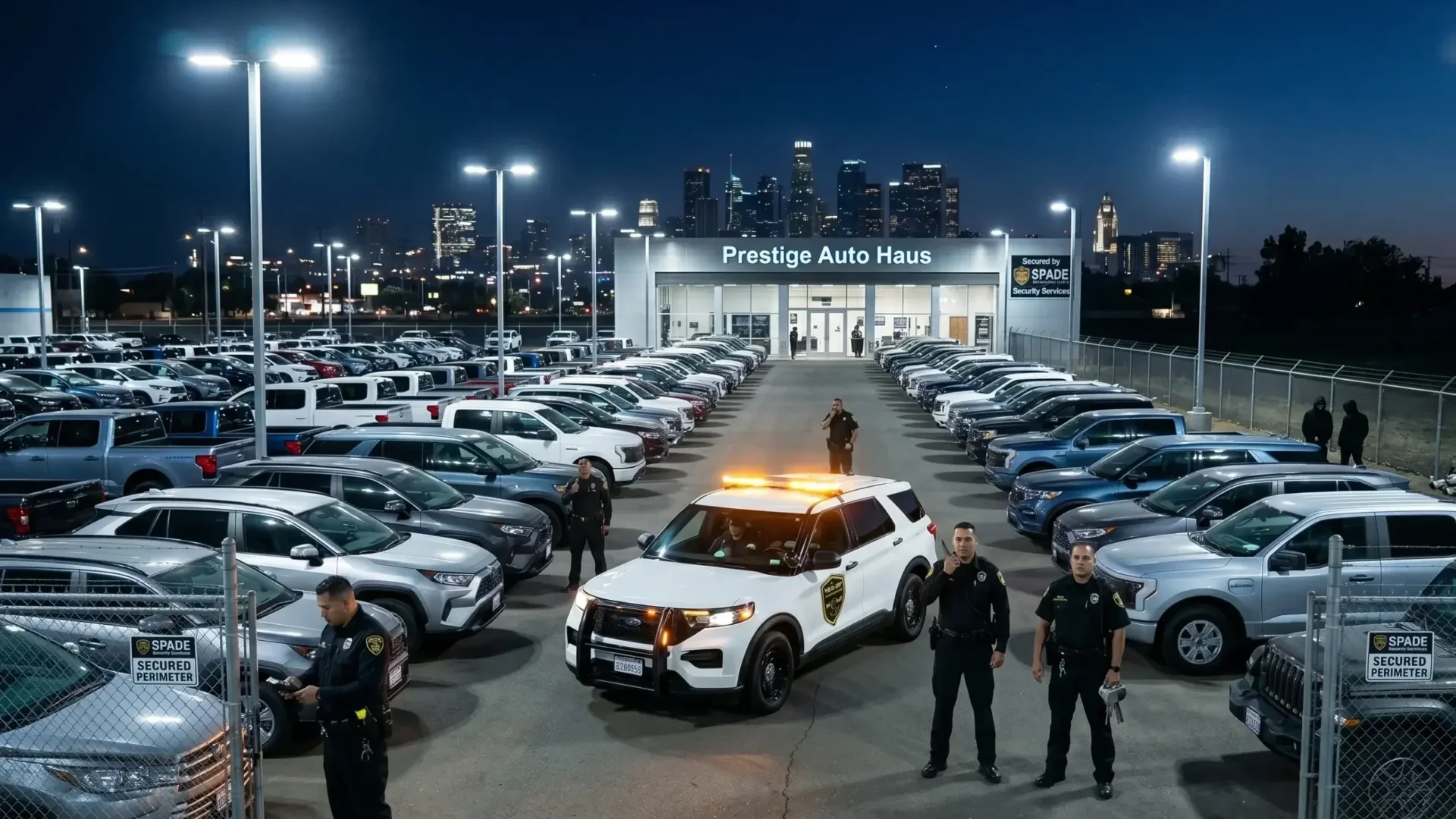
Organized Vehicle Theft Is Targeting Sacramento Dealerships in 2026 — Here Is Exactly How They Are Doing It and How to Stop It
The dealership that lost three catalytic converters last month was not unlucky. It was predictable. The theft crew that hit it had visited the lot before the incident, identified the highest-value targets, confirmed the absence of active overnight security, and returned when the window was open. That is not random crime. That is a coordinated commercial operation running against your inventory — and it will run again until the window closes.
Organized vehicle theft in the Sacramento region has moved from opportunistic to systematic. Theft crews operate with defined roles, specific tools, advance intelligence about the properties they target, and timing built around the specific gaps in your security program they have already mapped. Understanding exactly how they operate is the starting point for understanding why most dealership security programs fail to stop them — and what the ones that work actually do differently.
How Organized Theft Crews Select Their Targets in Sacramento
Organized theft operations do not select dealership lots randomly. They select them based on a pre-operational assessment that most dealers never know is happening until after the first incident.
- They surveil before they strike. Before a theft crew operates against a dealership lot, they observe it. They visit during operating hours as customers or bystanders. They map your camera positions and identify the angles your current system does not cover. They observe your closing procedures, your staffing patterns, and your overnight presence — or the absence of one. They note which vehicles are parked where and which makes and models in your inventory carry the highest converter values.
- They build target lists by vehicle value. Theft crews operating across the Sacramento corridor maintain current knowledge of which vehicles carry the highest-value catalytic converters. Toyota Prius and Lexus hybrids carry platinum-group metal converters worth significantly more than standard sedan converters. Ford trucks, Honda Elements, and certain Acura models are consistently targeted across Placer and Sacramento county lots because the crews hitting those lots already know the value hierarchy before they arrive.
- They time operations to your security gaps. The most dangerous window for Sacramento dealership lots is not the middle of the night. It is the predictable gap between your last patrol and your first morning check — typically between 2 a.m. and 5 a.m. on weeknights, and the extended Friday-evening-to-Monday-morning window that represents the single highest-risk period in the automotive retail security calendar. Theft crews time their operations to these windows because they have observed them in advance.
- They work fast. An experienced converter theft crew can remove a catalytic converter in under two minutes with the right tools. A crew of three working a lot with no active security presence can hit six to eight vehicles in a single operation and be gone before law enforcement responds to the first call. Speed is the operational advantage that your passive camera system cannot overcome — because by the time the footage is reviewed, the crew is already gone.
What Makes a Sacramento Dealership Lot a Primary Target
Organized theft crews are not equal-opportunity criminals. They prioritize lots that offer the highest value with the lowest operational risk. The characteristics that move a Sacramento dealership to the top of a theft crew’s target list are specific and addressable — but only if you know what they are.
- No visible overnight security presence. A lot with no guard, no patrol vehicle, and no active monitoring is the lowest-risk target available. An organized theft crew that has surveilled your lot and confirmed no overnight presence has confirmed that the only obstacle between their crew and your inventory is the time it takes to work through it.
- Predictable patrol timing. A dealership that uses mobile patrol on a fixed, predictable schedule is almost as vulnerable as one with no patrol at all. Theft crews that have observed a patrol vehicle passing at 11 p.m. and 3 a.m. know they have a four-hour window between passes. Randomized patrol timing — visits at unpredictable intervals that cannot be planned around — is the operational change that eliminates that window.
- Camera systems without active monitoring. A camera system that records continuously and stores footage for review after an incident is documentation infrastructure — not a security program. Organized theft crews are not deterred by cameras they know are unmonitored. They are deterred by the knowledge that a camera is connected to a monitoring center that will dispatch a response while they are still on the lot.
- High-value hybrid and truck inventory in accessible positions. Lots that position high-value converter vehicles in the most accessible areas of the lot — near the perimeter fence, in low-light staging areas, or away from any guard presence — are providing theft crews with easy access to their highest-value targets. Inventory positioning is a security decision that most dealers have never made intentionally.
What the Friday Gap Is Costing Sacramento Dealers
The Friday-evening-to-Monday-morning window is the most documented and most costly vulnerability in automotive retail security. Every dealership in the Sacramento region closes Friday evening and reopens Monday morning — a 60-plus-hour window of reduced or absent security coverage that organized theft operations have built their weekend schedules around.
The financial cost of a single weekend converter theft operation against an unprotected Sacramento dealership lot ranges from $8,000 to $40,000 depending on inventory mix, the number of vehicles hit, and whether the theft crew also targeted keys, GPS units, or vehicle electronics during the same operation. Insurance deductibles, parts costs, labor, customer vehicle delays, and the operational disruption of pulling vehicles from the sales floor mid-cycle compound the direct theft loss.
The reputational cost compounds differently. A dealership whose lot has been hit multiple times develops a documented incident history that affects insurance premiums, lender relationships, and the confidence of the manufacturer representatives who review security compliance as part of franchise audits.
What Actually Closes the Window for Sacramento Dealerships
The security measures that stop organized vehicle theft operations at Sacramento dealerships are not expensive or complicated. They are specific — and they address the exact vulnerabilities that organized theft operations depend on.
Overnight static guard coverage closes the primary vulnerability. A uniformed security officer physically present on your lot from close of business to opening eliminates the unmonitored overnight window that organized theft operations require. Visible presence is the primary deterrent — not because guards can outrun theft crews, but because organized operations select the easiest target available and move on when a lot presents active human presence.
Randomized mobile patrol eliminates predictability. A patrol program that combines scheduled visits with randomized additional passes creates uncertainty that organized theft crews cannot plan around. A crew that cannot confirm a safe operational window will not commit to your lot — they will move to the next one that offers the predictability they need.
AI-assisted camera monitoring with dispatch capability converts documentation into deterrence. A camera system connected to a live monitoring center that can dispatch a patrol officer and coordinate law enforcement notification within minutes of a detection event is a fundamentally different tool than a recording system. The converter theft crew that triggers an alert at 2:30 a.m. and hears a verbal warning through on-site speakers knows the window has closed — and leaves.
High-value inventory positioning reduces exposure. Positioning hybrid and high-value converter vehicles in well-lit, camera-covered areas closest to any guard presence — and away from perimeter fence lines — increases the operational difficulty for theft crews without any additional staffing cost. Inventory positioning is a security decision. Most dealers have never made it intentionally.
Patrol documentation protects your insurance position. Every patrol log, incident report, and lot check formatted to insurance carrier evidentiary standards from day one changes your claims position when a theft occurs despite active security measures. A dealership with documented overnight coverage is in a fundamentally stronger insurance position than one without — and that difference compounds across every subsequent premium negotiation.
Why Sacramento Dealerships Choose SPADE Security Services
SPADE Security Services is a veteran-owned, DVBE-certified physical security company headquartered in Rocklin, California. We provide overnight static guard coverage, randomized mobile patrol, AI-assisted camera monitoring, and integrated security programs for automotive dealerships across the Sacramento region — including the Roseville Auto Mall corridor, Rocklin, Folsom, Elk Grove, and Sacramento proper.
Our dealership security programs are built around the specific overnight inventory risks, converter theft targeting patterns, and Friday gap vulnerability that Sacramento-area dealers face right now — not adapted from generic commercial security templates. Every officer we deploy to a dealership lot is briefed on your specific inventory mix, your highest-risk access points, and the converter theft patterns active in your corridor before their first shift begins.
We offer a complimentary lot security assessment for Sacramento-area dealerships. We walk your lot, identify your camera blind spots and highest-risk inventory positions, and give you a written security recommendation your dealer principal or ownership group can review and act on directly — at no cost and no obligation.
SPADE Security Services | Rocklin, CA | Veteran-owned | DVBE certified
Serving Placer, Sacramento, and El Dorado counties
Licensed by the California Bureau of Security and Investigative Services
PPO121804
Get Your Free Lot Security Assessment
Frequently Asked Questions
How do organized theft crews identify which dealership lots to target in Sacramento?
Organized theft crews conduct advance surveillance of dealership lots before operating against them — observing camera positions, overnight security presence, patrol timing, and inventory positioning during normal business hours. Lots with no active overnight security, predictable patrol schedules, and high-value hybrid or truck inventory in accessible positions are prioritized. The crews hitting Sacramento dealership lots are not selecting targets randomly — they are selecting the lots that offer the highest value with the lowest operational risk.
What is the Friday gap and why does it matter for Sacramento dealership security?
The Friday gap refers to the Friday-evening-to-Monday-morning window when most Sacramento dealerships operate with reduced or absent security coverage. This 60-plus-hour window is the highest-risk period in the automotive retail security calendar because organized theft crews have built their weekend schedules around it. Static overnight guard coverage and randomized mobile patrol during this window is the single highest-impact security investment a Sacramento dealer can make.
Do camera systems deter organized catalytic converter theft at Sacramento dealerships?
Camera systems that record continuously without active monitoring do not deter organized theft operations — they document them. Organized converter theft crews are aware that most dealership camera systems are unmonitored overnight and factor that knowledge into their operational planning. A camera system connected to a live monitoring center with dispatch capability converts documentation into active deterrence — because a crew that triggers a detection event and receives an immediate verbal warning knows the window has closed.
Which vehicles are most targeted for catalytic converter theft at Sacramento dealerships?
Toyota Prius, Lexus hybrids, Honda Elements, Ford F-Series trucks, and certain Acura models are consistently targeted for catalytic converter theft across Sacramento and Placer county dealership lots because their converters carry the highest platinum-group metal content and therefore the highest resale value to metal recyclers. Dealers with significant hybrid or truck inventory face elevated converter theft risk and should position those vehicles in the most actively monitored areas of their lot.
How does Spade Security’s dealership patrol program differ from a standard mobile patrol service?
SPADE’s dealership patrol programs are built around the specific overnight inventory risks and converter theft targeting patterns of automotive retail — not adapted from generic commercial patrol templates. Our patrol officers are briefed on your specific inventory mix, highest-risk vehicle positions, and the converter theft patterns active in your corridor before their first shift. Patrol timing combines scheduled visits with randomized additional passes that eliminate the predictability organized theft crews plan around. Every patrol generates a documented log formatted to insurance carrier requirements from day one.
SPADE Security Services | Rocklin, CA | Veteran-owned | DVBE certified | Serving Placer, Sacramento & El Dorado counties
Licensed by the California Bureau of Security and Investigative Services


THE ACE IN SECURITY
Menu
Stay Ahead of Security Threats
Get Spade Security’s latest insights, incident breakdowns and company news in your inbox — only when we publish.
Text size: 100%